Steel Raised Garden Beds
A raised bed is the shortest route to a productive vegetable garden in a Canadian yard: the soil warms one to two weeks earlier in spring, drains after heavy rain, and you never dig out the lawn or fight compacted clay. The beds here are by Miracle-Gro, Arrow and ShelterLogic, in 2' x 4', 40" x 40", 4' x 4', 3' x 6' and 4' x 8'.
The choice is mostly material and depth. The beds come in wood or galvanized metal; metal warms faster and will not rot, wood looks softer in a garden and insulates the root zone a little better. Depth matters more than footprint: an 11 to 12 in. bed suits salad, herbs and bush beans, while carrots, potatoes and tomatoes want 17 in. or more.
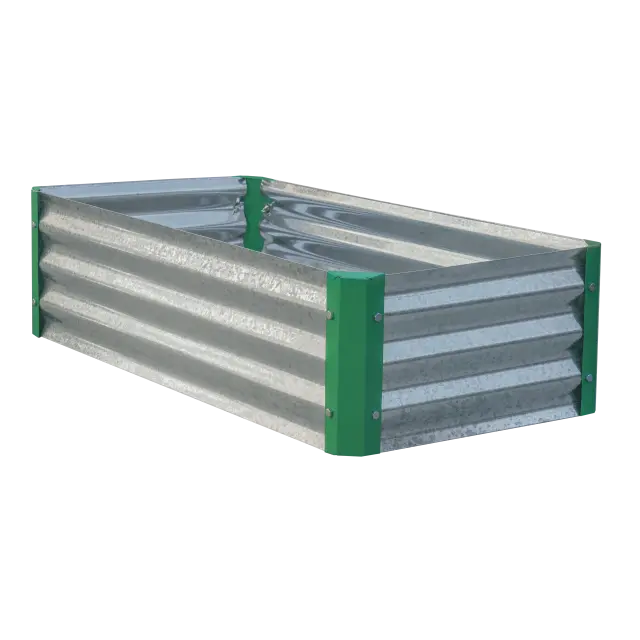
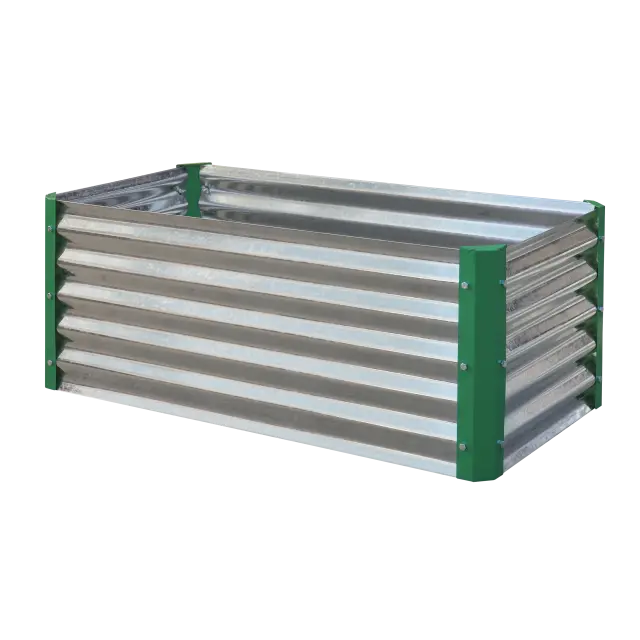
Filling a bed well matters more than the bed itself. Aim for roughly two parts screened garden soil or triple mix to one part compost, water it in and let it settle for a day before planting, then finish with an inch of mulch to slow evaporation. A raised bed drains faster than open ground, which is its advantage in a wet spring and its weakness in August, so plan on watering more often than you would a row garden. The wood beds here arrive as flat-pack kits with pre-cut boards and the galvanized ones bolt together from flat panels with the hardware supplied, so either can sit on lawn, gravel or a patio with no foundation.
Related: Planters and raised beds · Greenhouses · Plant support and protection · Metal vs wood raised beds
Which bed for what you grow
| Depth | Grows well | Notes |
|---|---|---|
| About 11–12 in. | Lettuce, spinach, herbs, radish, bush beans, strawberries | Shallow roots; the least soil to fill, so the cheapest to start |
| About 17–24 in. | Carrots, beets, potatoes, peppers, tomatoes | Deep enough for most root crops and for staking tall plants |
| Two tiers | A mixed bed, or gardening without bending as far | Costs more soil, but easier on the back and easier to net |
Raised bed FAQ
How much soil does a raised bed need?
Multiply length × width × depth in feet to get cubic feet, then divide by 27 for cubic yards. A 4 x 8 ft bed at 11 in. deep takes roughly 30 cu ft — about eight 4 cu ft bags. Fill with a mix of garden soil and compost rather than pure potting mix, which drains too fast in a large bed.
Is galvanized metal safe for growing food?
Yes. The zinc coating on galvanized beds is stable at garden soil pH, and the amount that migrates into soil is negligible compared with what plants already take up. Metal beds also warm faster in spring, which is the main reason to choose them in Canada.
Where should I put a raised bed?
Six to eight hours of sun for fruiting crops such as tomatoes and peppers; four is enough for leafy greens. Keep it within reach of a hose, and leave a path wide enough to kneel beside it — a bed you cannot reach the middle of gets neglected.
Do raised beds need to come apart for winter?
No. Metal and treated-wood beds stay in place year-round. Top the soil up with compost in the fall, since a bed settles a few inches each season, and leave the roots of spent plants in the ground to break down.
What sizes do you carry?
Sizes in the range: 2' x 4', 40" x 40", 4' x 4', 3' x 6', 4' x 8'.
Free shipping on most orders over C$88 — conditions in our Shipping Policy. Large items ship by freight carrier — see Freight delivery.
Browse our steel frame outdoor structures — the most popular choice for durability and weather resistance. Steel frames support gazebos, carports, sheds and garages built to withstand Canadian winters with powder-coated or galvanized finishes.
3 products
-
ShelterLogic
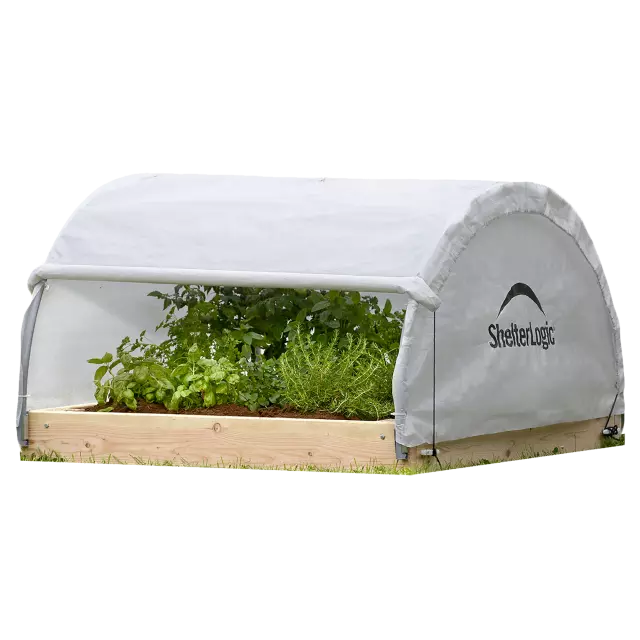
GrowIT Backyard Round Raised Bed Greenhouse, 4 × 4 ft, Translucent4 × 4 ft
$95.83Free shipping
Login and Registration Form
Sign in before you order so your purchase earns points. Orders placed while signed in earn points once they’re complete. Checking out as a guest? Create your account on the order confirmation page and that order is added to it. Every 100 points takes $1 off a later order. About Club IPATIO
Create your account to earn 100 points right away, plus 100 more if you subscribe to our newsletter. Your account also earns points on purchases once each order is complete, and for product reviews. Every 100 points takes $1 off a later order. About Club IPATIO