Every September, Canadian homeowners hit the same wall: the patio season is winding down, the cushions are still on the chairs, and the garage is already full. A deck box is the cheapest, fastest way to solve that — but only if you buy the right size. Most people shop by the number on the label (134 gallon, 150 gallon, 230 gallon) without knowing what those gallons translate to in real cubic feet, or whether a box that size will actually swallow a season's worth of outdoor cushions before the first frost hits Ottawa, Winnipeg or Halifax.
This guide breaks down deck box sizing the practical way: what a gallon rating really means, what fits inside a typical 134-gallon steel box, when a deck box stops being enough, and how to keep one usable through a Canadian winter instead of replacing it every three years.
What a Deck Box Is Actually For (and What It Is Not)
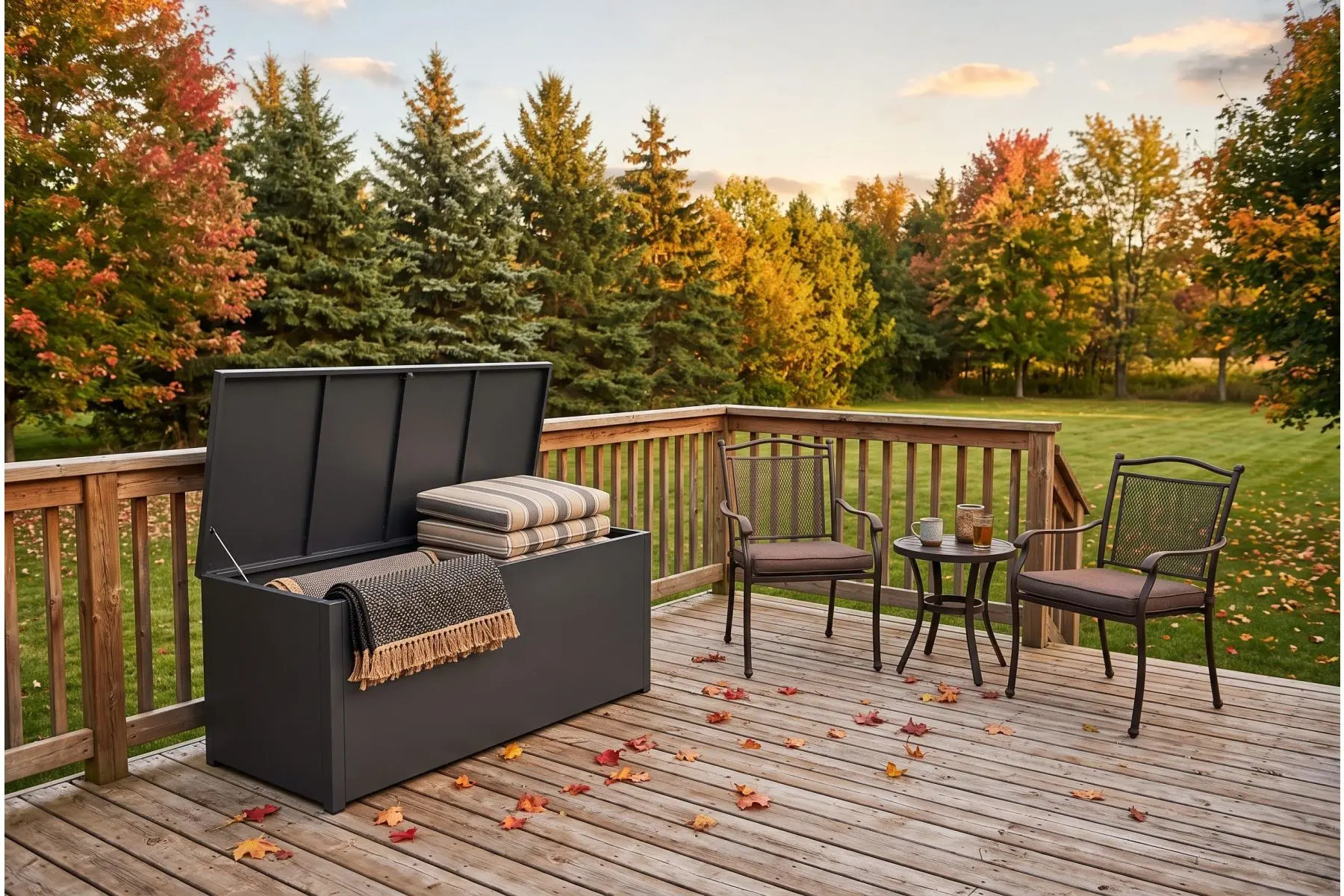
A deck box is a lidded, weather-resistant container sized to sit on a deck or patio without dominating it. Think of it as the outdoor equivalent of a hallway bench with storage: it holds the things you use weekly and want within arm's reach — cushions, throws, pool toys, barbecue tools, kids' gear, gardening gloves.
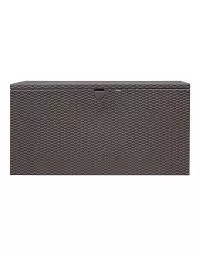
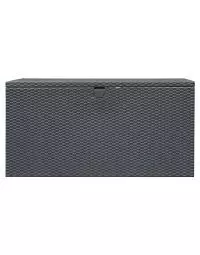
What it is not is a sealed, waterproof vault. This trips up a lot of first-time buyers. Steel deck boxes such as the Arrow Spacemaker are built from hot-dipped galvanized steel with a powder-coated basket-weave exterior and a corrugated floor that lifts contents off standing water, and they carry a 10-year limited warranty against rust-through. But they are not rated waterproof or even water-resistant in the technical sense: the lid overlaps rather than gaskets shut, so wind-driven rain and fine snow can find their way in around the seam.
The practical consequence is simple. Store things that tolerate getting damp and can dry out — cushions, covers, tarps, toys, tools. Do not store electronics, paper manuals, pet food, seed packets or anything with a paper label you need to survive the winter. If it must stay bone dry, it belongs indoors or in a shed with a proper door.
Deck Box Sizes: What 134 Gallons Really Holds
The gallon number on a deck box is a nominal volume rating, not a measurement you can plan around directly. Converting is easy: one US gallon is about 0.134 cubic feet, so the common sizes work out roughly like this.
| Gallon rating | Approximate volume | Typical use |
|---|---|---|
| 100–134 gallon | 13–18 cu ft | Cushions for a 4-piece set, throws, a folded outdoor rug |
| 150 gallon | ~20 cu ft | Cushions plus pool gear or kids' toys |
| 200 gallon | ~27 cu ft | Large sectional cushions, multiple covers |
| 230 gallon | ~31 cu ft | Full patio set plus bulky seasonal items |
Manufacturers measure slightly differently, which is why a 134-gallon box can list more than the raw conversion suggests. The Arrow Spacemaker deck box is rated at 134 gallons but lists 18.72 cubic feet of storage volume across a 9.21 square foot footprint — its exterior measures 52.25 inches wide by 27.5 inches deep by 26.13 inches tall, with a usable interior of 51.75 by 25.63 by 24.4 inches.
Those interior numbers matter more than the gallons. At just over 51 inches wide and 25 inches deep, you can lay two side-by-side stacks of standard chair cushions and still close the lid, or run longer sofa cushions lengthwise down one side with room for a rolled outdoor rug beside them. As a working estimate, a box in this class handles the seat and back cushions from a four-chair dining set plus two or three throws — enough for most Canadian decks, and not enough for a large sectional.
The other dimension people forget is height. At roughly 26 inches tall, a deck box of this size doubles as bench seating and sits below the top rail of most deck railings, so it does not block sightlines. If you plan to sit on it, check that the lid is rated for it — the Spacemaker uses a pneumatic lift that controls the lid on the way down, which also means no slammed fingers when a gust catches it.
Steel vs Resin: What Survives a Canadian Winter
Most deck boxes sold in Canada are either moulded resin or powder-coated steel, and the split matters more here than in milder climates.
Resin is lighter, cheaper and will never rust. The trade-off is cold-weather brittleness: UV exposure over several summers degrades the polymer, and a resin lid that has spent five Julys in direct sun can crack when it takes a load of ice in January. Resin boxes are also light enough to move in high wind when empty, which is why so many end up on a neighbour's lawn after a spring storm.
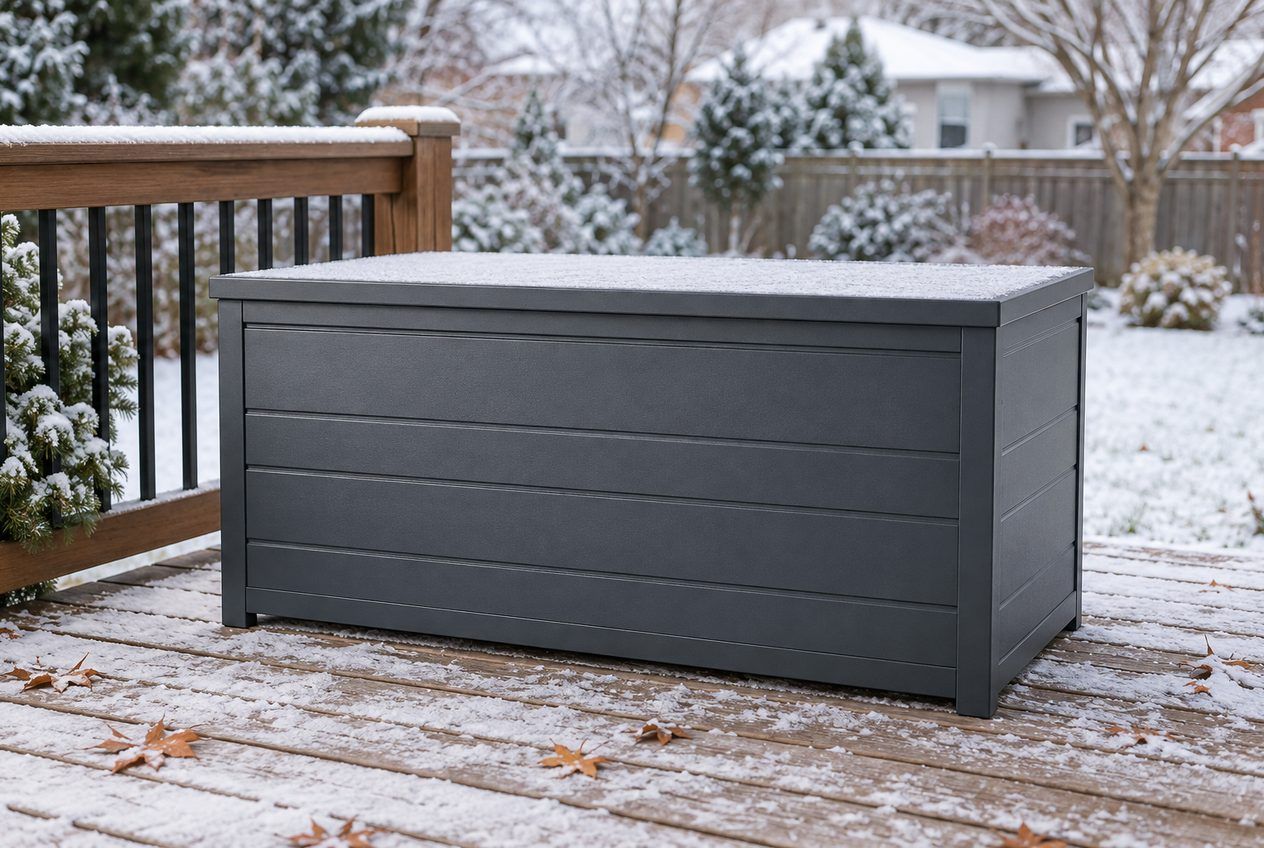
Steel is heavier, holds its shape in deep cold and does not go brittle. A 134-gallon steel box weighs around 73 pounds empty, so wind is a non-issue. The risk with steel is corrosion at cut edges and fasteners — which is exactly why hot-dipped galvanized construction matters in a country that salts its walkways. Look for galvanized steel rather than painted steel, and a warranty that specifically covers rust-through rather than just "materials and workmanship."
One more Canadian-specific point: security. Steel boxes commonly include an integrated hasp that accepts a standard padlock or combination lock. That is useful less for theft than for wind and curious raccoons, both of which will open an unlatched lid.
When a Deck Box Is Not Enough: The Capacity Ladder
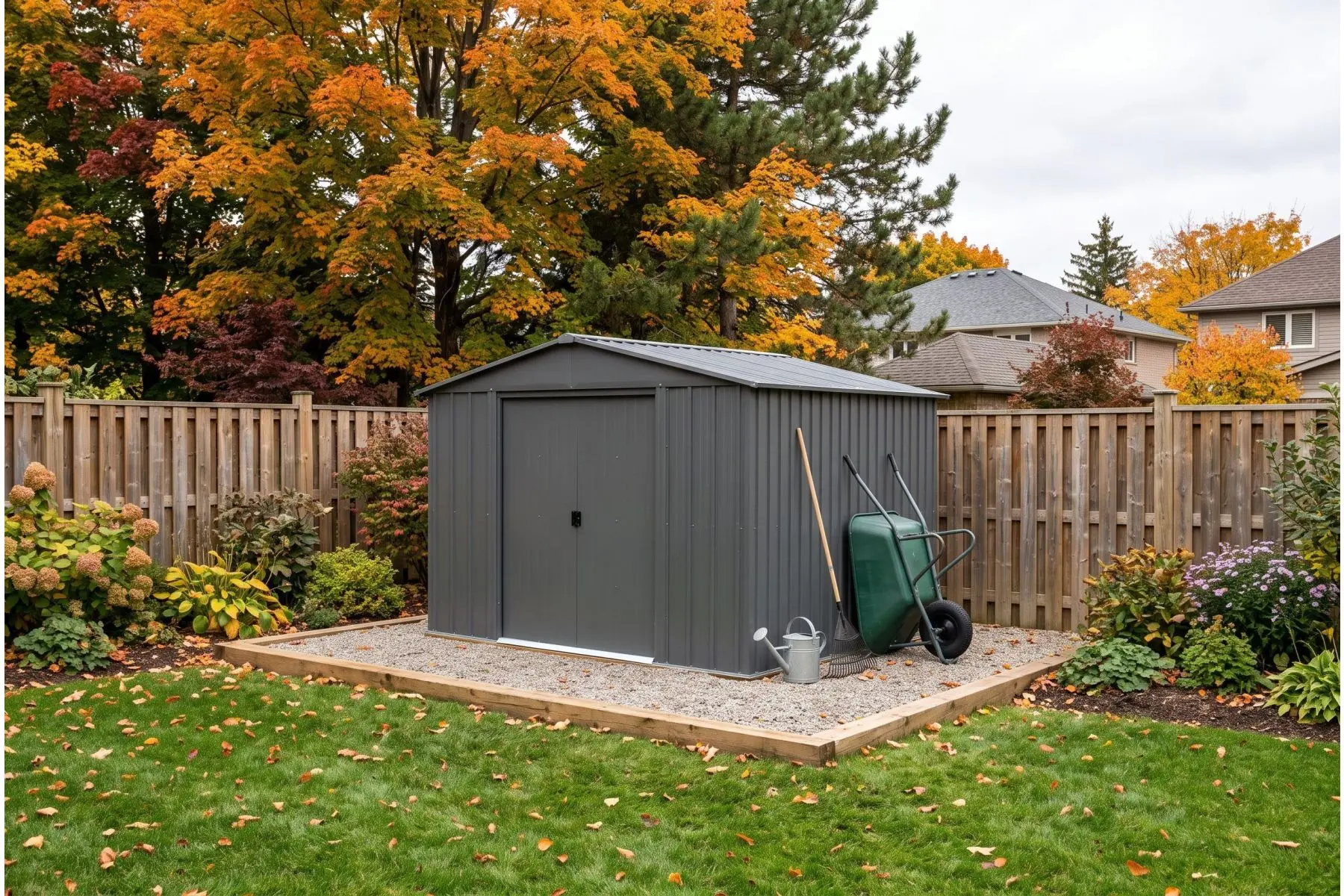
The most common mistake is buying a deck box to solve a shed problem. Deck boxes top out around 30 cubic feet; the moment you need to store a mower, a snowblower, bikes, or anything taller than about two feet, you have outgrown the category. Here is how the ladder actually runs through our range of storage boxes and sheds:
Products in this guide
| Option | Footprint | Storage volume | Height | Best for |
|---|---|---|---|---|
| 134-gallon deck box | 9.21 sq ft | 18.72 cu ft | 26 in | Cushions, throws, small gear; doubles as a bench |
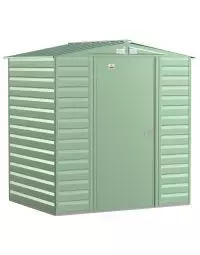
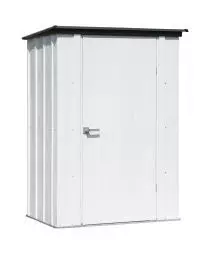
| Spacemaker patio shed, 4x3 | 12 sq ft | 74 cu ft | 74 in | Cushions plus serving carts, long-handled tools |
| Classic steel shed, 6x4 | 21 sq ft | 118 cu ft | 71 in | Garden tools, bikes, a push mower |
| Select steel shed, 6x5 | 27 sq ft | 167 cu ft | 79 in | Mower, wheelbarrow, full tool wall |
Notice the jump between the first two rows. Going from a deck box to a compact 4x3 patio shed roughly quadruples usable volume for only about three extra square feet of deck — because you gain six feet of vertical space. That is the single best value step in the whole range, and it is the right answer for anyone currently eyeing an "extra large" 230-gallon deck box. If you are already thinking about a walk-in structure, our guide to choosing a storage shed size walks through the 8x6 to 12x12 tier.
Where to Put It: Drainage, Snow and Clearance
Placement decides how long a deck box lasts far more than brand does.
Keep it off standing water. On a wooden deck, water drains between the boards and you are fine. On a concrete patio or a paver surface that ponds, set the box on a couple of pressure-treated sleepers or composite shims so air can move underneath. Trapped moisture under a steel base is the number one cause of premature rust in Canadian backyards.
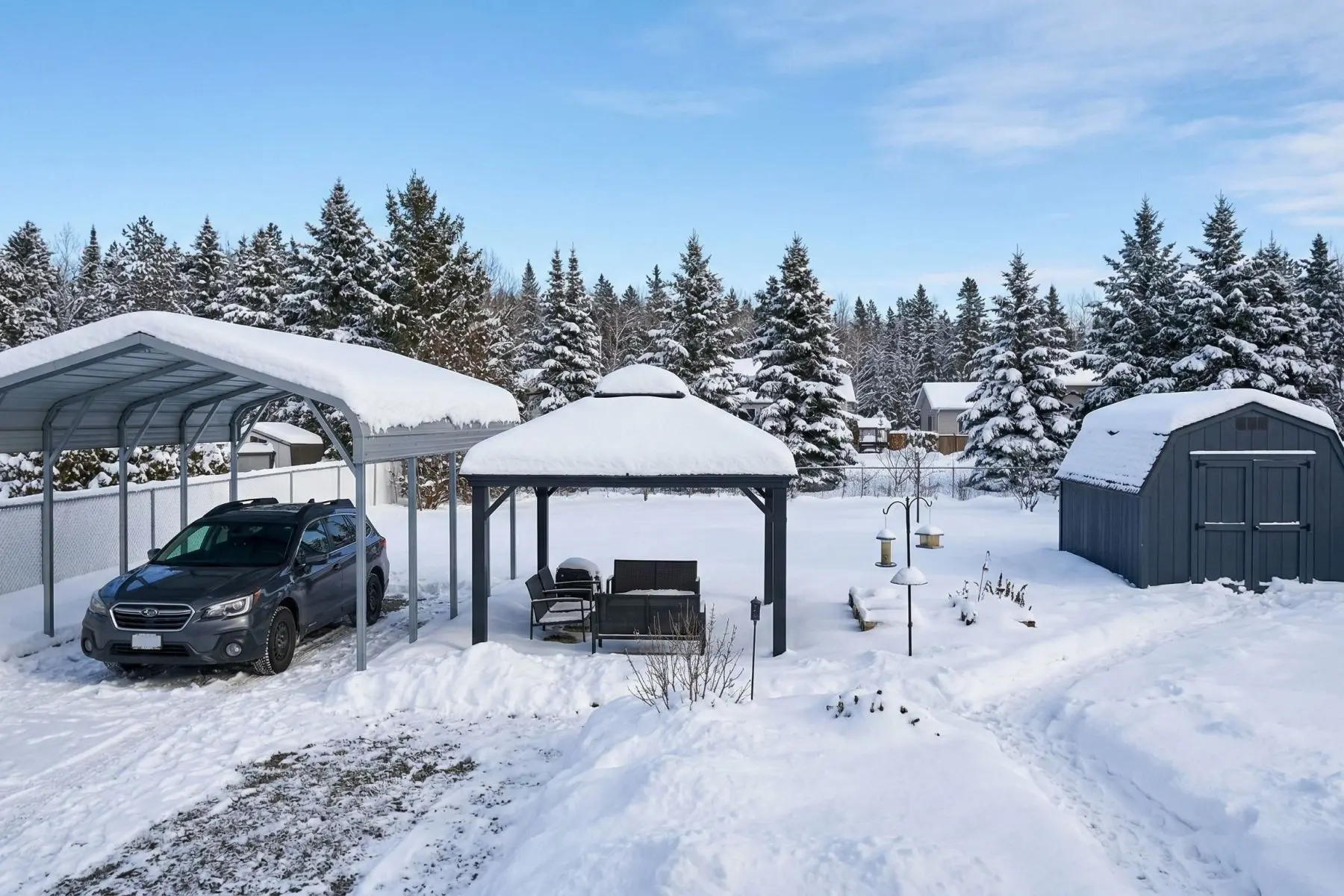
Mind the roofline. Do not park a deck box directly under an eave that drops snow or drips meltwater all winter. A sliding load of wet snow off a steel roof will dent a lid, and the constant freeze-thaw drip finds every seam.
Leave lid clearance. A lid needs roughly 24 to 30 inches of swing above the box. Tucking it tight under a deck railing, a window sill or the edge of a gazebo means you will be fighting it every time you open it — and in practice, you just stop using it.
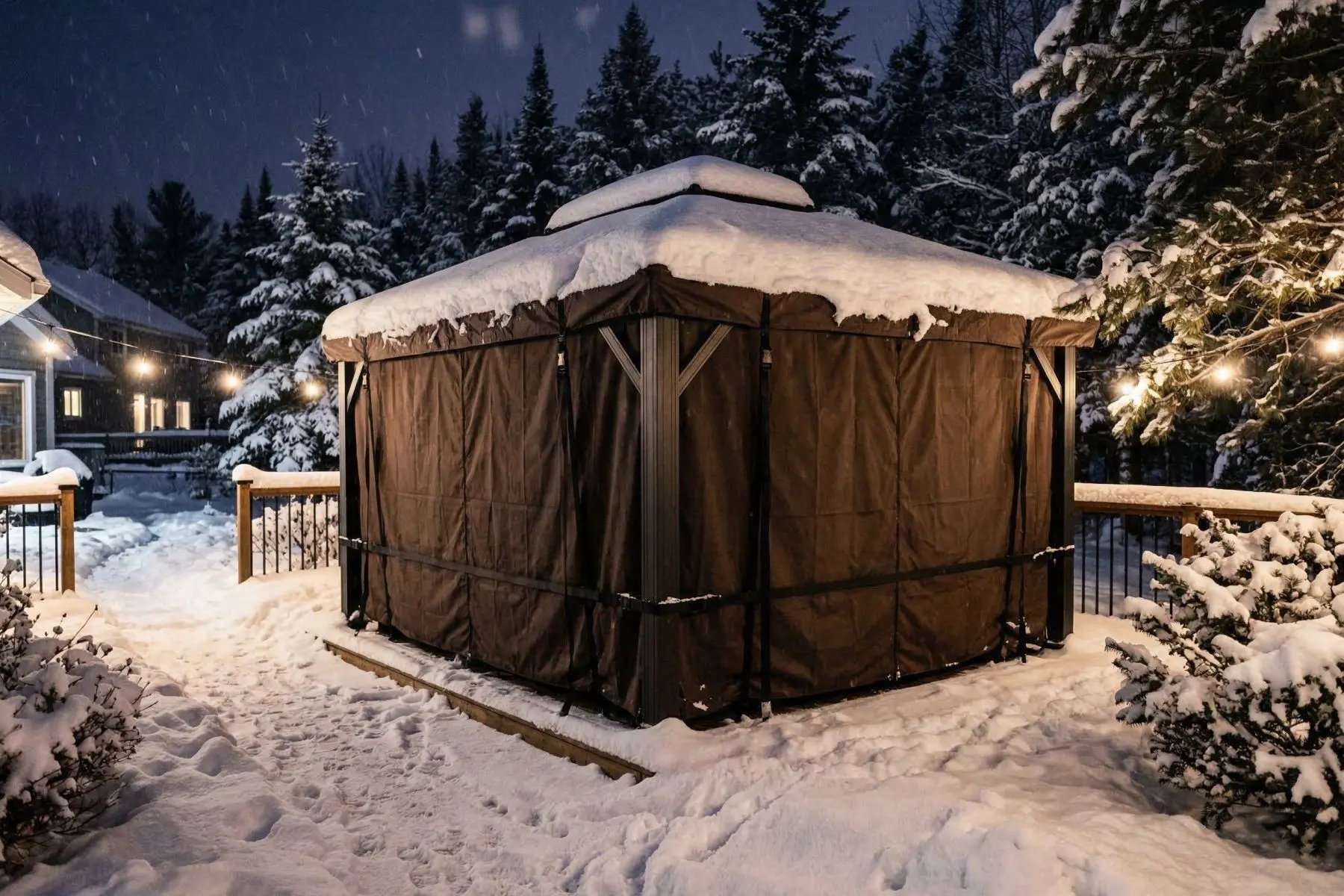
Think about winter access. If you will need what is inside during January, put the box where you can actually reach it after 40 centimetres of snow. If it is pure off-season storage, the far corner of the deck is fine.
Your Fall Pack-Away Checklist
Across most of Canada the window runs from the second week of September in the Prairies to mid-October on the coasts. Work through it in this order:
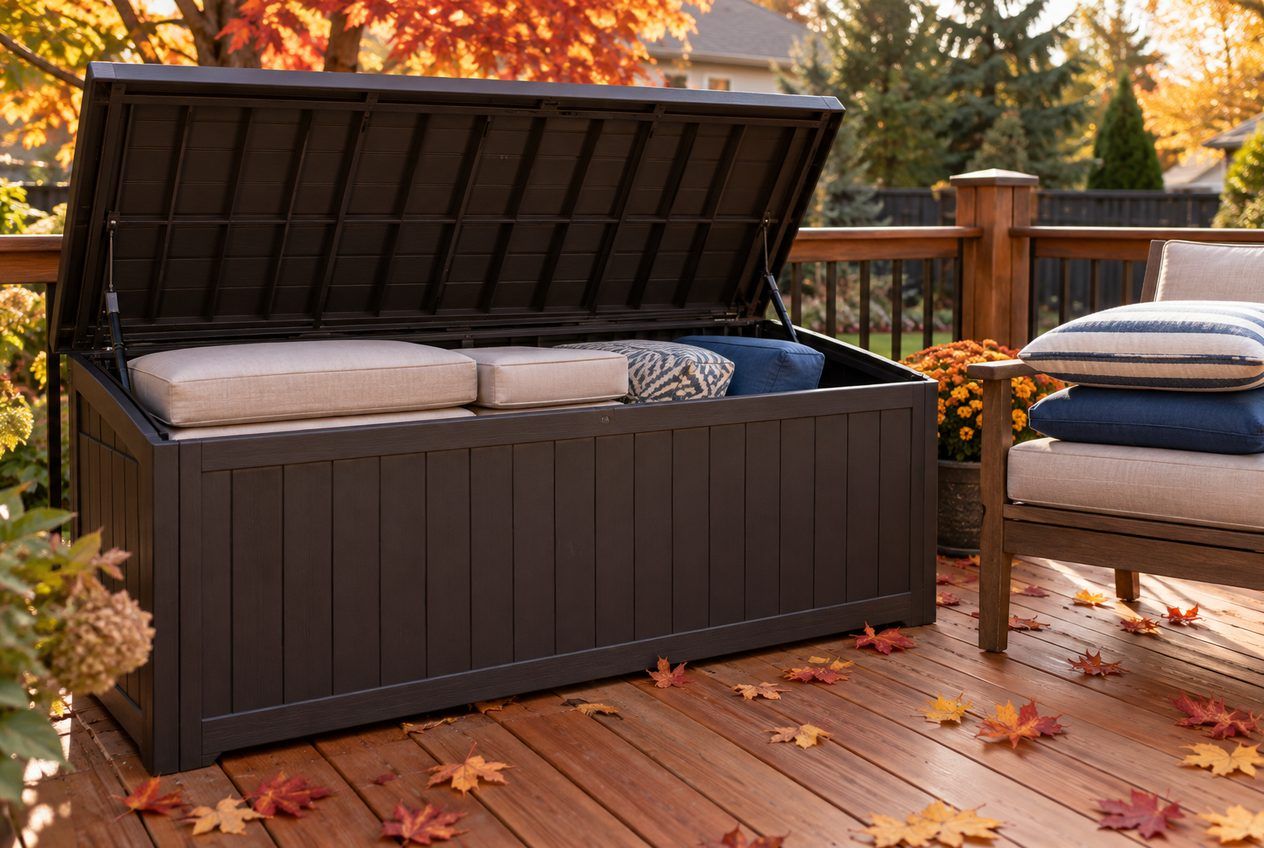
1. Dry everything completely. Outdoor cushions packed away damp will mildew by November, and no box will save them. Give them two dry, breezy days on a railing first.
2. Wash and let cure. Mild soap and water on cushion covers and patio furniture, then a full dry. Skip pressure washing on fabric.
3. Bag the fabric, not the box. Use breathable fabric storage bags or old pillowcases rather than sealed plastic bins inside the box. Plastic traps condensation; breathable bags let trapped moisture escape through the lid seam.
4. Load heavy at the bottom. Cushions on top, hard goods underneath. It keeps the lid closing flat, and a flat-closing lid lets snow slide off instead of pooling it.
5. Deal with what does not fit. Umbrellas, chair frames and side tables generally belong under winter covers or inside a shed rather than crammed into a box with the lid propped open.
6. Latch it. Padlock or clip the hasp before the first windstorm, not after.
Frequently Asked Questions
What size deck box do I need for patio cushions?
For a four-chair dining set, a 100 to 134 gallon box (roughly 13 to 19 cubic feet) is usually enough for seat and back cushions plus a couple of throws. A 134-gallon steel box gives you about 51 inches of interior width, which fits two side-by-side cushion stacks. Step up to 200 gallons or more if you are storing sectional cushions, or move to a compact patio shed if you also need room for umbrellas and long-handled tools.
Are deck boxes waterproof?
No. Nearly all deck boxes, including galvanized steel models, are weather-resistant rather than waterproof — the lid overlaps the body instead of sealing against a gasket, so wind-driven rain and powder snow can get in around the seam. A corrugated floor keeps contents up off any water that does enter. Store items that can tolerate humidity and dry out, and keep anything that must stay bone dry indoors.
Can a deck box stay outside all winter in Canada?
A galvanized steel deck box is designed to stay out year-round, which is why it carries a long rust-through warranty. Give it drainage underneath, keep it out of the path of snow sliding off a roof, and brush accumulated snow off the lid so it is not carrying a heavy ice load for months. Resin boxes are more vulnerable to cold-weather cracking after several seasons of UV exposure, so check the lid for stress lines each fall.
Is a deck box or a small shed better value?
It depends on what you are storing. A deck box wins when you want seating, a low profile that does not block a view, and 30-minute assembly. A compact 4x3 patio shed takes only about three more square feet of ground but offers roughly four times the volume and over six feet of height, which is the better buy the moment you need to stand things upright. Below about 20 cubic feet of needs, buy the box; above it, buy the shed.
Choosing Your Box
Start with what you are actually putting away, not with a gallon number. Measure your cushion stack, add the throws and the small gear, and compare it against the interior dimensions rather than the advertised capacity. If the total lands under about 19 cubic feet, a 134-gallon galvanized steel deck box on a deck with good drainage will serve you for a decade. If you are stretching to make it fit, skip the extra-large box and move up to a patio shed — the vertical space is worth more than another few gallons.
Browse our range of outdoor storage boxes, sheds and winter covers to get your patio furniture and outdoor cushions packed away before the first hard frost, and your deck will be ready to go again the moment the snow clears.