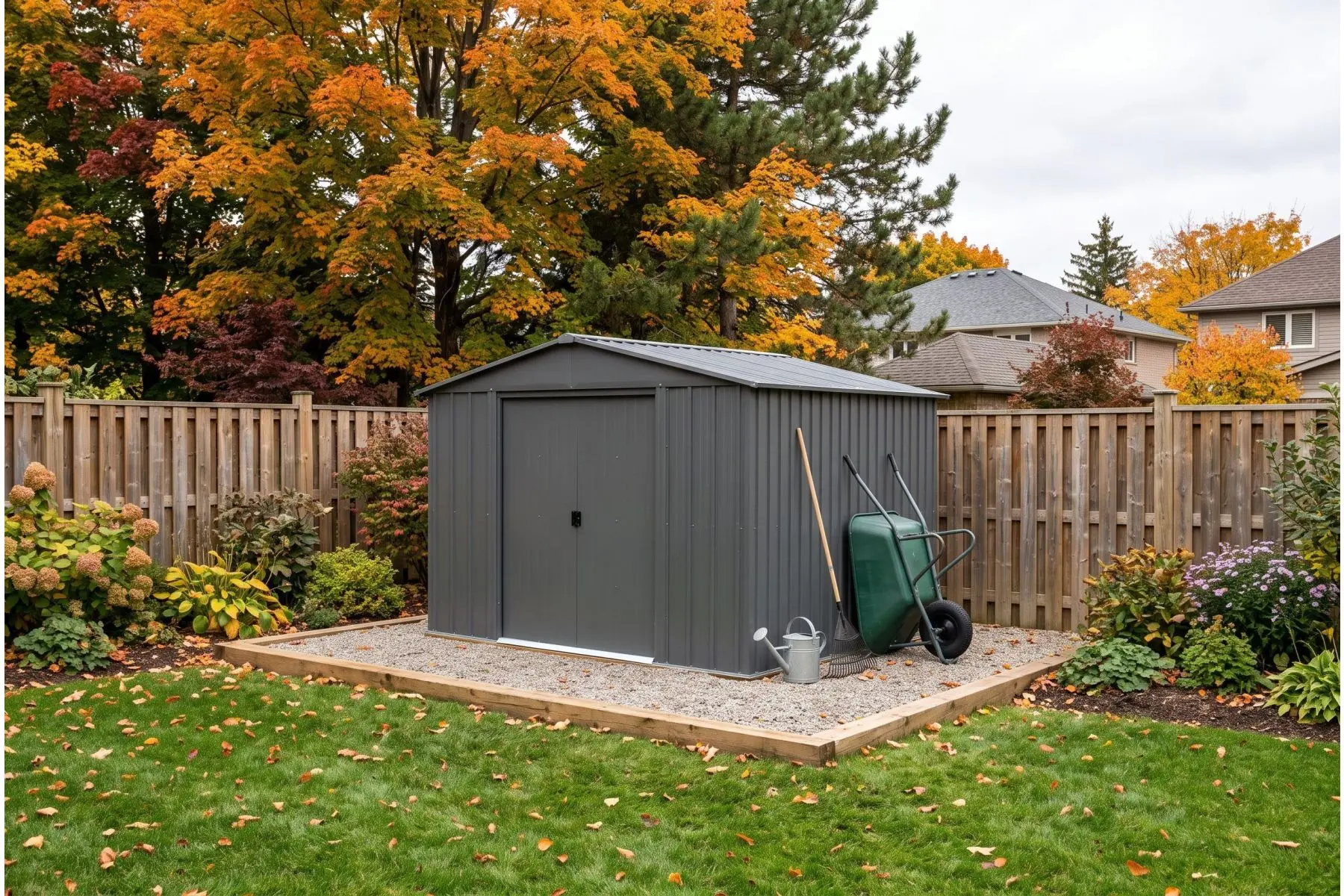
Type "8x6" into a Canadian search bar in September and there is a good chance you are shopping for a storage shed. It is the size most homeowners picture when the garage stops closing, the size that shows up in every backyard on the street — and the size that turns out to be either exactly right or frustratingly tight, depending on one measurement almost nobody checks before buying. This guide walks through what each shed footprint actually holds, using the real interior dimensions of the steel sheds we stock, so you can settle the 8x6 versus 10x8 versus 12x12 question before the first snowfall instead of after it.
Why 8x6 Became Canada's Default Shed Size
An 8x6 shed hits a sweet spot that is part geometry and part municipal reality. At roughly 43 square feet of usable floor and 248 cubic feet of volume, it swallows a push mower, a wheelbarrow, a spreader, a full wall of long-handled tools and a season's worth of patio cushions without eating the yard. Its footprint also fits the side-yard strip between a house and a fence on most suburban lots in Mississauga, Laval, Surrey or Calgary — the leftover space that is too narrow for anything else.
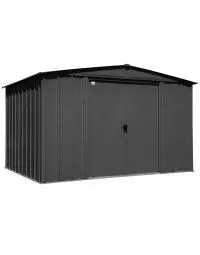
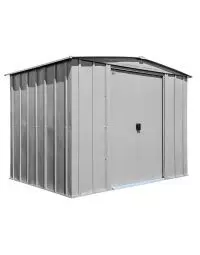
Price reinforces the habit. The Arrow Classic Steel Storage Shed, 8x6 sits at $889 at the time of writing, only about $140 above the 6x5 and $80 below the 8x8. When the jump to the next size up costs less than a cord of firewood, it is worth asking whether 8x6 is genuinely your size or just the default.
The honest answer for a lot of Canadian households: 8x6 is right if you are storing garden tools and seasonal gear, and one size too small the moment a snow blower, a bike rack or a second set of patio furniture enters the picture. Storage sheds are one of the few backyard purchases people almost never regret buying larger.
Measure the Door, Not Just the Floor
Floor area tells you what fits once things are inside. The door opening tells you what gets in at all — and it is where shed lines differ far more than the marketing suggests.
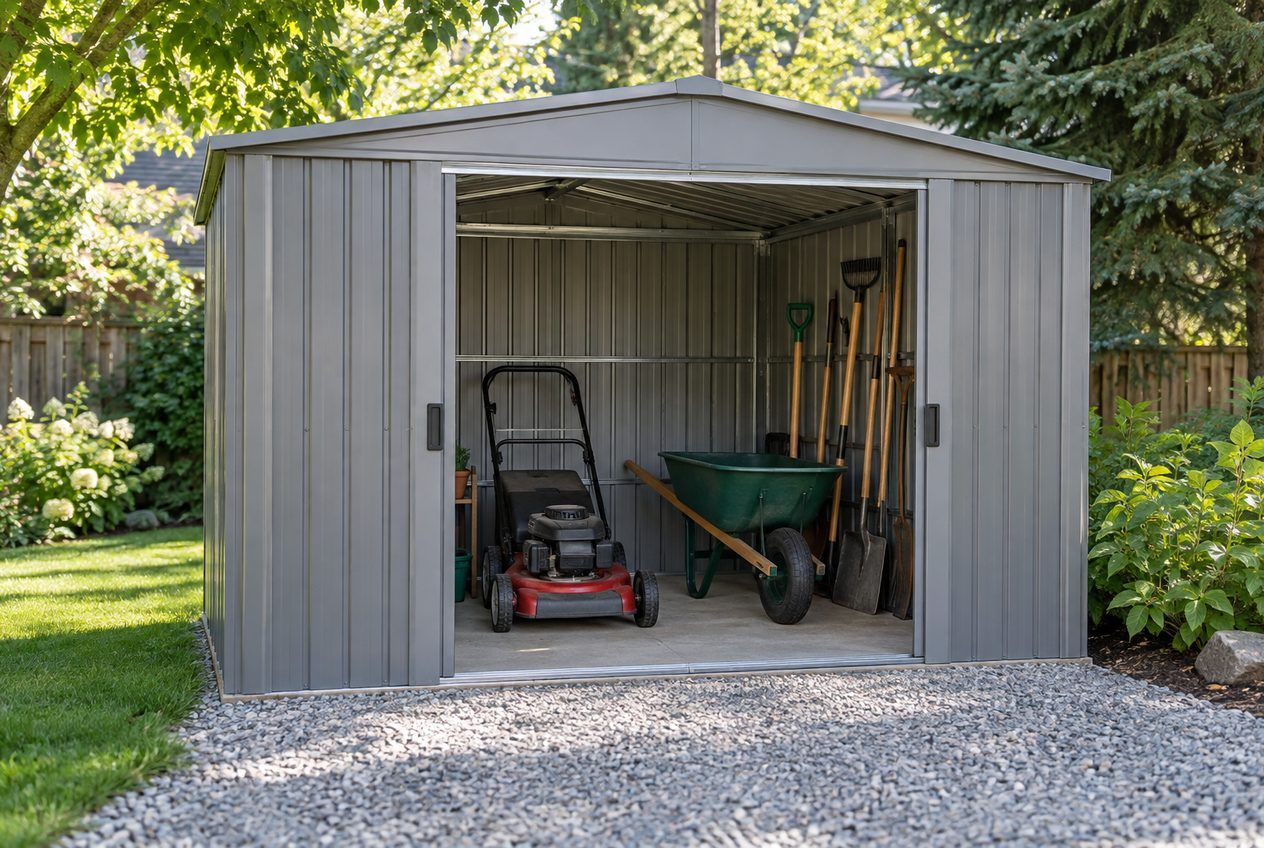
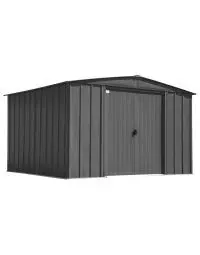
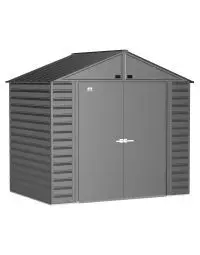
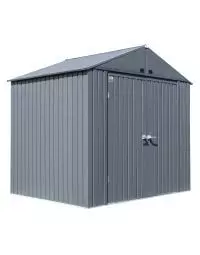
Take three sheds with the same 8x6 nominal footprint. The Arrow Classic Steel Storage Shed, 8x6 has a sliding-door opening 43.5 inches wide and 63 inches high. The Arrow Select Steel Storage Shed, 8x6 opens to 59.25 inches wide and 69 inches high. The Arrow Elite Steel Storage Shed, 8x6 opens to 63.44 inches wide and 69.77 inches high with reinforced swing doors. Same square footage on the price tag, a 20-inch difference at the threshold.
That gap decides real questions. A two-stage snow blower is commonly 26 to 30 inches wide and clears any of the three. A wheelbarrow tipped on its side or a lawn tractor in the 40-inch class does not clear a 43.5-inch sliding opening with any comfort, and pushing bulky items through a narrow door in November is exactly the annoyance that makes a shed go unused. Before you compare prices, measure the widest thing you plan to store, add four inches of knuckle room, and use that number to filter the list.
The Shed Size Ladder: What Each Footprint Actually Holds
Nominal sizes are exterior labels. The numbers below are the usable interior figures published for the steel sheds we carry, which is what you should be planning against.
| Nominal size | Usable floor | Storage volume | Door width | Realistic contents | From |
|---|---|---|---|---|---|
| 4x3 Spacemaker patio shed | 12 sq ft | 74 cu ft | 30.4 in | Cushions, deck tools, pool chemicals | $516 |
| 4x7 Yardsaver lean-to | 26 sq ft | 154 cu ft | 38.5 in | Bikes, trimmer, tools against a wall | $699.99 |
| 6x5 | 27 sq ft | 153 cu ft | 32 in | Push mower plus hand tools | $749.98 |
| 8x6 | 43 sq ft | 248 cu ft | 43.5 in | Mower, wheelbarrow, tool wall, seasonal bins | $889 |
| 8x8 | 59 sq ft | 338 cu ft | 43.5 in | Above plus a workbench or bikes | $969 |
| 10x8 | 74 sq ft | 432 cu ft | 55.5 in | Snow blower, mower and a walking aisle | $1,234.60 |
| 10x12 | 115 sq ft | 674 cu ft | 55.5 in | Two machines, shelving, off-season furniture | $1,376.98 |
| 12x12 | 138 sq ft | 913 cu ft | 67.9 in | Workshop plus full equipment storage | $2,058.98 |
Two things jump out of that table. First, volume climbs faster than floor area, because taller lines add headroom as well as footprint — an 8x8 holds 338 cubic feet against the 8x6's 248, a 36 percent gain for $80. Second, the price per square foot falls sharply through the middle of the range and then rises again at 12x12, where sheds cross from storage into small-building territory. If you are torn between two adjacent sizes, the larger one is almost always the better value per cubic foot.
Wall Height Is the Hidden Variable
Two sheds can share a footprint and feel completely different inside. The Arrow Classic line uses 65-inch walls with a low gable roof designed to drain water rather than maximize headroom. The Arrow Select line raises that to 71-inch walls with a pitched roof and built-in air vents. The Arrow Elite line goes to 72-inch walls with a high gable, which is why an Elite 8x6 reports 314 cubic feet against the Classic's 248 on nearly the same slab.
Height changes how you use the space. A 71.63-inch interior peak on a Classic 8x6 means most adults will stoop near the walls; the 90-inch interior peak on a Select or Elite lets you stand upright, hang a bike vertically, or run shelving above head height. If your plan involves wall-mounted storage, ladders or a pegboard, buy height before you buy floor.
Material differs too. Classic and Select sheds are galvanized steel with a Sherwin-Williams paint finish; the Elite series uses Galvalume — steel plated with an aluminum-zinc alloy — with a textured wrinkle finish and gable vents. On the coast in British Columbia or anywhere road salt drifts, that corrosion resistance is worth the premium. The Ironwood Steel Hybrid Shed Kit takes a different route again: an all-steel frame, roof and door that you clad in your own wood paneling (sold separately) for a 59 square foot 8x8 or 74 square foot 10x8 that looks like a wood shed.
The Pad Is Bigger Than the Shed
The single most common sizing mistake is pouring or levelling a pad to the nominal size. Foundation requirements run larger than the label: the Classic 8x6 asks for 97.5 by 68.75 inches, the 10x8 for 121 by 92.75 inches, and the 12x12 for 143.88 by 143.25 inches. Build to the nominal number and the shed hangs over the edge, water tracks under the walls, and the base rusts from below.
Products in this guide
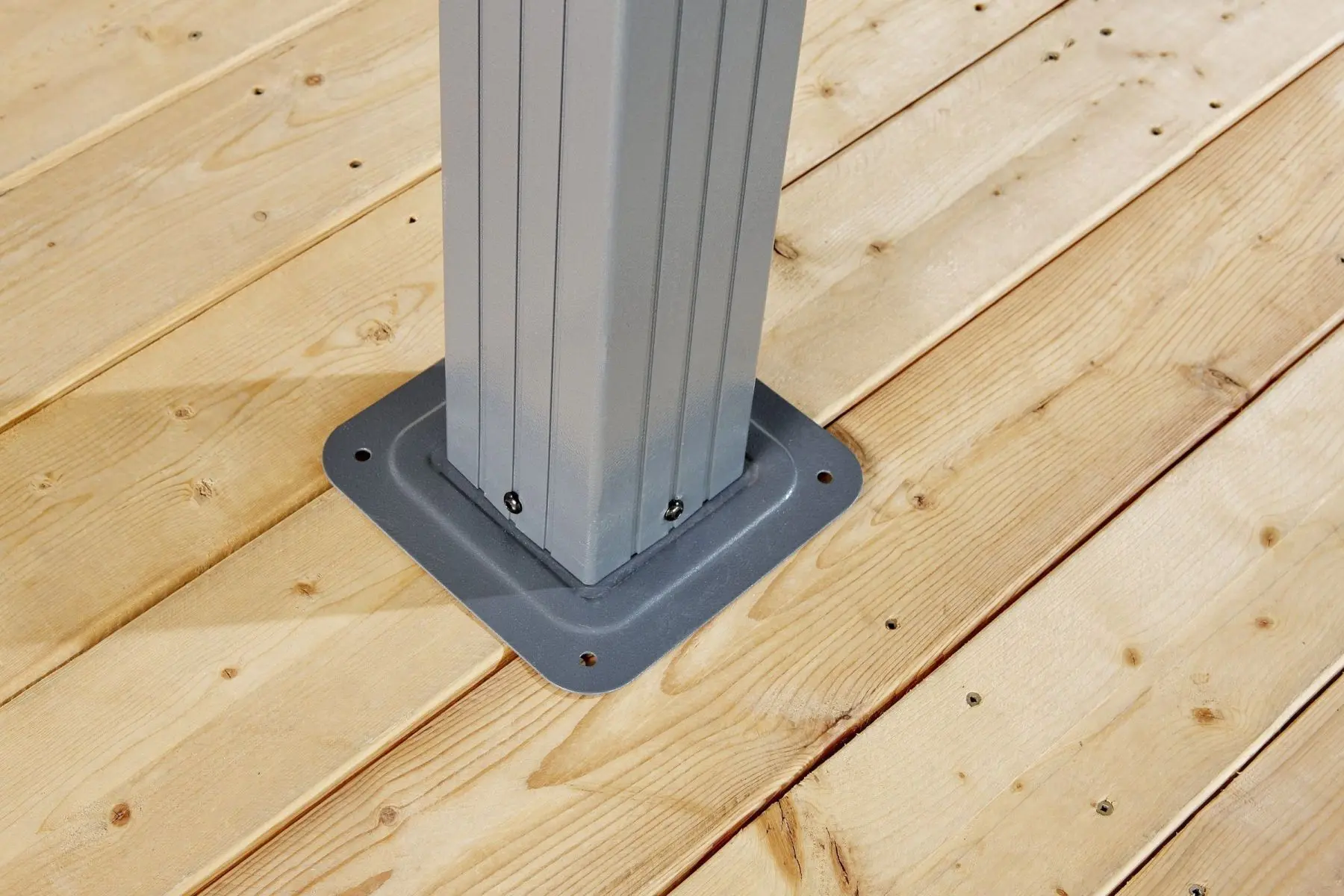
You have three sound options in Canadian conditions. A concrete slab is the gold standard and pairs with a concrete anchor kit. A compacted gravel base — four to six inches of crushed stone, screeded flat and framed — drains well through spring melt and freeze-thaw cycles. Or use a floor frame kit, a hot-dipped galvanized framework that lifts the floor off grass, gravel or bare earth for drainage; the frame supplies the structure only, and you finish it with 5/8-inch minimum exterior-grade plywood with waterproof adhesive. Whichever you pick, add anchors. Arrow's ground auger anchor kit twists into soil and cables to the frame with no concrete required — cheap insurance against the wind that flattens unanchored buildings every spring.
Sizing for Canadian Snow, Wind and Permits
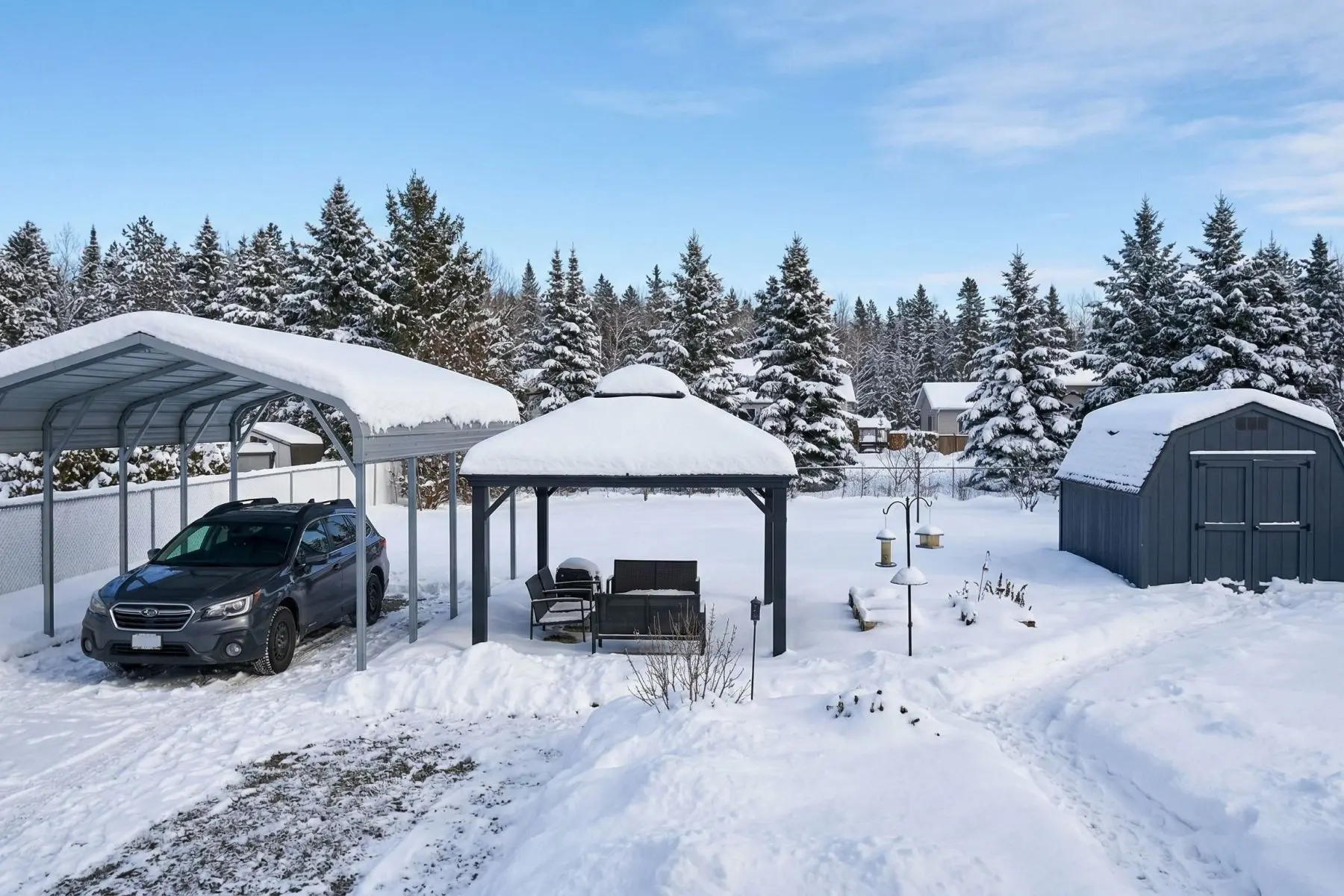
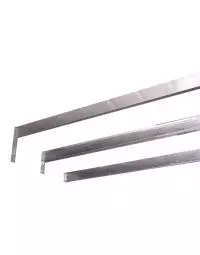
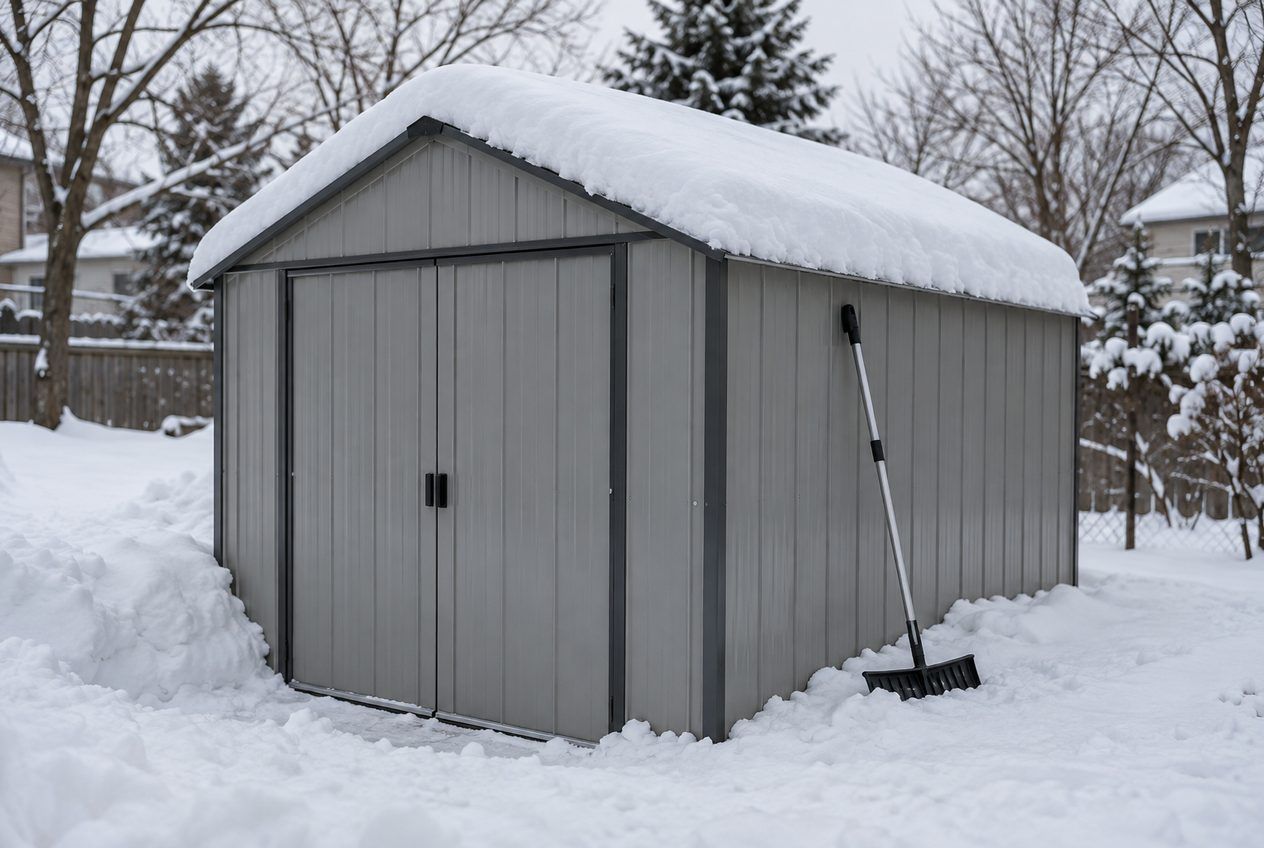
Snow load is the reason shed sizing in Canada is not the same exercise as in Georgia. A wet late-winter snowpack can load a roof heavily, and the flatter the roof the more of it stays put. Two practical responses: favour the steeper high-gable profiles of the Select and Elite lines if you are in the snow belt, and add a roof strengthening kit, which adds beams and gable braces specifically to improve snow load. Kits are sold by size band — one covers 6x5 and 8x6 units, another covers 10x6 through 10x10, another 10x12, another 10x13 and 10x14 — and Arrow recommends installing them during initial assembly, because retrofitting one onto an assembled shed can require partial disassembly. If you are ordering a shed for a Quebec, Ontario or Prairie winter, order the kit in the same cart.
Then there is paperwork. Many Canadian municipalities exempt small accessory buildings from a building permit below a floor-area threshold — around 10 square metres (roughly 108 square feet) is a common line, but every municipality sets its own, and setback rules from property lines and easements apply regardless of size. Look at the ladder above and you will see why this matters: an 8x6, 8x8 and 10x8 sit comfortably under that mark, while a 10x12 at 115 square feet and a 12x12 at 138 square feet are likely to need a permit. Five minutes on your city's website before checkout is cheaper than moving a shed.
Which Size Should You Buy?
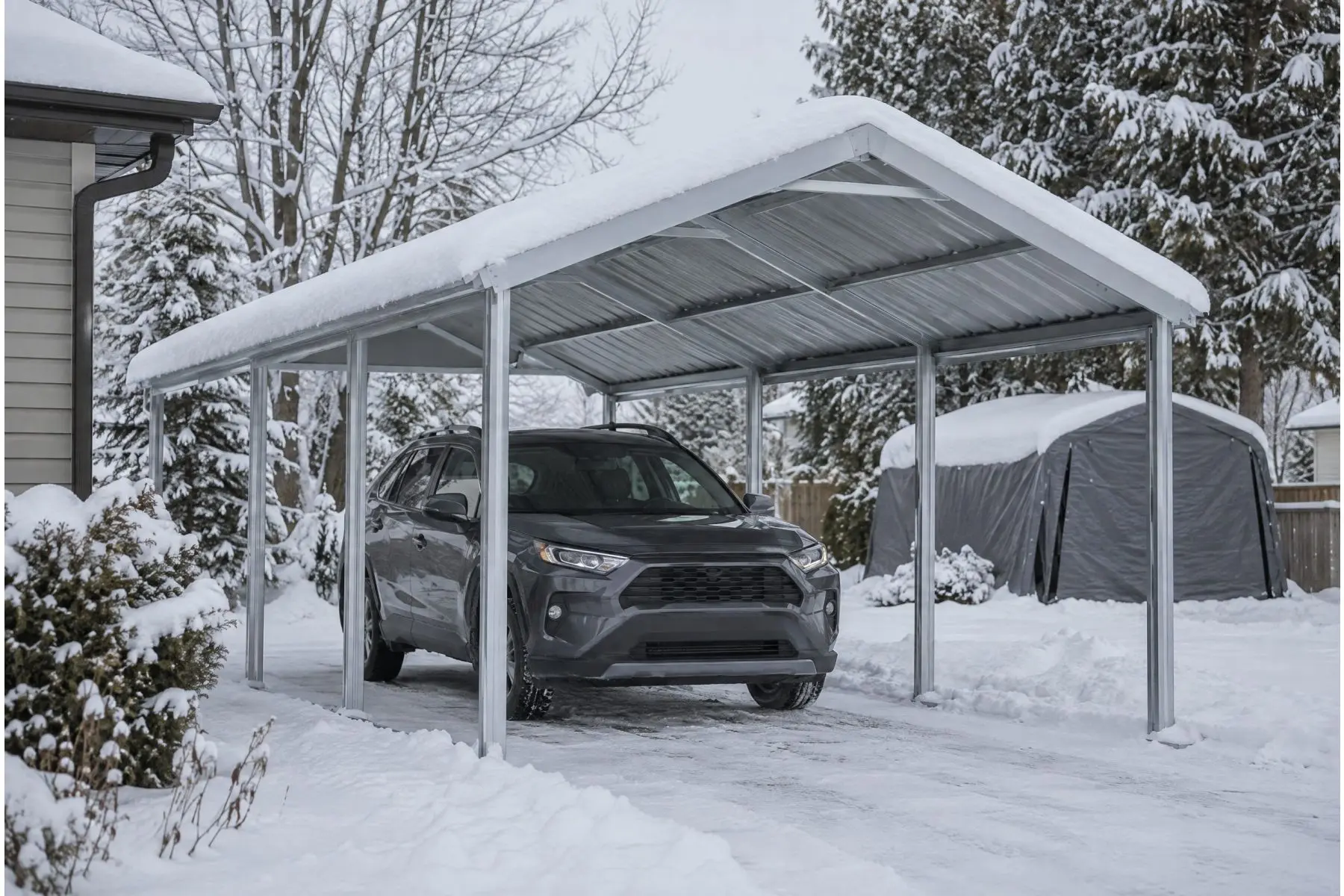
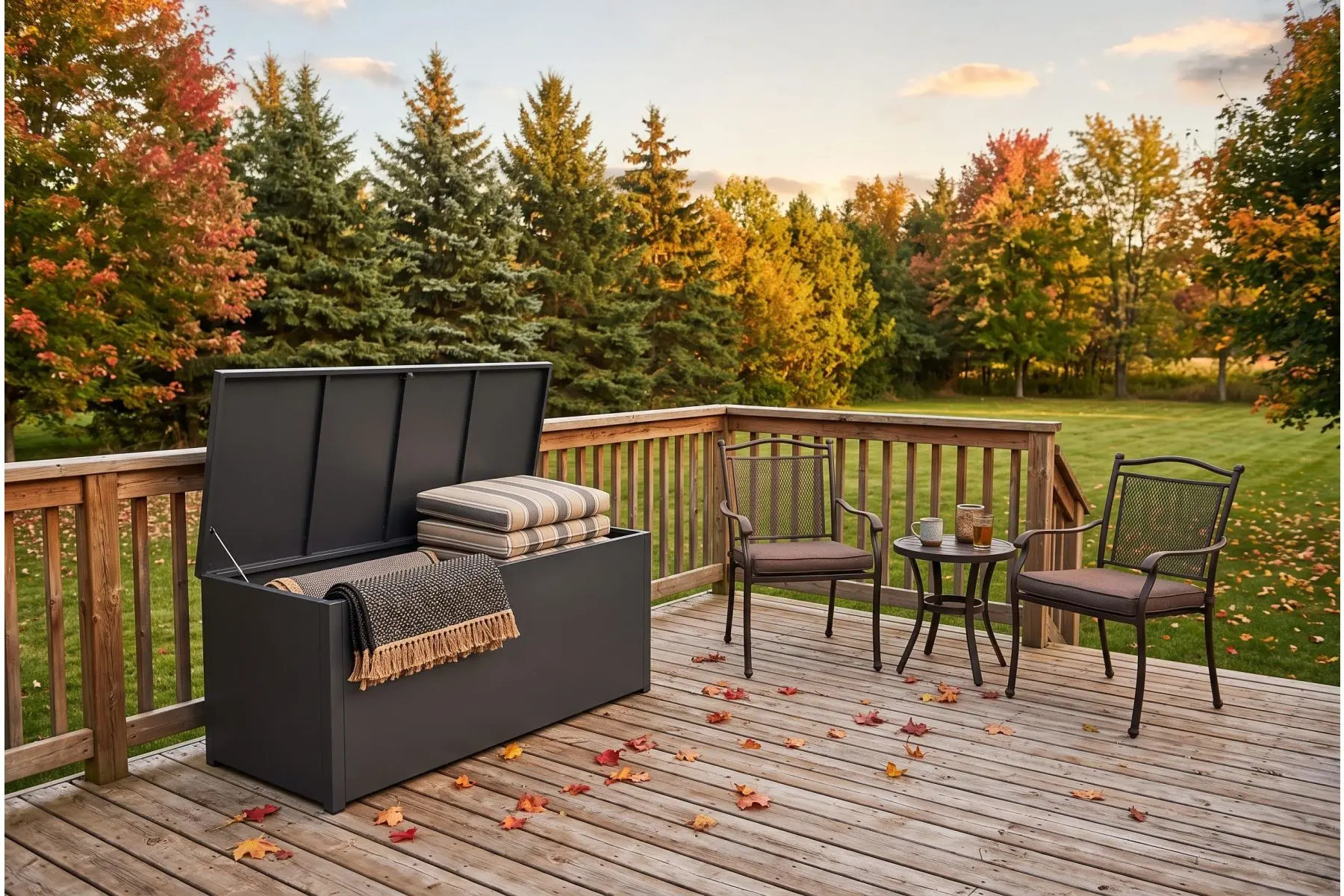
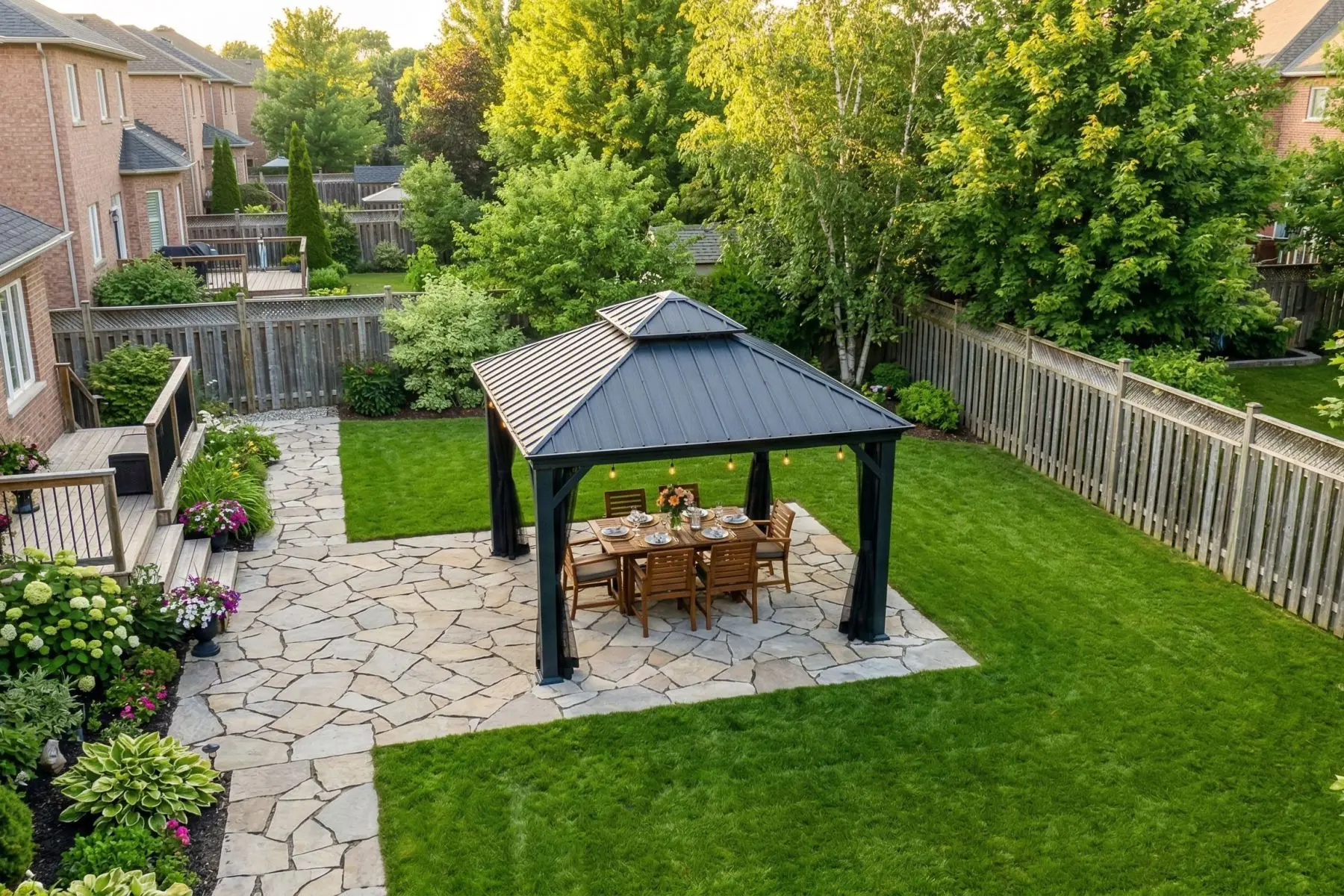
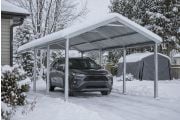
If the storage problem is garden tools, cushions and pool supplies, a 4x3 patio shed or a 6x5 solves it without dominating a small yard, and storage boxes handle the overflow. If it is a mower, a wheelbarrow and a wall of tools, 8x6 is the sensible floor — and 8x8 is the better buy at $80 more. If a snow blower is involved, or two people need to get past each other inside, start at 10x8, where the 55.5-inch door and 74 square feet give you an aisle instead of a wall of stuff. If you want a workbench, seasonal patio furniture and both machines under one roof, 10x12 or 12x12 is the real answer — and at that point compare against carports and garages, which change the cost equation once you cross the permit threshold anyway.
Whatever the size, budget for the extras that make the shed last: the pad, the anchors, the floor frame, and the roof strengthening kit. Together they add a few hundred dollars to an $889 shed and roughly double how long you are happy with it.
Frequently Asked Questions
What can actually fit in an 8x6 shed?
An 8x6 steel shed gives you about 43 square feet of usable floor and 248 cubic feet of volume, with a 94.75 by 66 inch interior. That comfortably holds a push mower, a wheelbarrow, a spreader, a wall of long-handled tools and several bins of seasonal gear. The limit is usually the 43.5-inch door on the Classic line rather than the floor space — if you need to move a lawn tractor or a wide cart through it, step up to a Select or Elite 8x6, which open to 59 and 63 inches respectively.
Do I need a building permit for a shed in Canada?
It depends entirely on your municipality. Many Canadian cities exempt accessory buildings under roughly 10 square metres (about 108 square feet) from a building permit, which covers sizes up to 10x8, while a 10x12 at 115 square feet or a 12x12 at 138 square feet usually crosses the line. Setback and lot-coverage rules apply at every size, so check your city's zoning page before you order rather than after the shed arrives.
How much bigger than the shed does the foundation need to be?
Larger than the nominal size in every case. An 8x6 Classic needs a 97.5 by 68.75 inch base, a 10x8 needs 121 by 92.75 inches, and a 12x12 needs about 143.88 by 143.25 inches. Level the pad to the published foundation dimensions, not to the name on the box, and either pour concrete, build a framed gravel base, or use a floor frame kit finished with 5/8-inch exterior-grade plywood.
Will a steel shed handle Canadian snow?
Yes, with the right roof and a bit of preparation. Snow slides off pitched and high-gable roofs more easily than off low-gable profiles, and a roof strengthening kit adds beams and gable braces specifically to improve snow load. Install the kit during assembly — adding it later can mean partially taking the shed apart. Clearing heavy wet snow off the roof after major storms and keeping the doors free of ice buildup does the rest.
Final Thoughts
Shed shopping goes wrong when people compare price per size instead of fit per dollar. Start with the widest item you own, check the door opening, plan the pad at the published foundation dimensions, and then pick the largest size your yard and your municipality allow. Browse the full range of sheds from Arrow and ShelterLogic, and pair whichever you choose with the shed accessories — anchors, floor frames, roof strengthening kits — that keep it standing through a Canadian winter.