
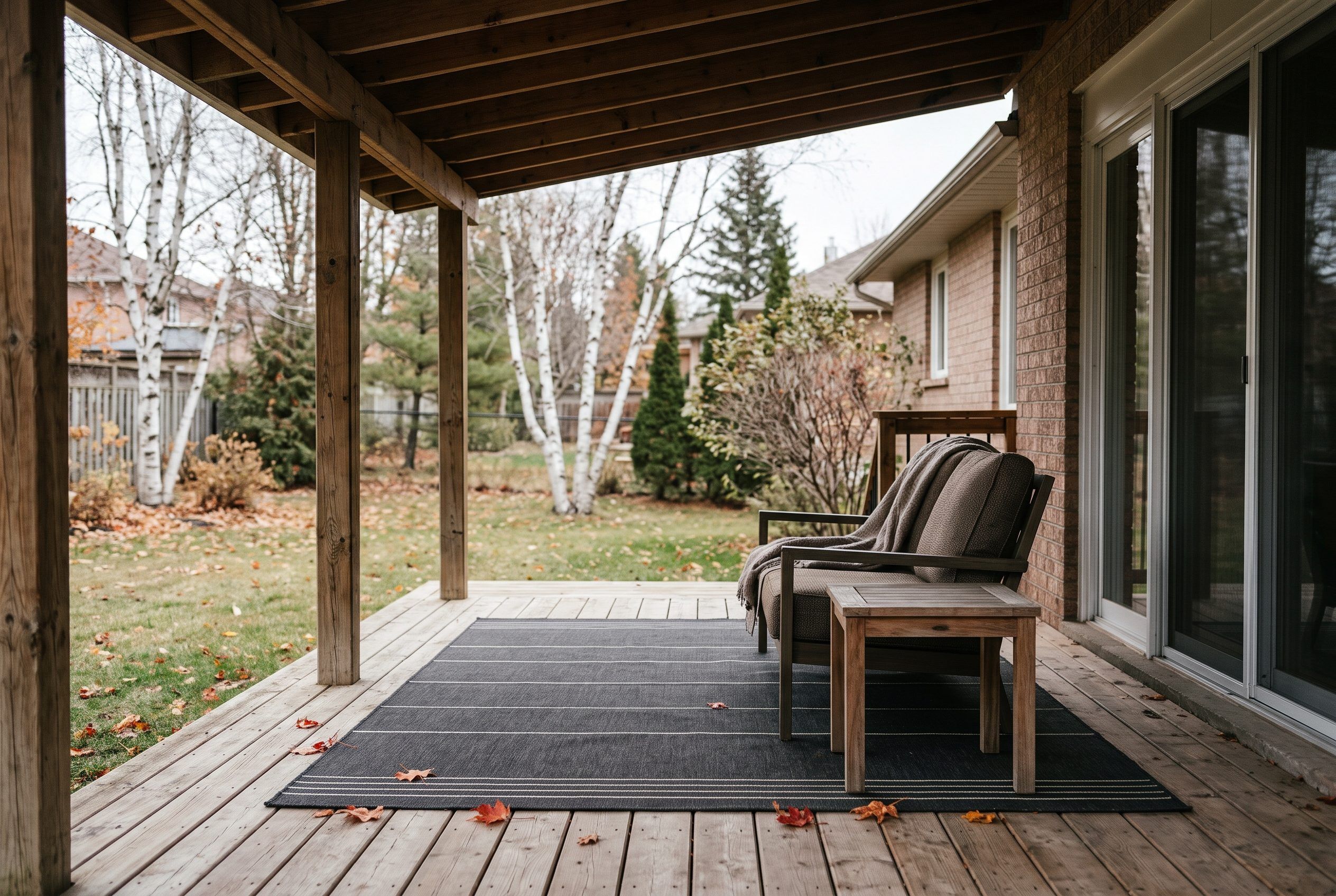
A rug is the cheapest thing you can put on a deck to make it feel like a room, and in Canada it is also one of the easiest things to get wrong. Between May and October an outdoor rug takes direct sun, thunderstorms, pollen, pine needles and the occasional barbecue drip. By early November it is sitting under wet leaves and the first slushy snow. The outdoor rugs that survive that cycle are not the expensive ones — they are the ones woven from the right fibre, sized to the furniture they sit under, and brought inside at the right moment. This guide walks through all three.
The short answer
Choose a flat-woven rug made from recycled polyester (RPET), size it so that it reaches at least 18 inches past your furniture on every side, put a non-slip pad underneath it, and roll it up and store it indoors before the first lasting snow. For most Canadian decks that means a 5 × 7 ft rug under a bistro set or on a balcony, an 8 × 10 ft under a four- to six-seat dining table or a sectional, and a 9 × 12 ft only when the seating area is genuinely large.
What outdoor rugs are actually made of
Almost every outdoor rug in our catalogue is woven from RPET yarn — recycled polyester spun from used plastic bottles. The bottles are sterilised, melted and drawn into polyester yarn, and the fibre that comes out has high tensile strength, good abrasion resistance, low moisture absorption and genuine UV resistance. The last two matter most in a Canadian backyard. Low moisture absorption is why a Saturday thunderstorm does not leave you with a heavy, sour mat on Sunday morning. UV resistance is why a south-facing deck in Calgary or Kelowna does not bleach the colour out of the weave in a single summer.
Low moisture absorption is not the same as waterproof, and this is the distinction that decides how long your rug lasts. Water passes through a flat weave and runs away under it, which is exactly what you want — but the yarn still needs air to dry out afterwards. The manufacturer is blunt about it: a rug left outdoors through long spells of rain has to dry properly between uses, or the fibres will eventually break down. On a covered deck that happens by itself. On an open stone patio through a wet Ontario October, it does not.
One more practical consequence of the fibre: these rugs are light. That is why they can be hosed, hung over a railing and carried indoors by one person at the end of the season — something you cannot say about a wool rug of the same size.
What size outdoor rug do you need?
Sizing is where most people go wrong, and there is one rule that fixes it: the rug should extend at least 18 inches beyond the edge of the furniture on every side, so that chair legs stay on the rug when someone pushes back to stand up. A rug that stops short of the chairs reads as a bath mat, and every chair leg catches on its edge. Measure your seating area first, then shop — not the other way round.
| Rug size | Best for | Seats comfortably |
|---|---|---|
| 5 × 7 ft | Bistro table with two chairs, a balcony, a small conversation corner | 2 |
| 8 × 10 ft | Standard dining table with chairs, or a sectional sofa set | 4–6 |
| 9 × 12 ft | Large dining table with eight or more chairs, or a complete outdoor living room | 8+ |
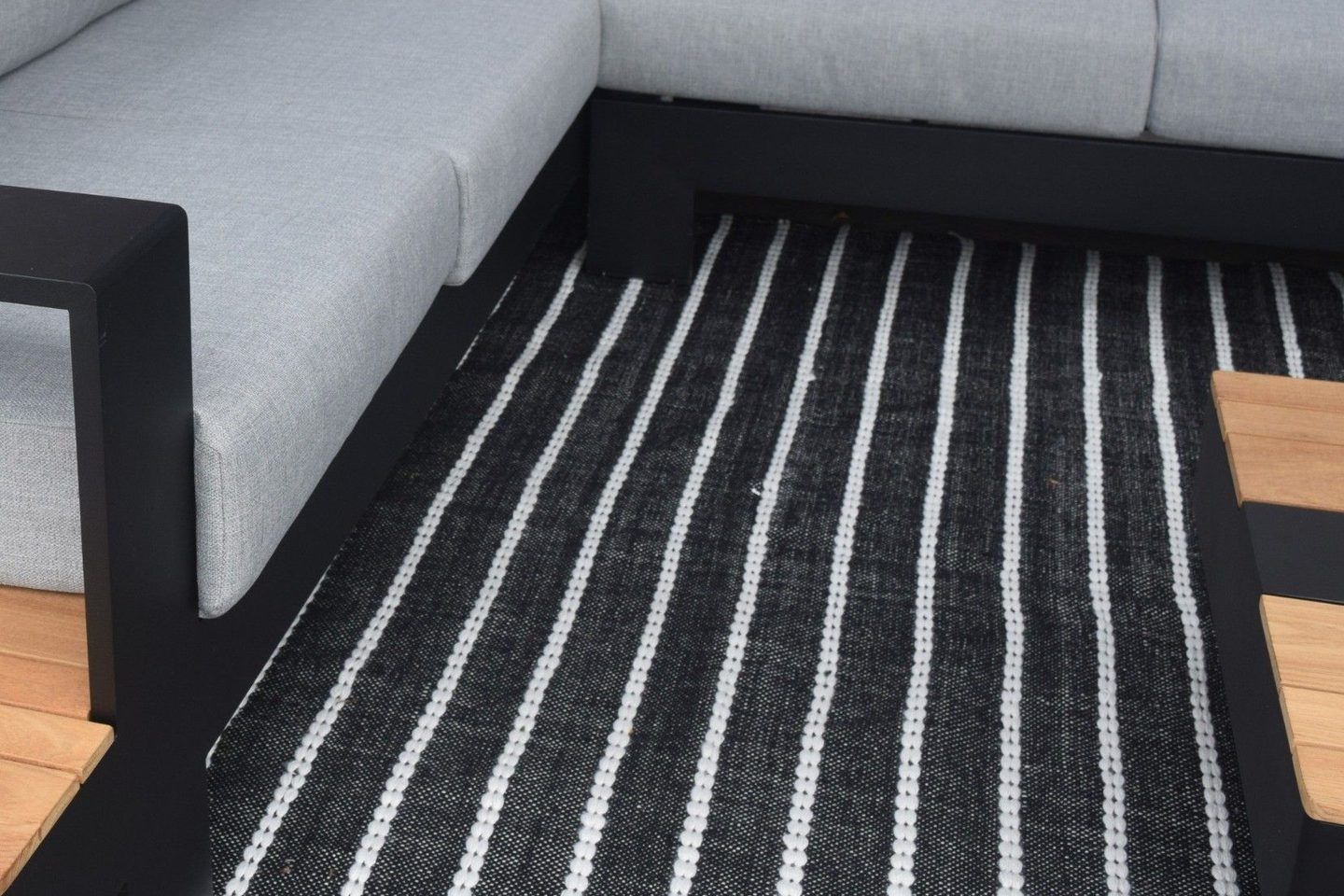
Delivery is easier than people expect. Each size ships rolled in a single box — roughly 17 lb for a 5 × 7 ft, 19 lb for an 8 × 10 ft and 26 lb for a 9 × 12 ft — so even the largest arrives as one parcel you can carry through the house, and the 9 × 12 ft box is about 19 × 19 × 11 inches, small enough for a car trunk if you would rather collect it.
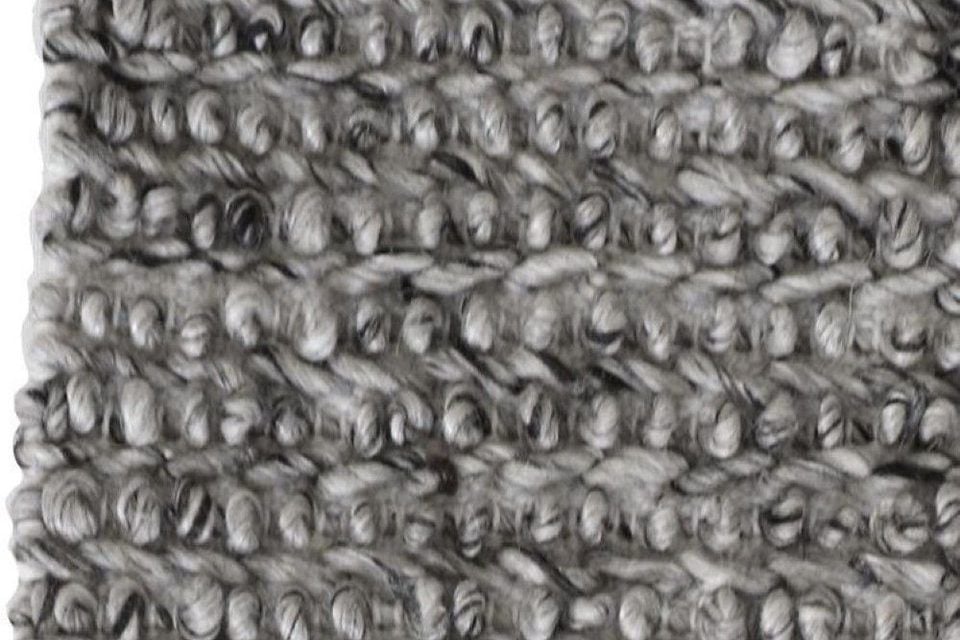
In the 5 × 7 ft size we stock the Corriveau Graphite Striped Rug, 5 × 7 ft in black and natural, the Corriveau Terra Rug, 5 × 7 ft in a mixed grey that hides pine needles well, and the Corriveau Ocean Rug, 5 × 7 ft in blue and natural. For a dining set, the Corriveau Element Striped Rug, 8 × 10 ft is the size most customers end up with. When the whole seating area needs covering, the Corriveau Charm Textured Rug, 9 × 12 ft is the one to look at.
Where an outdoor rug works in a Canadian backyard
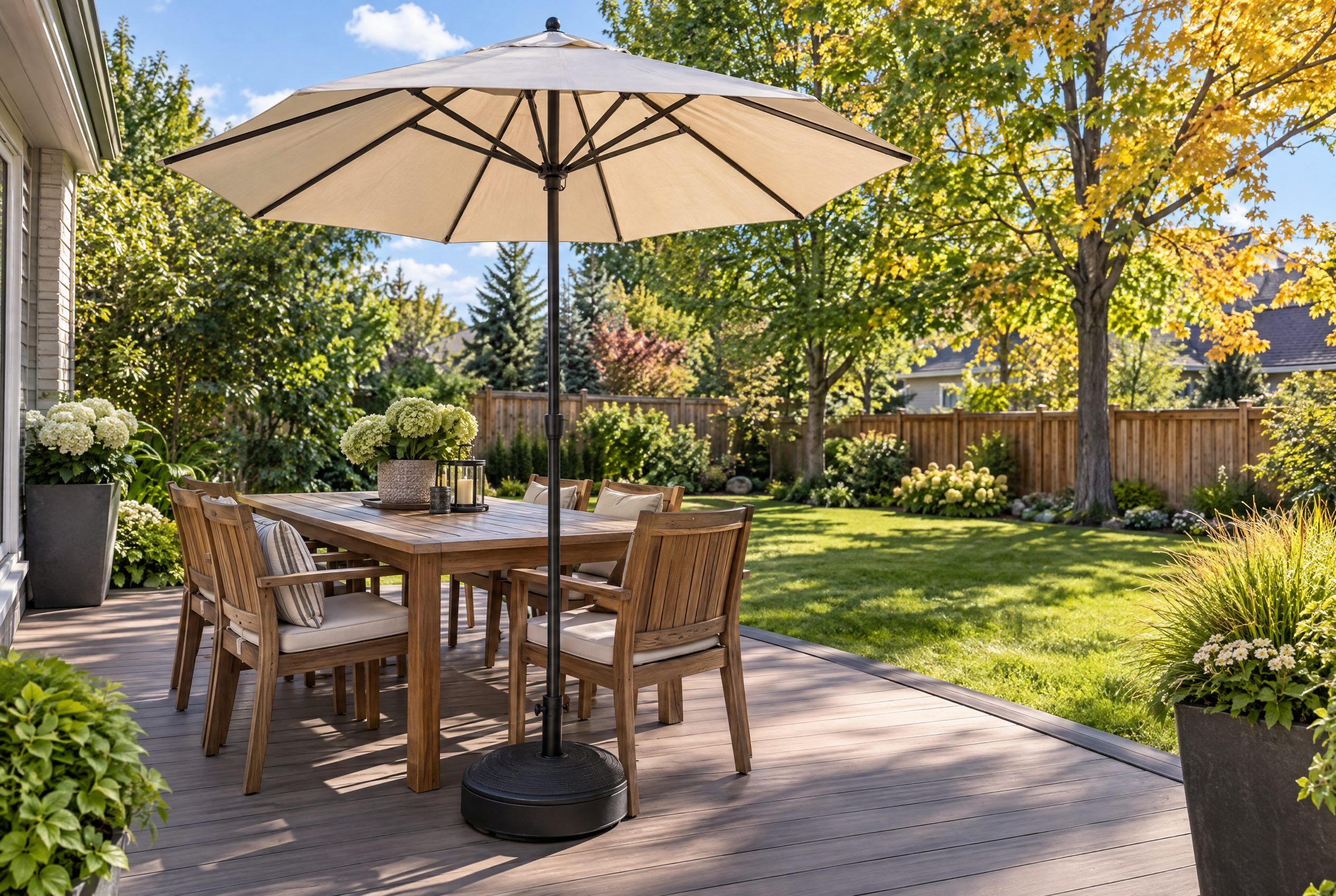
A covered deck or a porch is the ideal home for one. The roof keeps the worst of the rain off, air still moves underneath, and the rug dries between showers without any help from you. If you have a covered deck off the kitchen, that is where your first rug should go.
Products in this guide


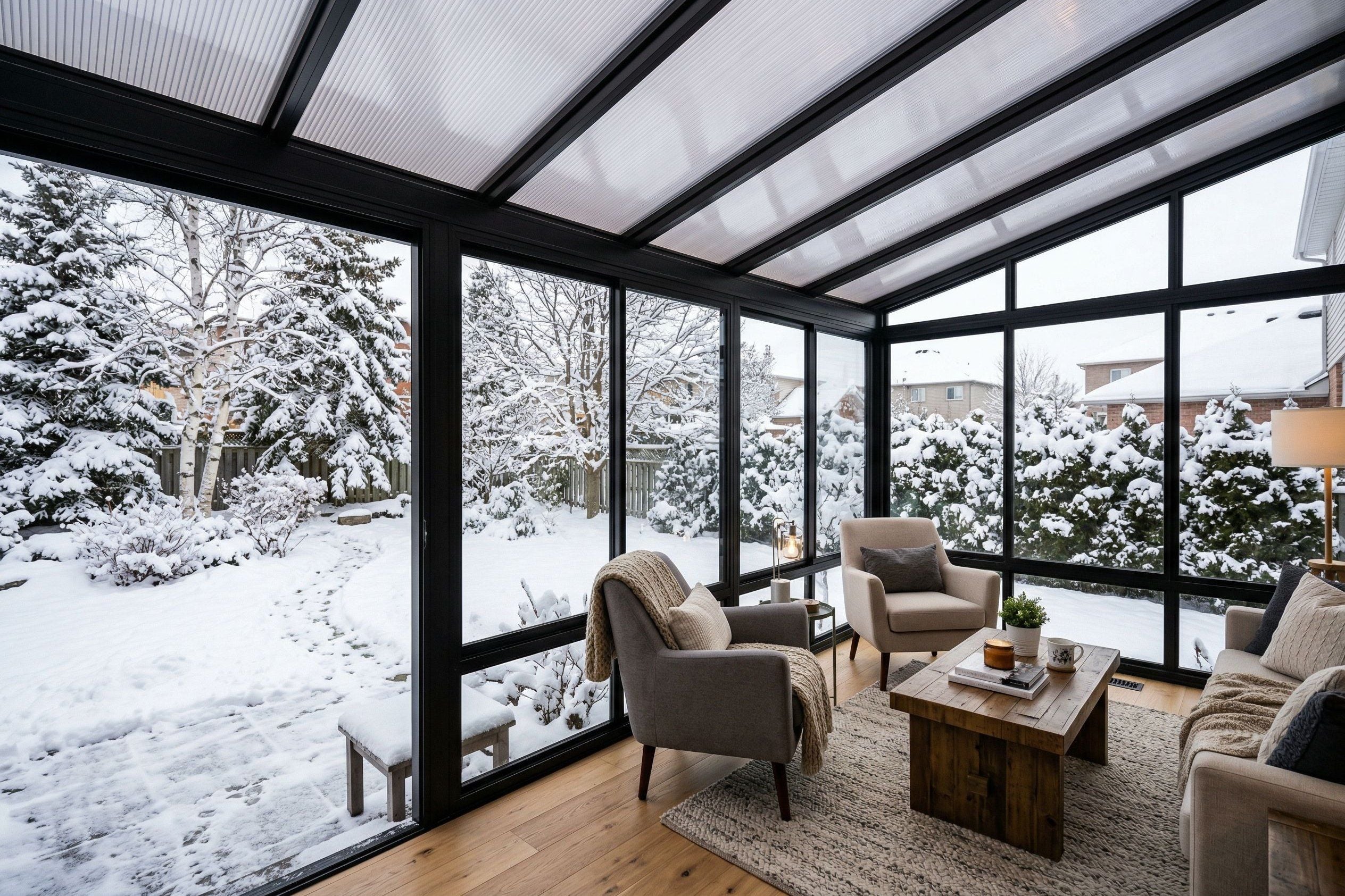
Under a gazebo the same logic applies, and a rug does something extra there: it defines the seating area inside a structure that is otherwise just posts and a roof. The same is true under a pergola, though a slatted or louvered roof lets more rain through, so expect the rug to get wet and plan on lifting it after a heavy storm. In a three-season solarium a rug is a genuine comfort upgrade — the floor is the coldest surface in the room in April and October, and because these are indoor and outdoor rugs there is no reason not to use one inside.
On an open stone or concrete patio a rug works beautifully from June to August and becomes a chore in the shoulder seasons, when it spends more time wet than dry. If that is your situation, buy the smaller size, keep it under the table where it is shaded, and accept that it comes in earlier than your neighbour's.
Two more places worth mentioning. Doormats and entry mats earn their keep from November onward, when every boot brings in salt and grit — a different product from a patio rug, and worth having at both doors. And because RPET rugs are rated for indoor use too, the rug that comes off the deck in November does not have to go into storage at all: a mudroom, a basement stairwell or a home office all take one happily through a Montreal or Toronto winter.
Care, pads and winter storage
Start with a non-slip rug pad. The manufacturer recommends one and so do we, for three reasons: it stops the rug sliding on smooth decking or tile, it lifts the weave slightly so air can move underneath, and it keeps damp fibres off the deck boards, which is what causes those dark rectangles on a stained deck.
Day-to-day cleaning is easy. Spills, coffee, wine and tracked-in dirt wipe off with a little water and a mild detergent, because the yarn does not absorb liquids. For a full clean, hand-wash with a mild detergent and hang the rug to dry — over a railing or a fence works perfectly. Do not put it away damp, and do not fold it wet: a wet fold held for a week is how a rug that would have lasted years picks up a permanent crease and a musty smell.
Then there is winter. Outdoor rugs are designed for three-season use, spring through fall, and the single most valuable thing you can do for one is to bring it in before the first lasting snow — late October on the Prairies, early to mid-November in southern Ontario and the Montreal area, later on the coast. Hose it down, let it dry completely, roll it rather than folding it, and store it somewhere dry: a garage, a basement, a storage shed or a deck box all work. Left outside, a rug will not be destroyed overnight, but months of ice, snowmelt and freeze–thaw cycles shorten its life considerably, and a rug frozen into the deck in January is unpleasant to deal with in March.
Frequently Asked Questions
Can outdoor rugs be left outside through a Canadian winter?
They will not be destroyed, but it is not what they are built for. Outdoor rugs are designed for three-season use, and prolonged exposure to ice, snowmelt and freeze–thaw cycles shortens their useful life. Best practice is to hose the rug, let it dry completely, roll it up and store it indoors or in a dry shed before the first lasting snowfall.
What size outdoor rug should I buy for my patio?
Match the rug to your furniture, not to the patio. A 5 × 7 ft suits a bistro table with two chairs or a balcony; an 8 × 10 ft suits a standard four- to six-seat dining table or a sectional; a 9 × 12 ft suits a large dining table with eight or more chairs. As a rule of thumb the rug should extend at least 18 inches beyond the furniture on all sides so chair legs stay on it when pulled out.
Are recycled polyester rugs really weatherproof?
RPET yarn resists water, sun and dirt, which is why it is used for outdoor rugs, but it is not waterproof. Water drains through the weave rather than soaking into the fibre. The rug does need to dry properly between soakings — if it stays wet for long stretches the fibres will eventually deteriorate, so a covered deck or a lift-and-dry habit after heavy rain makes a real difference.
Can I use an outdoor rug indoors?
Yes. RPET rugs are made for indoor and outdoor use, and the qualities that suit a deck — abrasion resistance, easy wipe-clean cleaning, low moisture absorption — are exactly what a mudroom, a basement or a kitchen needs. Many customers move the same rug indoors for the winter rather than storing it.
Choosing yours
Measure your seating area, add 18 inches on every side, and buy the size that result points to — that one decision does more for how a deck looks and feels than the pattern ever will. Then protect the purchase: a non-slip pad underneath, a hose-down and a full dry before storage, and the rug indoors before the first lasting snow. Do that and an outdoor rug stops being a one-summer item.
If you are furnishing a covered deck, a gazebo or a three-season solarium this year, start with our outdoor rugs, then look at the patio furniture and the deck box that go with them. And if you are not sure which size your set needs, send us the dimensions of your table or sectional — working that out with customers in Quebec and Ontario is a conversation we have most weeks. — the IPATIO team, Saint-Laurent, Quebec


Login and Registration Form
Sign in before you order so your purchase earns points. Orders placed while signed in earn points once they’re complete. Checking out as a guest? Create your account on the order confirmation page and that order is added to it. Every 100 points takes $1 off a later order. About Club IPATIO
Create your account to earn 100 points right away, plus 100 more if you subscribe to our newsletter. Your account also earns points on purchases once each order is complete, and for product reviews. Every 100 points takes $1 off a later order. About Club IPATIO