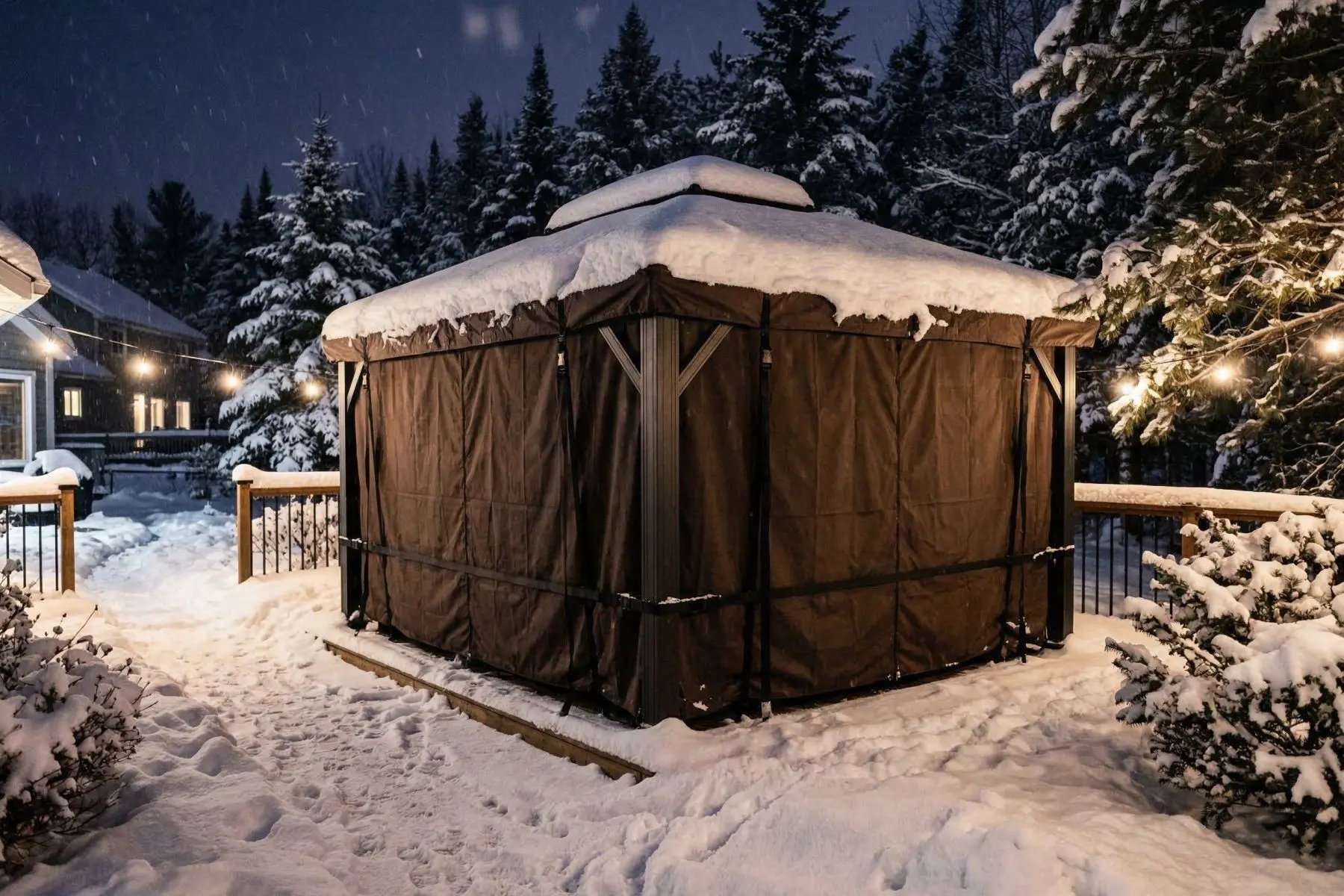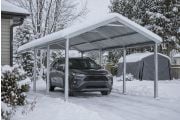
Every autumn, thousands of Canadian households run the same driveway arithmetic. The garage is full of bikes, tools and hockey bags, the second vehicle sleeps outside, and the forecast has started to mention flurries. A winter car shelter — the fabric-covered steel structure that Quebec drivers simply call an abri d'auto — is the least expensive way to buy back a clear windshield on a January morning and keep a season of freeze-thaw off your paint.
But car shelters are not interchangeable. An 11 x 16 ft model that swallows a Civic will leave a Silverado's tailgate in the snow, an unanchored frame becomes a sail in a February gust, and in much of Quebec the calendar decides when the structure is legal to stand at all. This guide walks through sizing, cover specifications, anchoring on real Canadian driveways, and the seasonal timing that keeps you on the right side of your municipal bylaw.
Three ways to shelter a vehicle through a Canadian winter
Before you shop by price, decide which of these three categories you are actually buying into — they age, cost and install very differently.
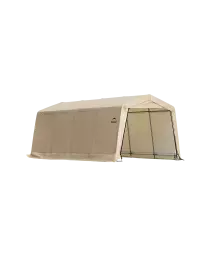
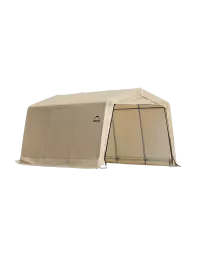
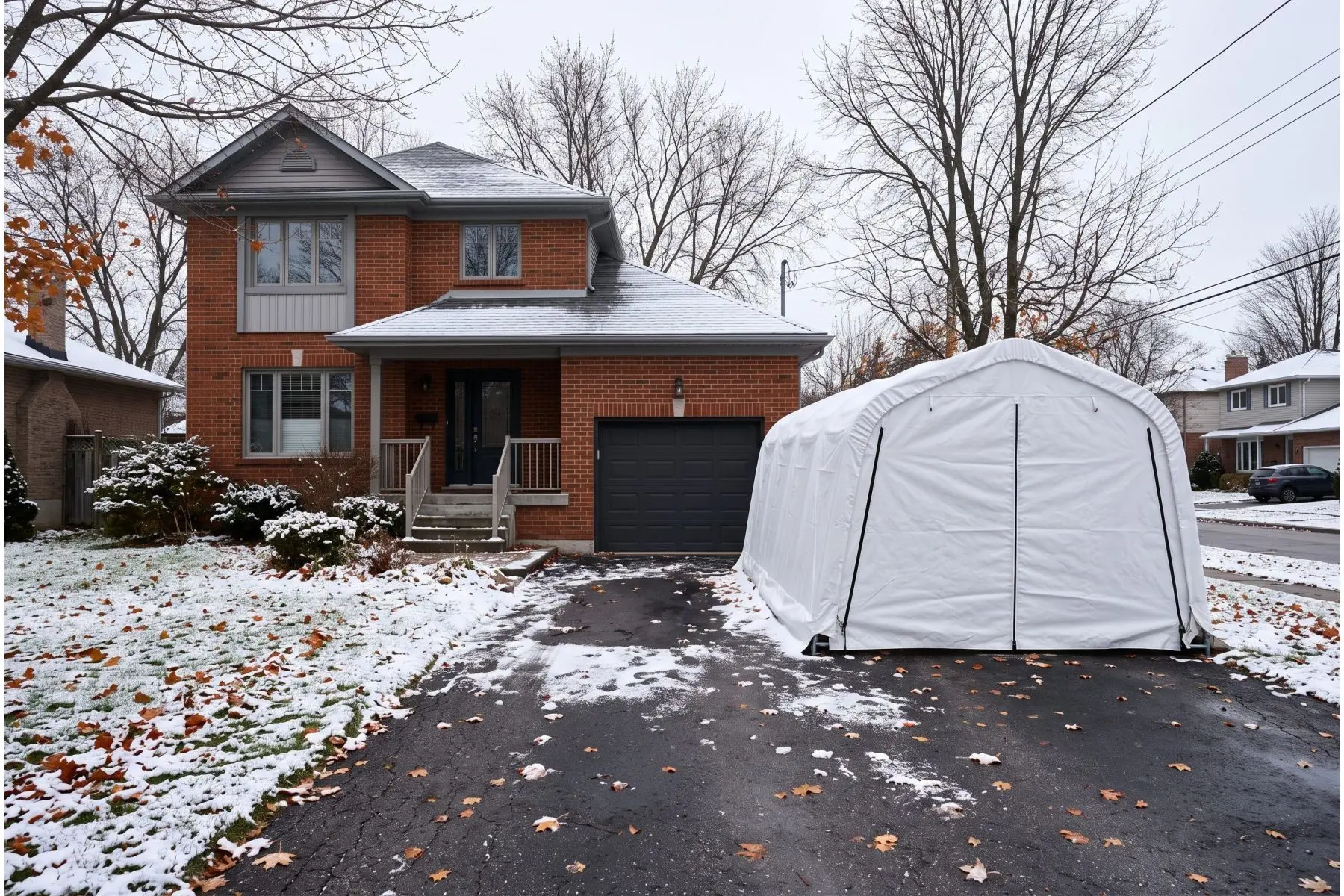
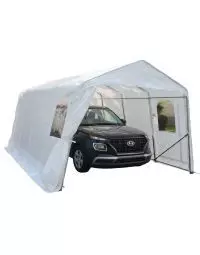
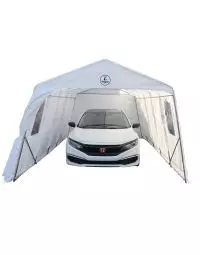
Seasonal fabric car shelters. These are the classic driveway shelters: a tubular steel frame, a tensioned woven cover, two zippered doors, and a footprint that disappears in April. The Gazebo Penguin range covers the common Canadian sizes — the Car Shelter 11 x 16 ft for a single vehicle, the Car Shelter 11 x 20 ft for something longer, and the Deluxe Double Car Shelter 18 x 20 ft and Deluxe Double Car Shelter 20 x 20 ft for two vehicles side by side. At the time of writing the singles sit in the high $500s to mid $600s and the doubles around $1,500.
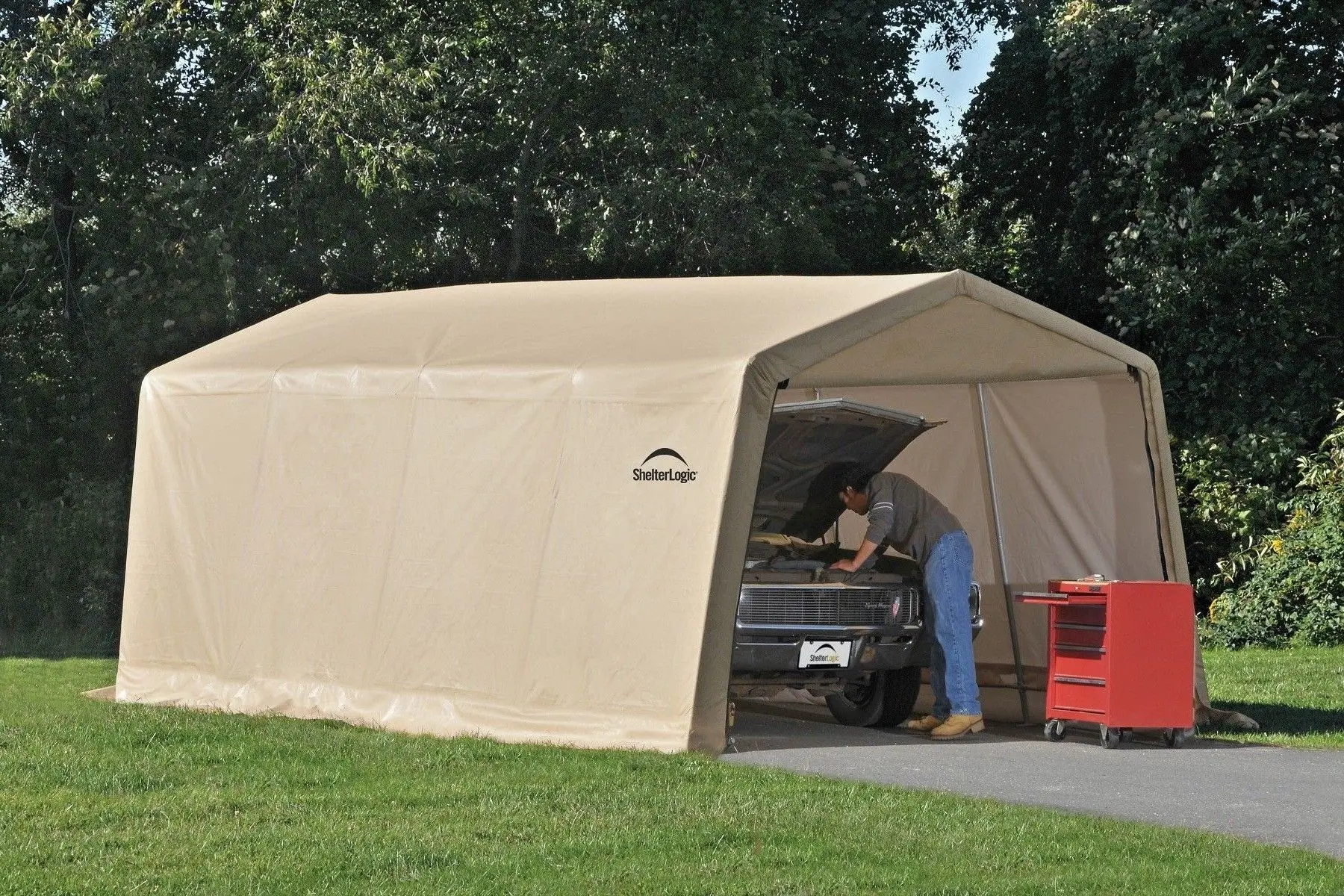
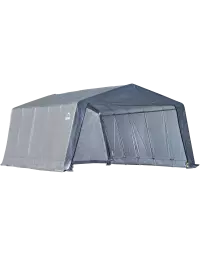
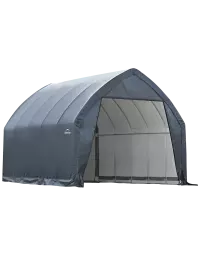
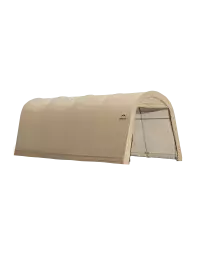
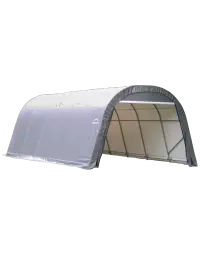
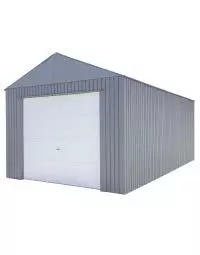
All-season portable garages. If the structure is going to live in the same spot year-round — sheltering a boat, a ride-on mower or a project car as well as the daily driver — a heavier portable garage makes more sense. ShelterLogic's Garage-in-a-Box 12 x 20 ft and the taller Garage-in-a-Box SUV/Truck 13 x 20 ft are built around powder-coated all-steel frames with a solid rear panel and a double-zippered door, and they land roughly between $1,000 and $1,200.
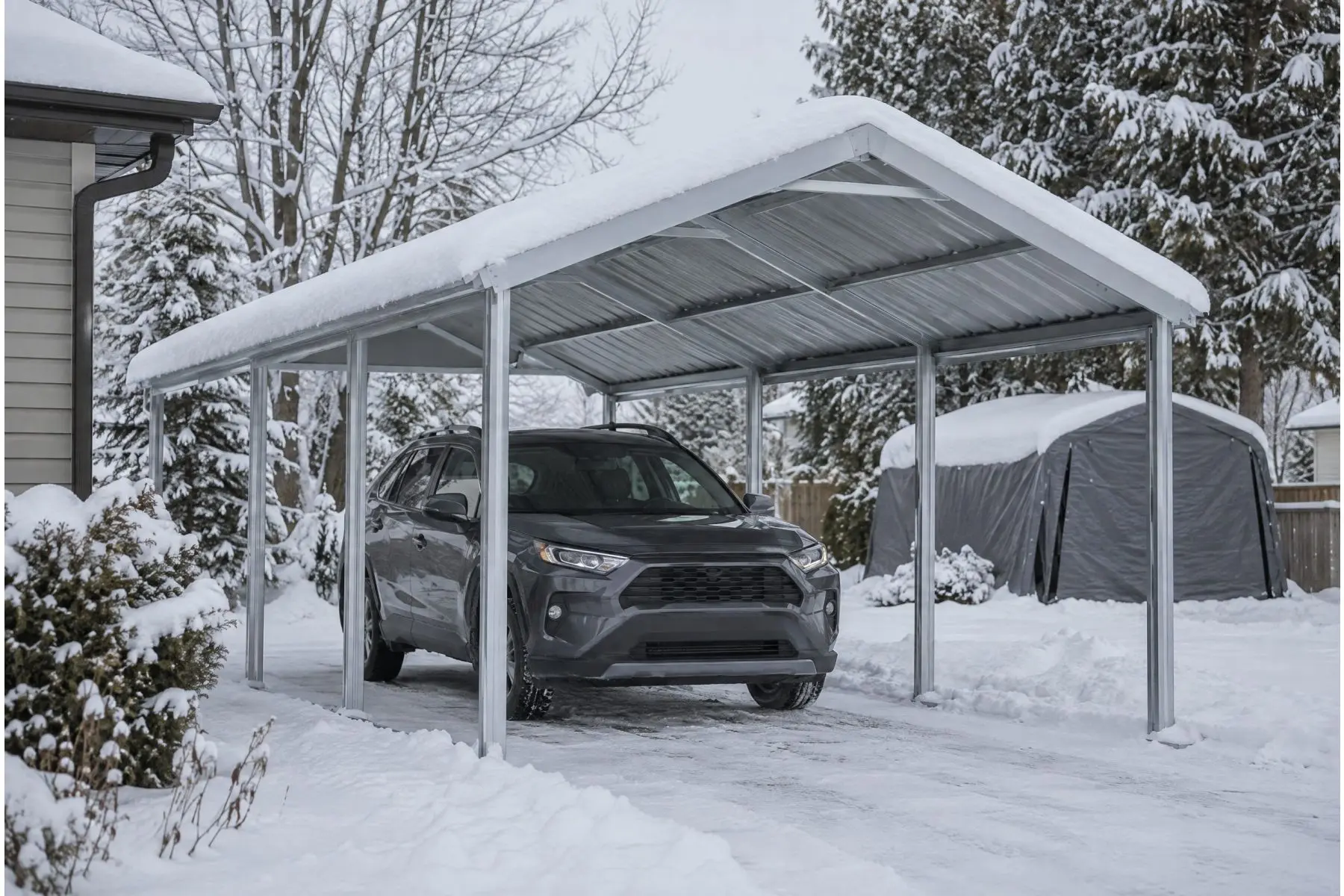
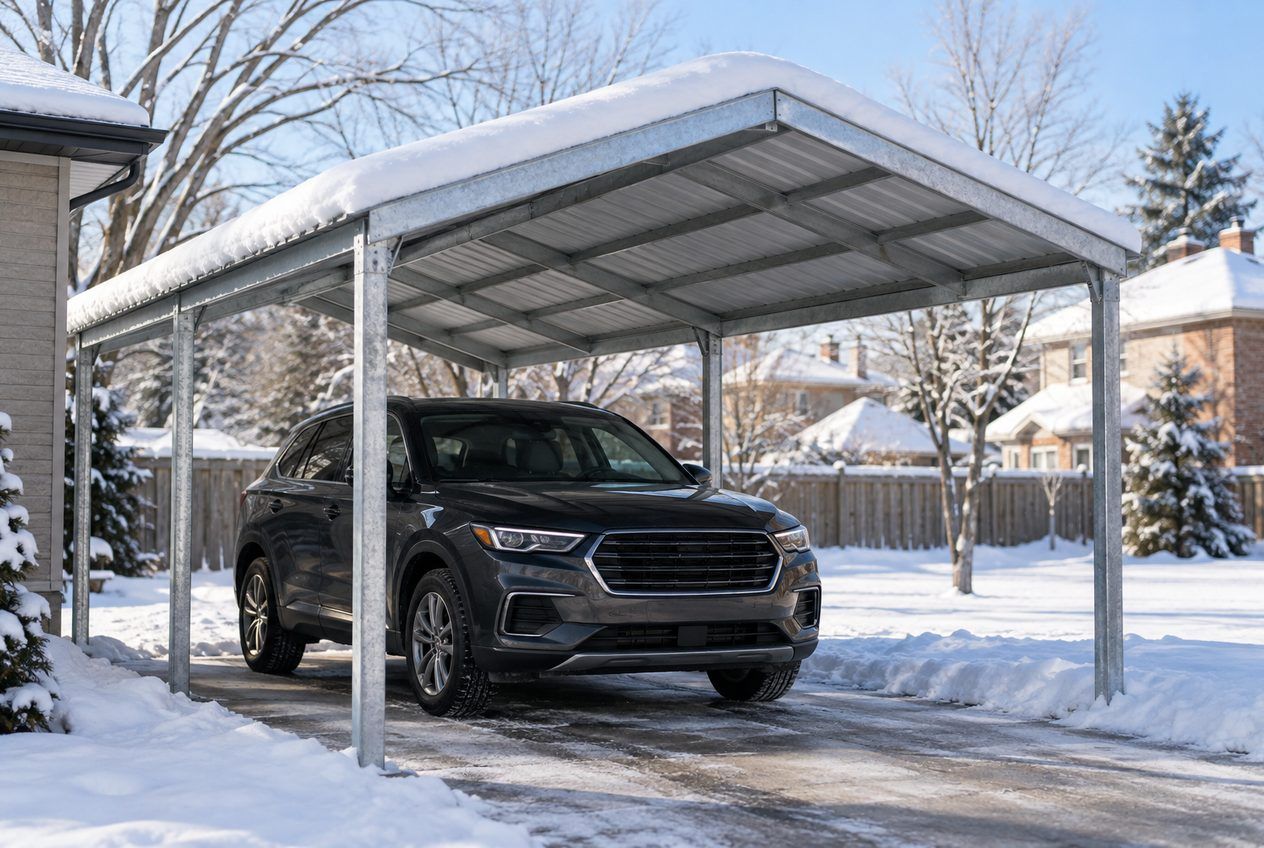
Permanent steel carports. At the top of the range, galvanized steel carports are bolted to a prepared pad and stay up for decades. Arrow builds them from about $1,850 for a 10 x 15 x 7 ft galvanized model, and they generally need a level base, more lead time and, in many municipalities, a building permit. If you are weighing a permanent structure against a seasonal one, our guide to outdoor structures for Canadian winters compares carports, garages and sheds in more depth.
Sizing: measure the vehicle first, the driveway second
The single most common sizing mistake is buying to fit the driveway rather than the vehicle plus the space you need around it. A shelter is only useful if you can open the driver's door, walk to the trunk and close the front panel behind you.
Work through it in this order. Measure your vehicle's overall length (a mid-size sedan is typically around 15 ft, a crew-cab pickup closer to 19 or 20 ft), then add roughly 2 to 3 ft at the front so the door panel is not resting on your bumper. Add at least 18 in. on the driver's side for door swing, and remember that the walls curve inward toward the roof — a roof rack or a raised truck cap eats into that clearance long before the mirrors do.
Then check the site: you need the full footprint on a flat surface, plus room to walk around the frame while you are tensioning the cover, plus clearance from the road allowance and the sidewalk that your municipality requires.
| Model | Footprint | Best for | Frame | Price (at the time of writing) |
|---|---|---|---|---|
| Gazebo Penguin Car Shelter 11 x 16 ft | 11 x 16 ft | One compact or mid-size car, plus a snowblower along the wall | 1 1/4 in. steel tube, 4 ft sections | $594 |
| Gazebo Penguin Car Shelter 11 x 20 ft | 11 x 20 ft | Pickup, minivan or long SUV | 1 1/4 in. steel tube, 4 ft sections | $644–$658 |
| Gazebo Penguin Deluxe Double Car Shelter 18 x 20 ft | 18 x 20 ft | Two vehicles side by side | 1 5/8 in. x 2 3/4 in. steel, 4 ft sections | $1,499 |
| Gazebo Penguin Deluxe Double Car Shelter 20 x 20 ft | 20 x 20 ft | Two vehicles with walk-around room | 1 5/8 in. x 2 3/4 in. steel, 4 ft sections | $1,528 |
| Garage-in-a-Box 12 x 20 ft | 12 x 20 ft | Year-round shelter for a car or small SUV | 1 3/8 in. all-steel, powder-coated | $996.98 |
| Garage-in-a-Box SUV/Truck 13 x 20 ft | 13 x 20 ft | Full-size SUV or pickup, year-round | 1 5/8 in. all-steel alpine frame | $1,199.99 |
Two practical notes on the doubles. An 18 x 20 ft shelter fits two vehicles but assumes you park them tight; the 20 x 20 ft version buys the extra two feet that make it comfortable to load groceries with both cars inside. And on a sloped driveway, the downhill end is where meltwater collects — orient the shelter so the doors are on the uphill side if you can.
White or clear? What the cover specifications mean
Cover colour is the choice buyers agonise over, and it matters less than the fabric numbers underneath it. The Gazebo Penguin covers are woven polyethylene at 7 oz per square metre (1600 denier), triple-layered and heat-welded at the seams, treated for UV inside, outside and in between, with antifungal agents added and an E.V.S. UV protection package. Crucially for this climate, the fabric is formulated to stay flexible in cold weather — a cover that stiffens at −25 °C is a cover that cracks when you unzip the door.
The white covers keep the interior dim and private, which many owners prefer on a front driveway. The clear covers let daylight through, so you can find a dropped socket without a work light and the space feels less like a tunnel; expect to pay a small premium on the longer size, where the clear 11 x 20 ft runs $658 against $644 for the white. Both versions include two windows, two doors and ropes to secure the front door panel.
ShelterLogic takes a different approach on the Garage-in-a-Box models: an engineered triple-layer ripstop polyethylene cover, a thermoset powder-coated steel frame that resists chipping and corrosion, patented ShelterLock stabilizers, and a Ratchet-Tite tensioning system with an Easy Slide Cross Rail that lets you re-tighten the cover as it settles. The 12 x 20 ft kit ships with 12 stabilizers, a grey fitted cover, a double-zippered door panel and a solid rear panel; the 13 x 20 ft SUV/Truck version adds a roll-up door kit and a reinforced door rafter. Both carry a one-year limited warranty, as do the Gazebo Penguin shelters against manufacturing defects.
Anchoring: asphalt, gravel and interlock
An anchored shelter is a structure; an unanchored one is a kite. This is the step Canadian owners most often shortcut, and it is the reason insurance adjusters see fabric shelters wrapped around fences every winter.
Products in this guide
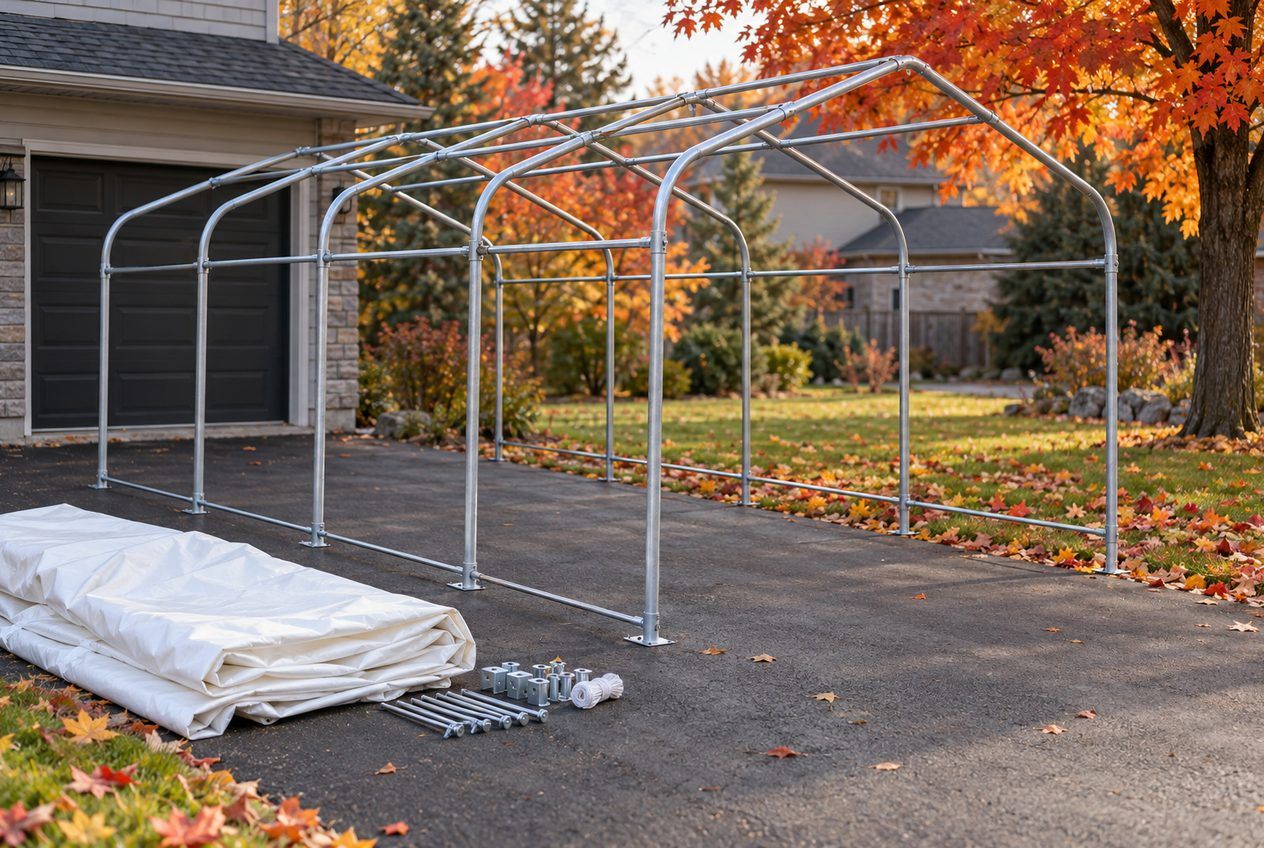
On soil, gravel or a lawn edge, auger anchors are the standard answer. They screw in like a corkscrew and resist uplift far better than a stake. The Garage-in-a-Box 12 x 20 ft ships with four 15 in. (38.1 cm) augers and the 13 x 20 ft with six — use all of them, and add more at the corners if your site is exposed.
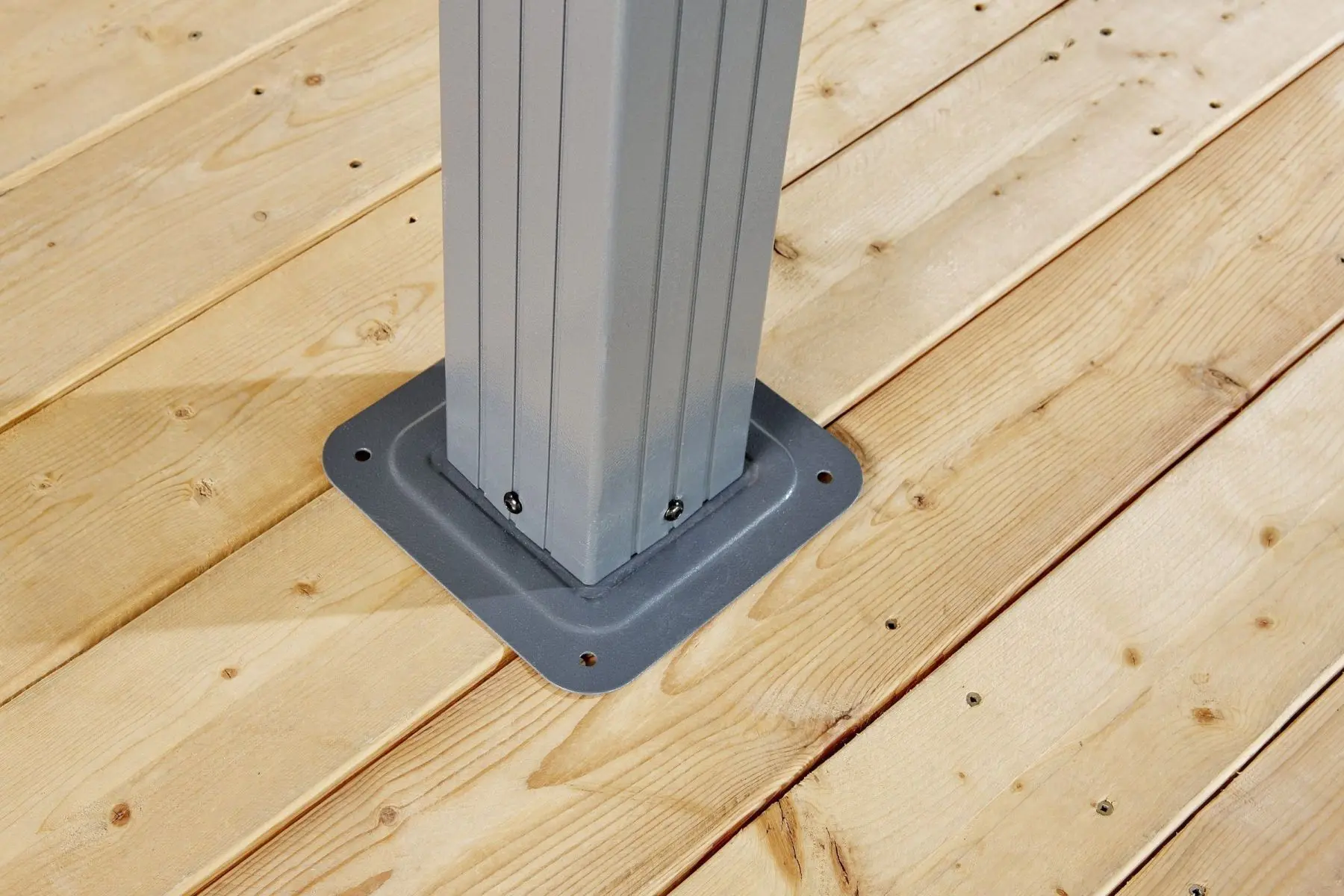
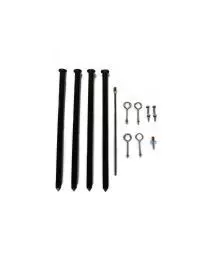
On asphalt, concrete or interlock, augers are not an option and drilling is. The Gazebo Penguin Permanent Anchor Set of 4 is the purpose-built solution at about $65, bolting the feet down so the frame cannot walk. Add ratchet straps over the roof on exposed lots, keep the cover drum-tight all season, and never anchor a shelter to the vehicle parked inside it.
Two safety habits are worth building in. Before you auger anything, confirm what is buried — irrigation lines, invisible fencing and utility laterals all live at auger depth. And re-check the anchors after the first hard freeze, because ground that was soft in October grips very differently in December. The same logic applies to any structure on your property; our guide to anchoring a gazebo on concrete, deck, grass and gravel walks through each surface in detail.
Timing and bylaws: when it goes up and when it comes down
Installation timing in Canada is dictated by the frost, not the calendar. You want the ground still workable when you set anchors, which in southern Ontario and the St. Lawrence valley usually means the first half of October, earlier in the Prairies and in northern communities, and later on the south coast of British Columbia.
Then there is the bylaw. Many Quebec municipalities regulate temporary car shelters with a fixed seasonal window — commonly from around October 1 or October 15 through to mid-April — and the exact dates, setbacks from the sidewalk and rules about front-yard placement differ from one city and borough to the next. Several Ontario municipalities take a stricter line and restrict fabric shelters in front yards entirely. Before you order, call your local planning or building department and confirm the dates and setbacks that apply to your address; it is a five-minute phone call that prevents a removal notice in November.
During the season, the maintenance list is short. Sweep or brush accumulated snow off the roof after a heavy storm rather than letting it load the frame, keep the cover tensioned as the fabric relaxes in the cold, chip ice away from the base of the door before you force a zipper, and keep the door panel closed against wind rather than half-open. In April, take the structure down on a dry day, let the cover dry completely before you fold it, and store it somewhere rodents cannot reach — the same rule that applies to winter covers for gazebos and patio furniture at the other end of the season.
Frequently Asked Questions
How much does a winter car shelter cost in Canada?
At the time of writing, single-vehicle fabric car shelters run from roughly $594 for an 11 x 16 ft model to about $658 for a clear 11 x 20 ft, while two-vehicle deluxe doubles are around $1,500. All-season portable garages fall between roughly $1,000 and $1,200, and permanent galvanized steel carports start near $1,850 before site preparation. Budget separately for anchors if your driveway is paved.
Can I leave a fabric car shelter up all year?
Seasonal car shelters are designed to come down in spring, and in many Quebec municipalities a bylaw requires it by mid-April. Leaving one up through the summer also means months of extra UV exposure on a cover you would rather keep for several winters. If you need year-round shelter, choose a portable garage such as the Garage-in-a-Box 12 x 20 ft, which is built to stay assembled, and confirm that your municipality allows a permanent accessory structure on that spot.
What size car shelter do I need for a pickup truck?
A crew-cab pickup is typically 19 to 20 ft long, so an 11 x 16 ft shelter is too short once you allow clearance for the door panel. Step up to a Car Shelter 11 x 20 ft, or to the Garage-in-a-Box SUV/Truck 13 x 20 ft if the truck carries a cap or a roof rack and you want more headroom and width along the sides.
How do I anchor a car shelter on an asphalt driveway?
Auger anchors only bite in soil or gravel, so on asphalt, concrete or interlock you drill and bolt the feet down instead — a Permanent Anchor Set of 4 is the straightforward option. Add ratchet straps over the frame on exposed corner lots, tension the cover so it cannot flap, and re-check every fastener after the first hard freeze and after any wind warning.
The bottom line
Choose the size from your vehicle's length plus clearance, not from what looks proportionate on the driveway; choose the cover for how you use the space rather than for looks; and treat anchoring as part of the purchase rather than an afterthought. Get those three right and a seasonal shelter pays for itself in scraped-windshield mornings you never have to spend.
Ready to compare options for this winter? Browse the full range of car shelters and carports, look at portable garages if the structure is staying put year-round, and pick up winter covers for the gazebo and the patio furniture while you are preparing the yard for the season.