By the middle of September most of Canada has had its first night under ten degrees, and the wood that will heat your house — or your backyard fire — from November through April is already sitting somewhere. Where it sits, and how, decides whether it burns hot in January or hisses and smokes. Firewood storage is the least discussed part of burning wood, and the part that costs the most when it is done badly.
The good news is that it is not complicated. Wood needs to be off the ground, open to moving air, and protected on top. Everything else — the rack you buy, the cover you put on it, where you stand it in the yard — is a variation on those three requirements. This guide covers what seasoning actually does, how much wood a Canadian household goes through in a winter, how to size a firewood rack, and the placement mistakes that turn a good stack into a wet one.
What Seasoning Actually Does
Freshly cut wood is roughly half water by weight. Burn it and a large share of the heat you paid for goes into boiling that water off instead of into the room. The smoke is heavier, the glass on the stove door blackens, and the unburned compounds condense in the chimney as creosote — the single largest cause of chimney fires in Canadian homes. Properly seasoned wood sits below about 20 percent moisture content, lights easily, and burns clean.
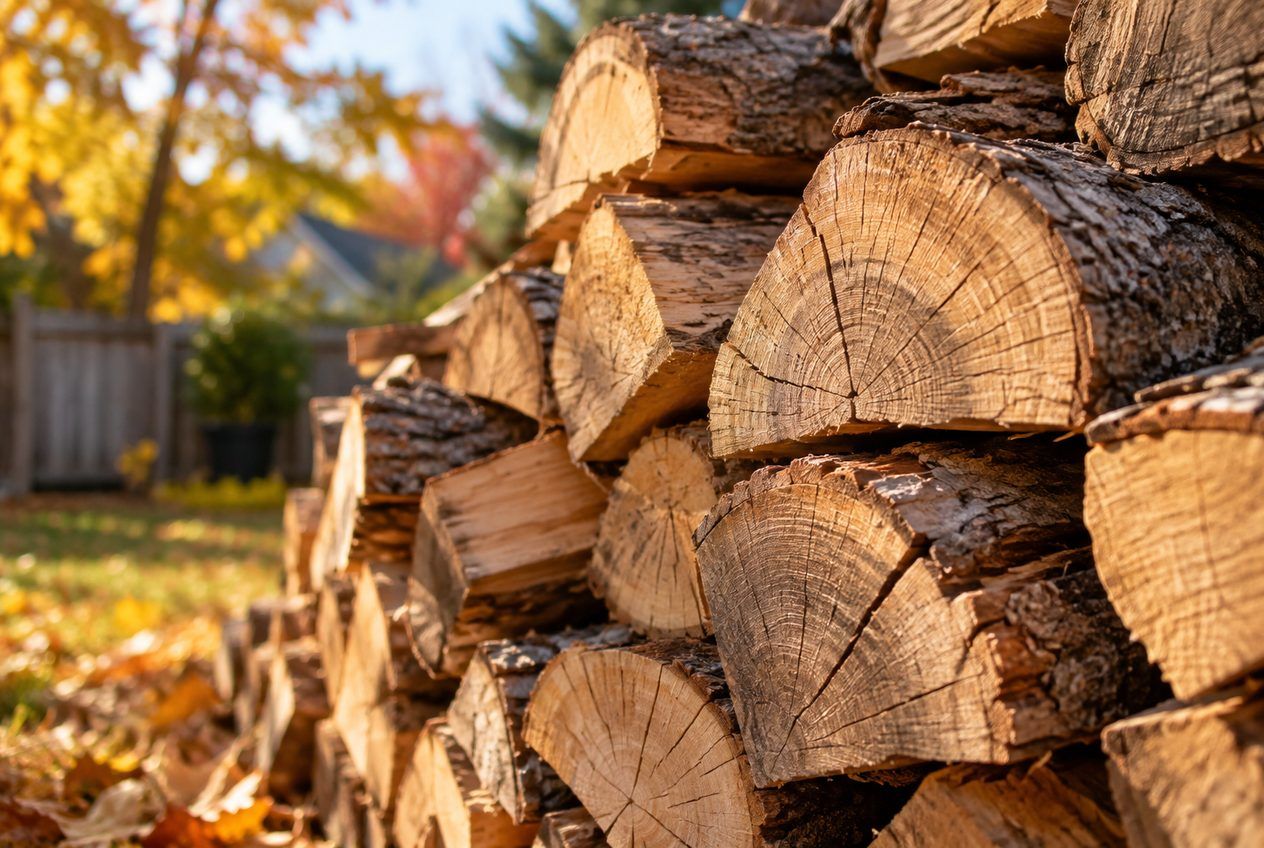
Getting there takes time and air, not heat. Split wood stacked in the spring is generally ready by the following autumn; dense hardwoods such as maple and oak want a full year, while birch and softwoods dry faster. What ruins the process is almost always one of three things: wood lying directly on soil, which wicks moisture back into the bottom row; a stack packed two or three rows deep with no path for air; or a tarp wrapped over the whole pile and tucked underneath, which turns the stack into a greenhouse and holds moisture in rather than keeping it out.
A firewood rack solves the first two problems by design. It lifts the wood clear of the ground and holds it in a single row with open ends, so prevailing wind moves along the length of the stack instead of stopping at the second row.
How Much Wood Will You Burn?
Firewood in Canada is sold by the cord, and the terminology causes more confusion than any other part of the purchase. A full cord is a stack measuring 4 feet high by 8 feet long by 4 feet deep — 128 cubic feet of wood and air. A face cord, sometimes called a stove cord or a 16-inch cord, is the same 4 by 8 foot face but only as deep as the logs are long, so roughly a third of a full cord when the splits are 16 inches.
Consumption varies enormously, but as a rule of thumb: an occasional user who lights a fire pit on weekend evenings from May to October will work through something on the order of a quarter to a half cord in a season. A household that runs a wood stove as supplemental heat on winter evenings typically burns one to three face cords. A rural property heating primarily with wood is in full-cord territory and needs a different scale of storage entirely.
Buy for one season more than you need. The rack you fill this month should ideally hold wood that was split last spring, while this year's green delivery starts drying at the other end of the yard. That two-stack rhythm is the whole secret of always having dry wood.
Sizing a Firewood Rack
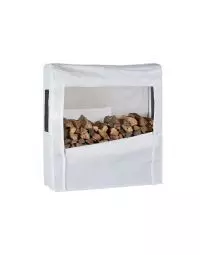
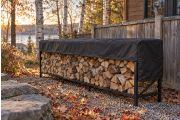
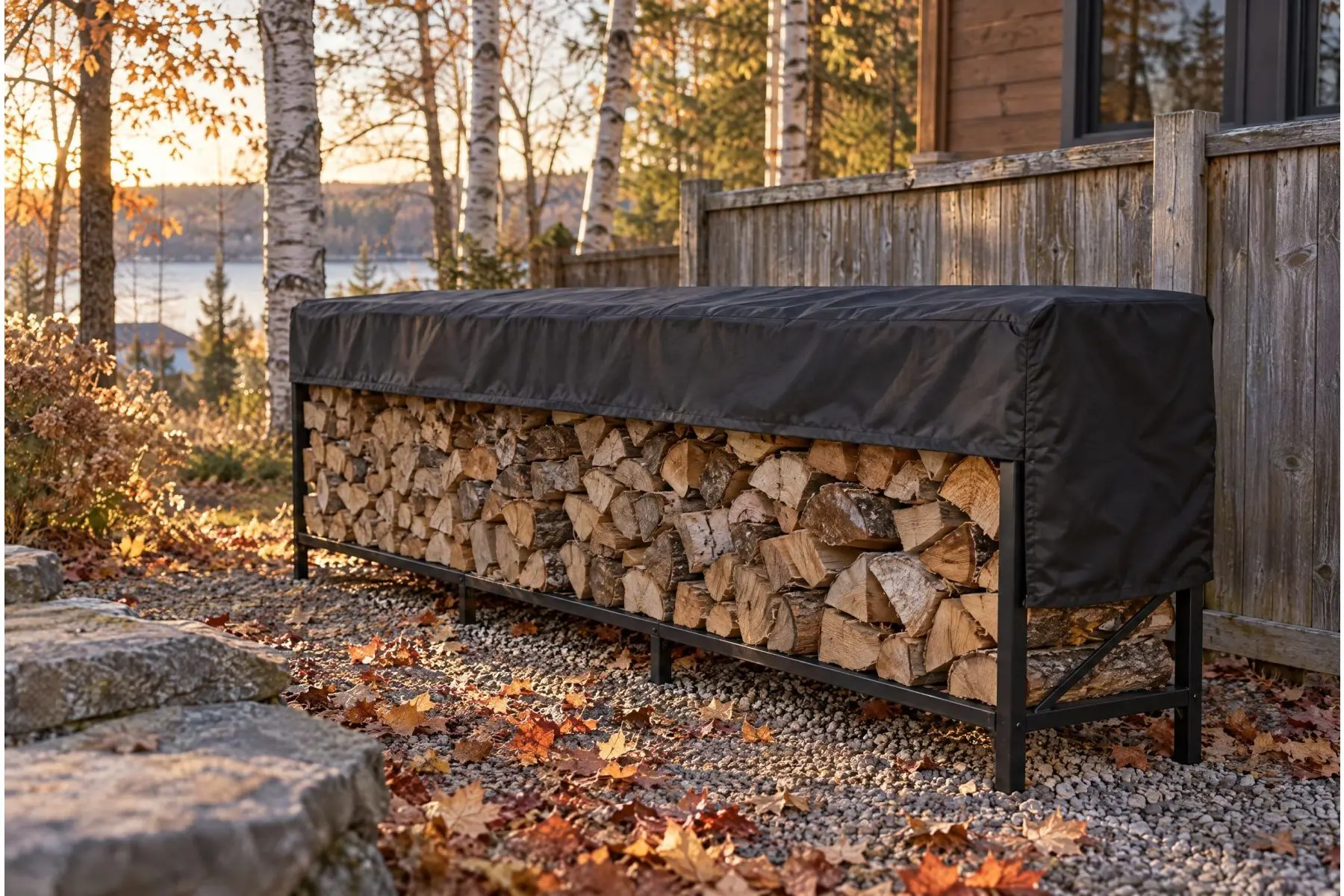
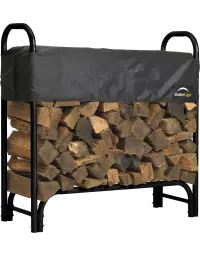
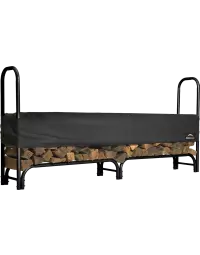
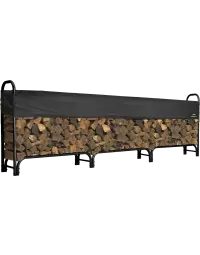
The ShelterLogic firewood racks we stock come in three lengths, all built the same way: an all-steel frame with a black powder-coat finish, an open design that lets air move through the stack, and an included two-way adjustable polyester cover that slides up and down the frame to match the height of the wood as you burn through it. The cover adjusts to fit split wood up to 24 inches long.
| Rack length | Holds | Assembled footprint | Cover | Suits |
|---|---|---|---|---|
| 4 ft heavy duty | 1/4 cord | 15.5 in. W x 49.7 in. D x 46.6 in. H | Included, adjustable | Fire pit evenings, small patios, townhouse yards |
| 8 ft heavy duty | 1/2 cord | 15.5 in. W x 95.6 in. D x 46.7 in. H | Included, adjustable | Wood stove used on winter evenings — the common choice |
| 12 ft heavy duty | 3/4 cord | Same 15.5 in. depth, 12 ft long | Included, adjustable | Regular heating, rural properties, two-season rotation |
| Bracket kit + your own lumber | Any length | Set by the 2x4s you cut | Sold separately | Long runs along a fence, awkward spaces |
Prices run from roughly $155 for the 4-foot rack to about $200 for the 12-foot, approximate and current at the time of writing. Note the 15.5-inch depth on all three: that is deliberate, and it is one row of standard 16-inch splits. Resist the urge to stack a second row against the first. A single row dries in a fraction of the time and is far less likely to topple in a February thaw.
If you are unsure between two lengths, take the longer one. An under-filled rack costs nothing but floor space, while an overfilled one ends up with the surplus dumped on the ground beside it, which is exactly the wood that will be wet in January.
Covers, Log Shelters and the Snow Problem
The cover that ships with a rack handles the top of the stack, which is the only part that genuinely needs covering. Full-length universal covers are also sold separately for 4-foot and 8-foot racks, and they are worth adding if your stack sits somewhere exposed. The fabric is a ripstop triple-layer woven polyethylene, UV treated on both faces so it does not go brittle after two summers, and a double zipper closure means you can get at the wood without wrestling the whole cover off in the dark at minus twenty.
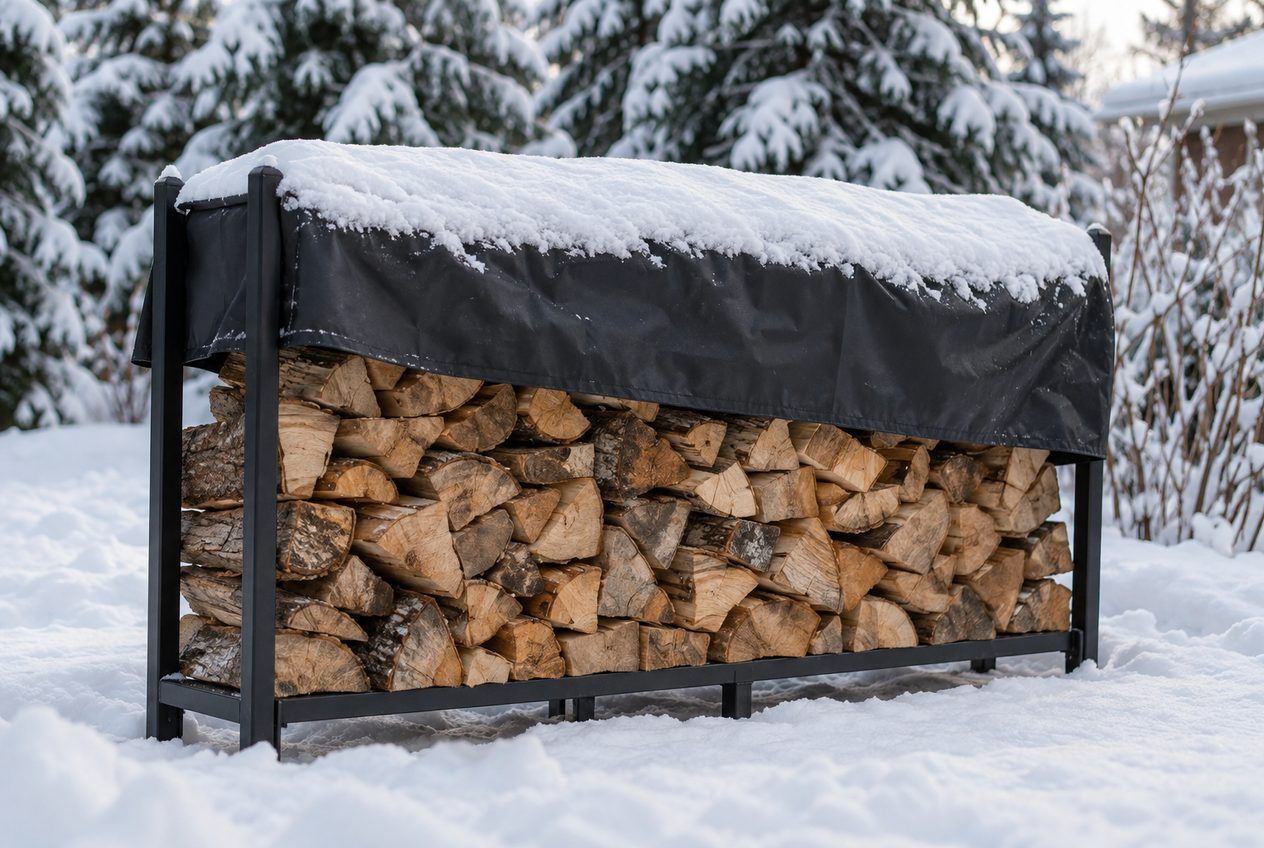
What no cover should ever do is reach the ground on all four sides. Leave the ends and the lower third of the stack open. You are shedding rain and snow off the top, not sealing the wood in.
Where a rack and cover are not enough — a windy rural lot, or a stack you want to actively dry rather than simply keep dry — a log shelter is the next step up. The Gazebo Penguin log shelter measures 5 ft 6 in. wide by 1 ft 5 in. deep by 5 ft 8 in. high on a heavy-duty aluminum frame with a chip- and corrosion-resistant finish. Its translucent fabric lets light through and holds warmth inside while air still circulates, which the manufacturer rates at drying wood roughly twice as fast as open-air seasoning. It also keeps insects and wildlife out of the stack, which matters more than people expect on properties backing onto bush.
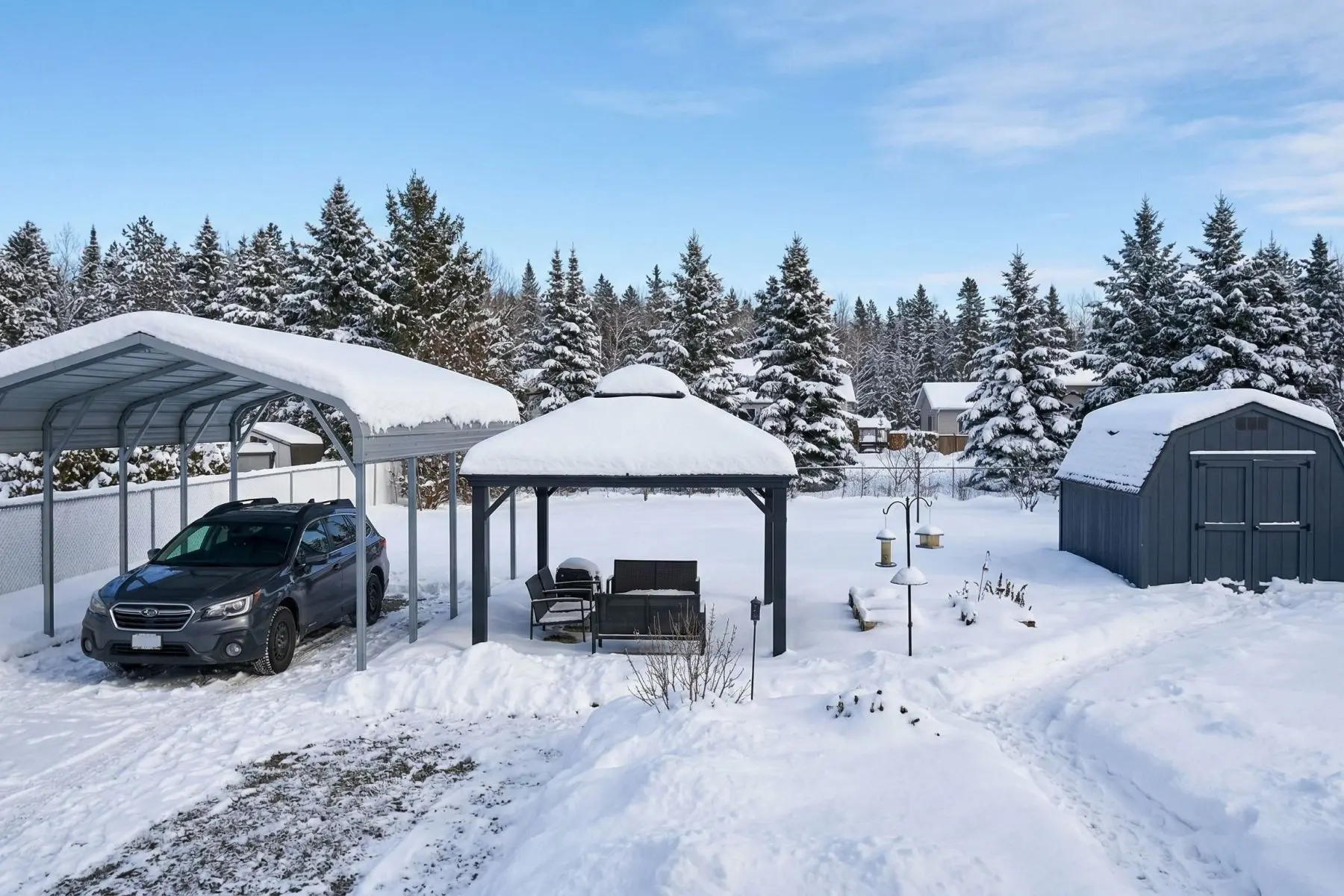
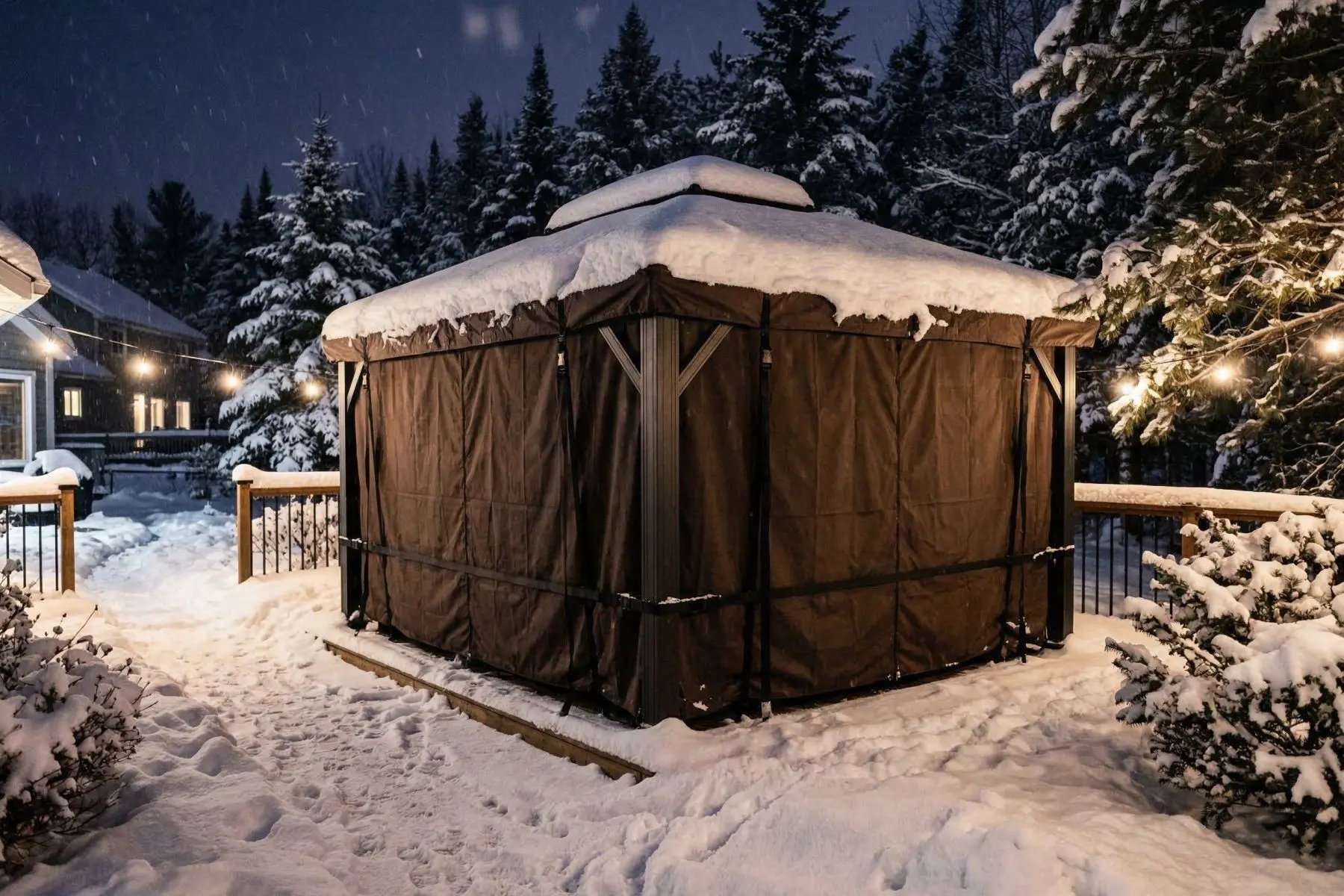
One Canadian-specific detail: think about where snow lands. Do not put a rack directly under the eaves of the house, or in the path where a load of snow slides off a shed or gazebo roof in a March thaw. A few metres of clearance saves you from digging the stack out twice a winter.
Building Your Own With a Bracket Kit
If your storage spot is an odd length — the run along a fence, the space between a garage and a property line — a bracket kit is cheaper and more flexible than a fixed rack. Two versions are available. The molded ABS polymer kit takes six standard 2x4s, needs no tools, and lets you set the rack to any length; it runs under $50. The steel adjustable bracket kit uses 1-3/8 inch round tube uprights with a baked-on powder coat finish and includes the wood screws, for around $63.
Products in this guide
Both give you a stronger rack than the equivalent budget in a pre-made frame, at the cost of a trip to the lumber yard and half an hour of work. Use pressure-treated lumber for the pieces that touch the ground, keep the run under about 10 feet between supports so the rails do not sag under a loaded stack, and buy a universal cover to go over the top.
Getting the Wood to the Fire
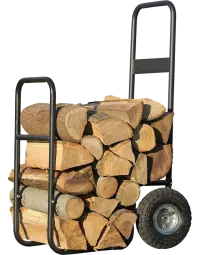
The stack is only half the job; the other half is the twenty metres between it and the stove. A rolling wood mover does that trip without a wheelbarrow's balancing act — the Haul-It model is built from 14-gauge tubular steel with pneumatic all-terrain tires that handle frozen ruts and gravel, measures 21.5 by 26 by 43 inches, and is deliberately slim enough to roll through a standard doorway with a full load.
For smaller loads, a carry bag is the tidier option. The heavy-duty firewood bags we stock are made from 600D polyester coated with PVC, so they repel water and snow rather than soaking it up, and they keep bark and dirt off the floor on the way in. Sizes range from a 29 by 9 by 18 inch carrier up to a 31 by 11 by 22 inch extra-large, plus an open-ended 40 by 19 inch design for splits that are too long for anything else. All of them fold flat and hang by their straps in a shed or garage between uses.
Bring in only two or three days of wood at a time. A week's supply stacked beside a warm stove is an invitation to every insect that was dormant in the bark.
Where to Put the Stack
Placement decides how much of this works. Four rules cover almost every Canadian yard.
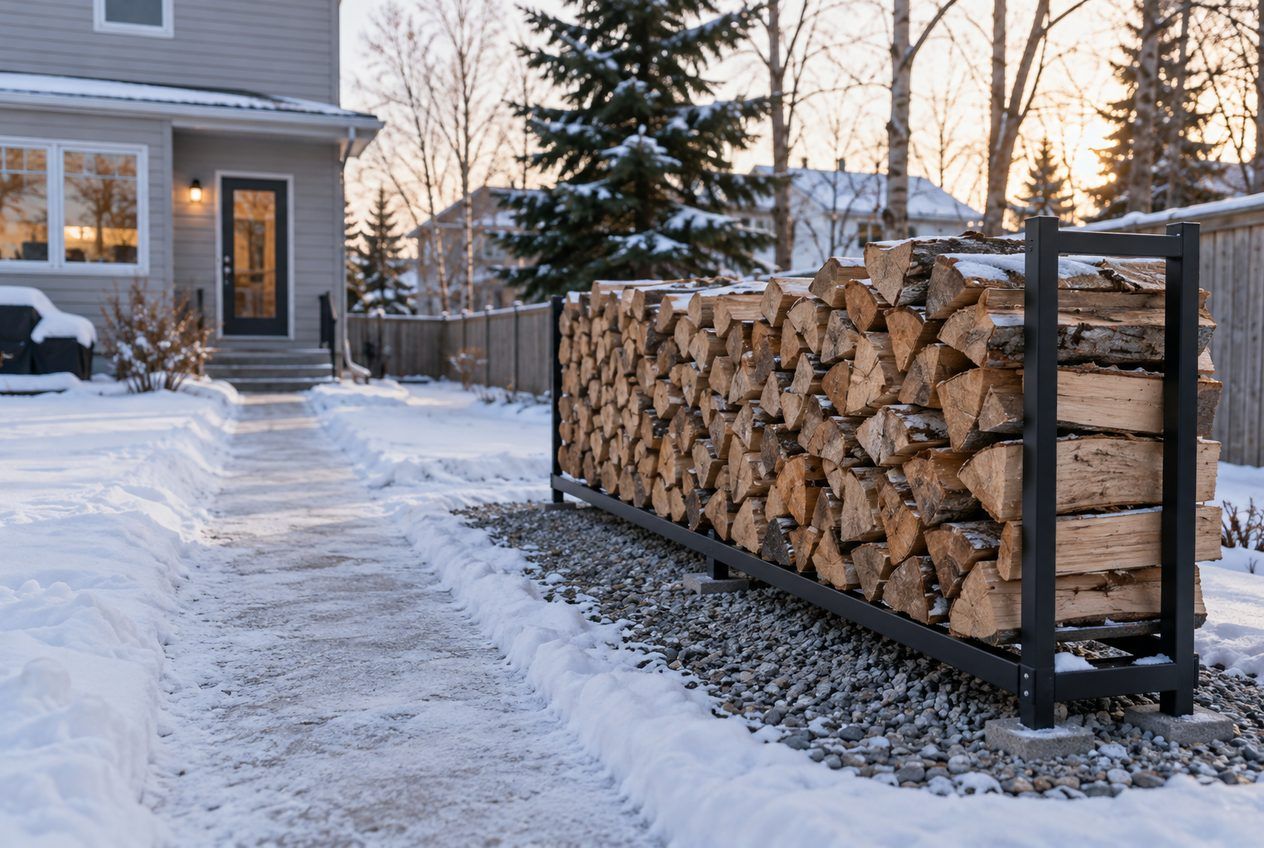
- Not against the house. Wood stacked against siding traps moisture on the wall and gives carpenter ants and rodents a covered bridge into the building. Keep the stack a few metres clear.
- Sun and wind, not shelter. A south or west exposure with the long axis of the rack facing the prevailing wind dries wood far faster than a tucked-away corner. Shade and stillness are what you are trying to avoid.
- Think about February, not September. The route from the stack to the door is a route you will be shovelling. Put the rack where a single shovel-width path reaches it, on gravel or pavers rather than grass that turns to mud.
- Do not move firewood long distances. The Canadian Food Inspection Agency regulates moving firewood out of areas affected by the emerald ash borer, and other pests travel the same way. Buy local wood, burn it where you buy it, and never haul a load from the city to the cottage.
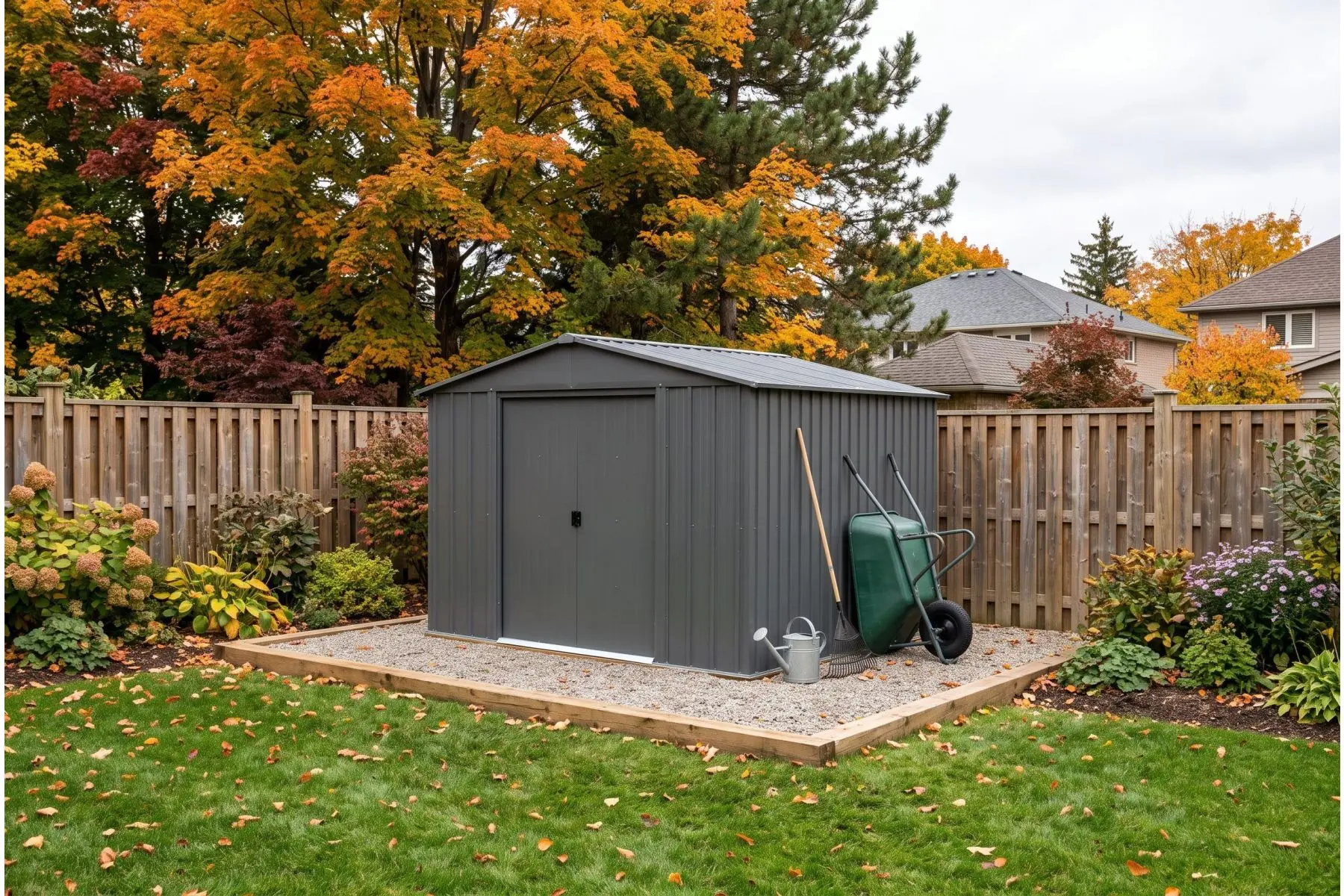
Sheds and garages deserve a note of their own. An enclosed building with no ventilation is a poor place to season wood — the moisture has nowhere to go. Store seasoned wood there in modest quantities if you like the convenience, but keep the bulk of the supply outdoors on a rack where air can reach it. Sheds are for the tools, the mower and the outdoor cushions.
Frequently Asked Questions
How long does firewood take to season in Canada?
Split wood stacked in spring is usually ready to burn by the following autumn — six to twelve months. Dense hardwoods like maple and oak are at the long end of that range; birch and softwoods dry faster. Time alone is not enough, though: the wood has to be off the ground, in a single row, with air moving through it. A pile left on the lawn under a tarp can sit for two years and still be wet. If you want certainty, a moisture meter pressed against a freshly split face should read under 20 percent.
Should I cover my firewood with a tarp all winter?
Cover the top, never the whole stack. A tarp wrapped down the sides and tucked under the wood seals moisture in and the stack will still be damp in March. The adjustable covers supplied with a firewood rack are designed around this: they keep rain and snow off the top and slide down as you burn through the stack, while the ends stay open to the wind. If you use a plain tarp, weight it over the top few rows only and leave the sides clear.
What size firewood rack do I need?
Match it to how you burn. A 4-foot rack holds a quarter cord, which suits weekend fire pit use or a small patio. An 8-foot rack holds half a cord and is the right size for most households running a wood stove on winter evenings. A 12-foot rack holds three-quarters of a cord and makes sense if wood is a real part of your heating or you want to rotate two seasons of supply. All three are 15.5 inches deep, which is one row of 16-inch splits.
Can I store firewood in my shed or garage?
Store seasoned wood there, not green wood. An enclosed shed has too little air movement to dry anything, and a damp stack inside a closed building invites mould and insects. Keeping two or three days of dry wood in a garage close to the door is sensible in January; keeping a full cord of fresh delivery in there is not. The bulk of the supply belongs outside on a covered rack.
Getting Ready Before the Snow
Work in this order and the job takes one Saturday. Decide how much wood you will actually burn, then buy the rack one size up from that figure. Set it on gravel or pavers a few metres from the house, long side to the wind, within a path you are willing to shovel. Stack a single row, bark side up on the top course so water runs off. Put the cover over the top third and leave the ends open. Then check it once in December and once in February, brush off the snow load, and that is the winter handled.
Browse our firewood racks and storage accessories for the covers, bracket kits, carry bags and the Haul-It wood mover, and take a look at the Gazebo Penguin log shelter if you want your wood dry faster. While the yard is still workable, it is the right weekend for the rest of the fall list too — winter covers over the patio furniture, the sheds tidied, and the fire pit pulled somewhere you can actually reach it once the snow arrives.