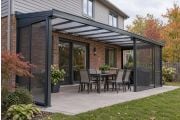
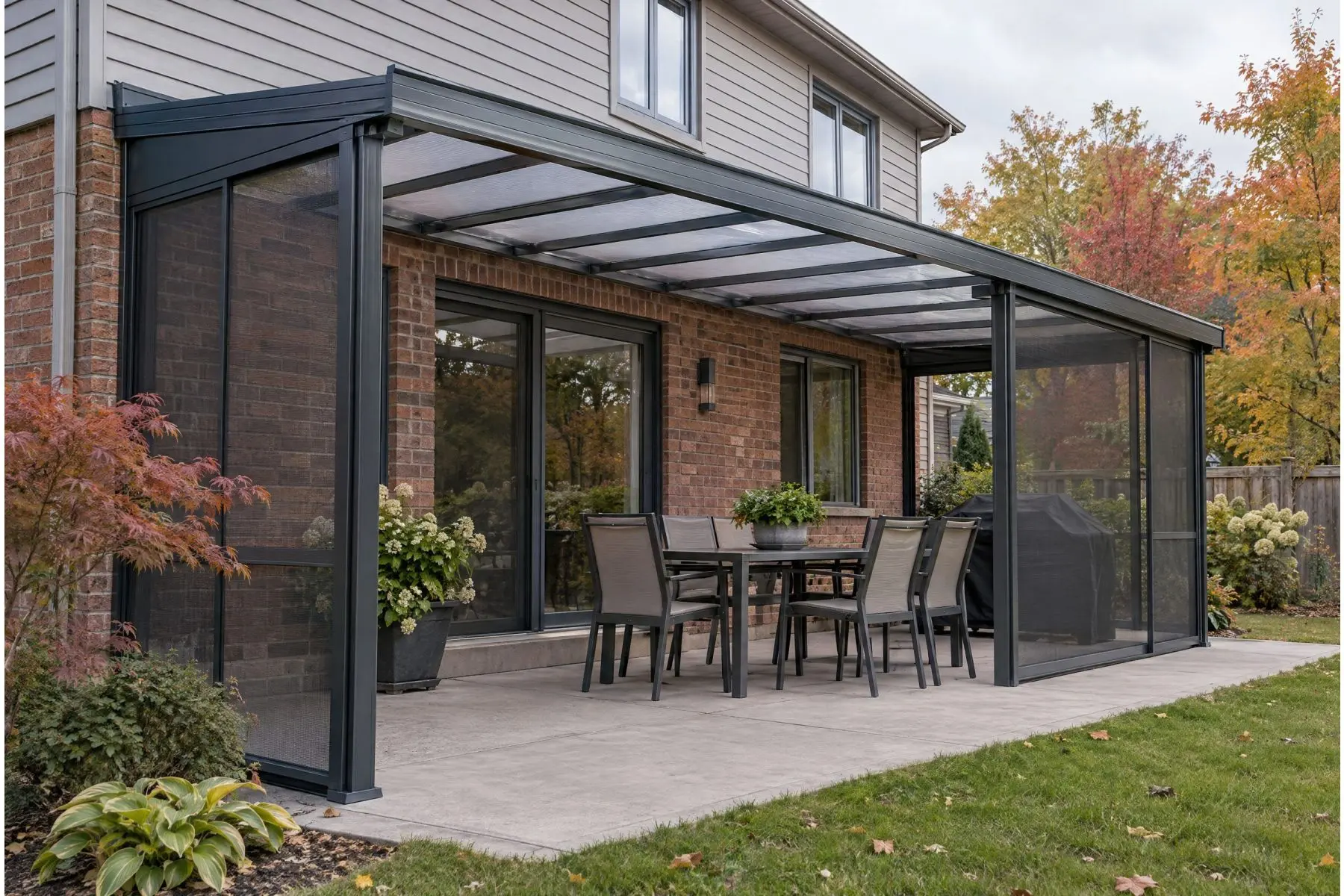
If your patio sits against the back of the house, a wall-mounted gazebo is often the smartest structure you can buy. Instead of planting four posts in the middle of the yard, an attached model borrows one wall from your home, shelters the door you already use, and leaves the rest of the lawn open. It is also the shape most Canadian homeowners search for once they realize a freestanding gazebo would swallow half the yard — and the shape most likely to run into a soffit, a window or a snow-loaded roof slope if you buy before you measure.
This guide walks through what wall-mounted structures actually are, how they compare with freestanding ones, the measurements that decide whether a model will fit your house, and what a Canadian winter does to a roof that is fastened to your siding.
Wall-mounted, add-a-room, abri soleil mural: what you are actually buying
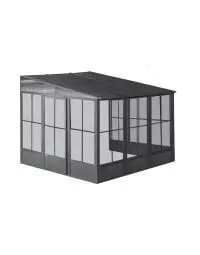
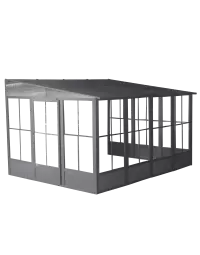
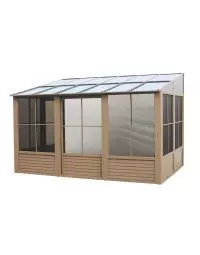
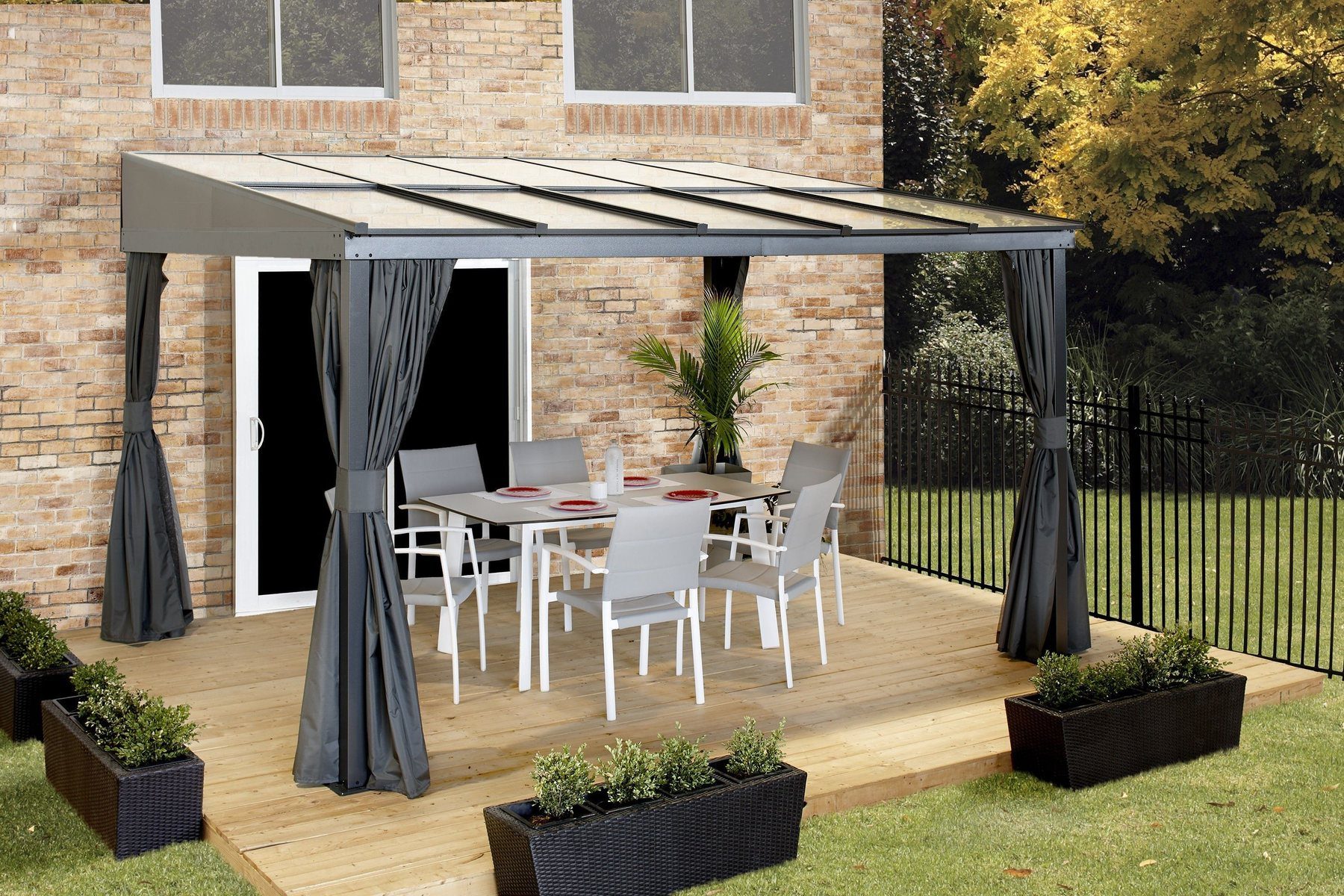
The category goes by several names. Manufacturers call them wall gazebos, wall-mounted solariums, add-a-rooms or, in Quebec, abris soleil muraux. Structurally they are all the same idea: a three-sided aluminum frame whose fourth side is bolted to your house, with a roof that pitches away from the wall.
Two families sit inside the category, and the difference matters more than the name:
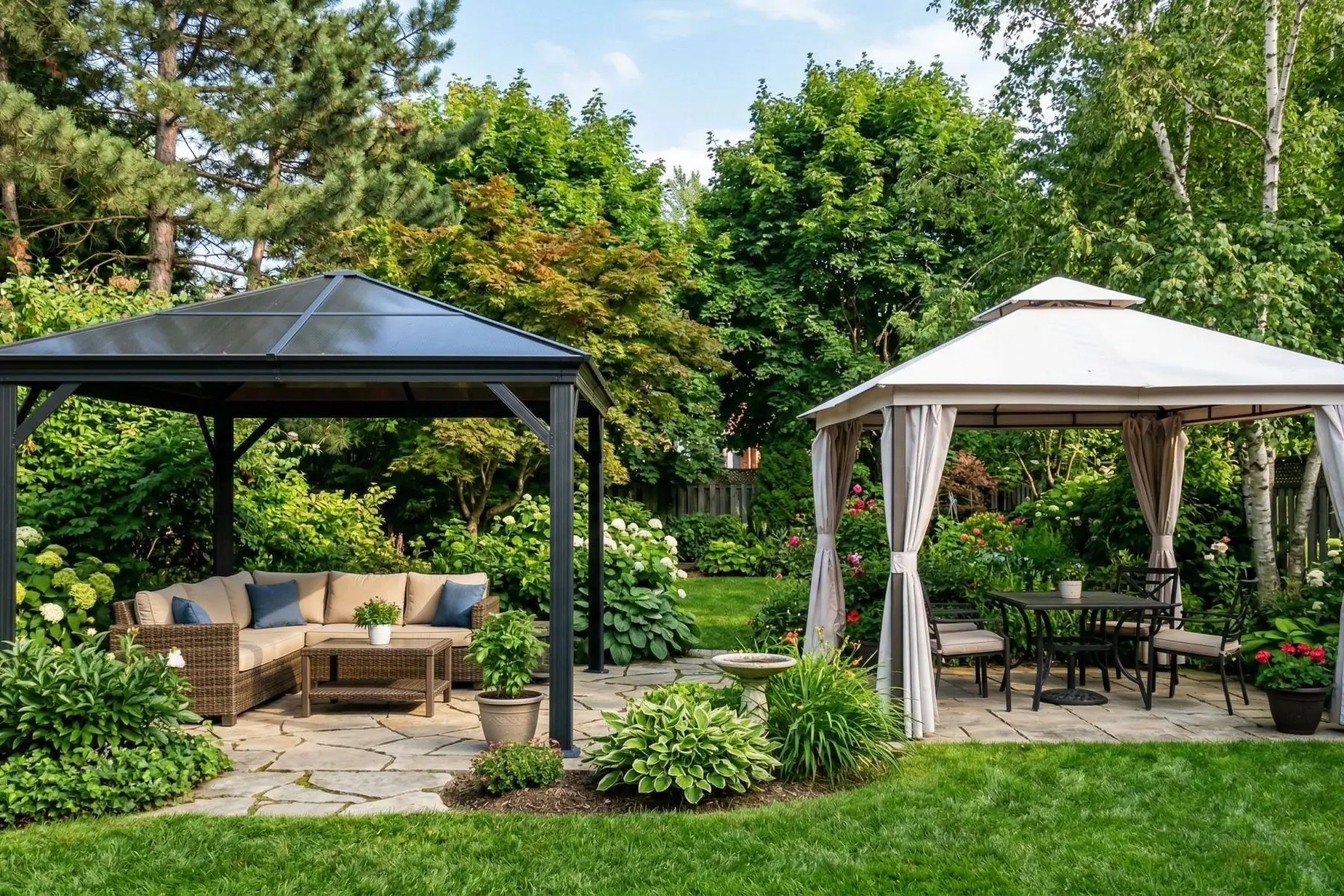
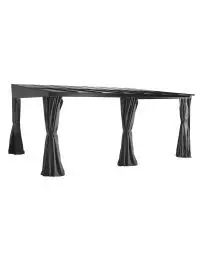
- Wall gazebos are open-air shade structures. The Sojag Pompano wall gazebo, for example, uses an aluminum frame with polycarbonate roof panels, nylon mosquito netting and polyester privacy curtains — it keeps sun, rain and mosquitoes off you, but it is not a room.
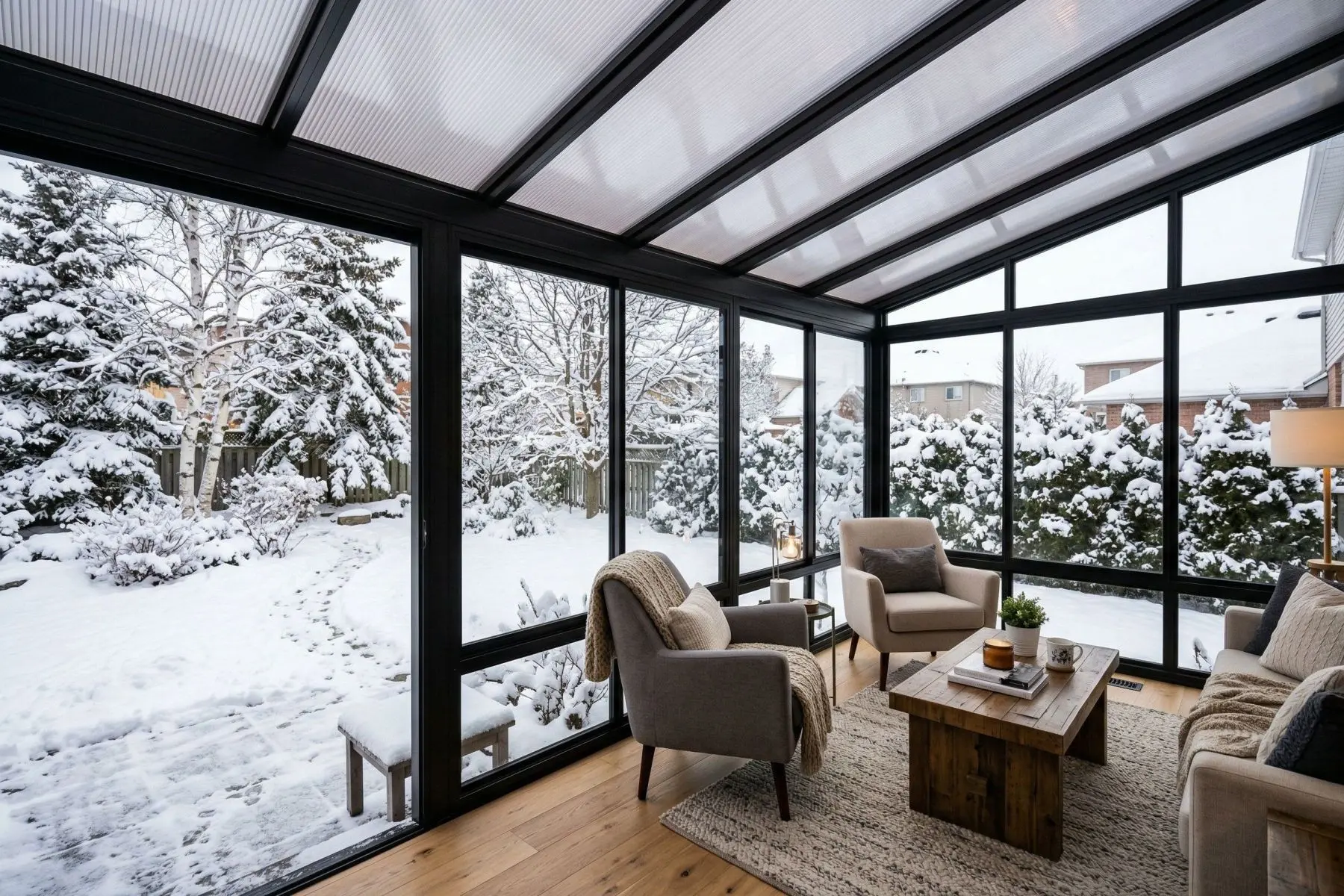
- Wall solariums add rigid walls. The Sojag Korado wall solarium is a three-season structure with an aluminum frame, a galvanized steel roof, PVC sliding windows and mosquito screens, so it closes up against wind and cool evenings. Three-season is the honest description: these are not insulated, heated winter rooms, and they should not be treated as one.
Both families are anchored to the house the same way, and both are sold as flat-pack kits with assembly required — the Korado ships as one structure, two doors, one roof kit and an instruction manual, while the Pompano adds a mosquito netting kit and a curtain kit to the box.
Wall-mounted vs freestanding: the honest trade-offs
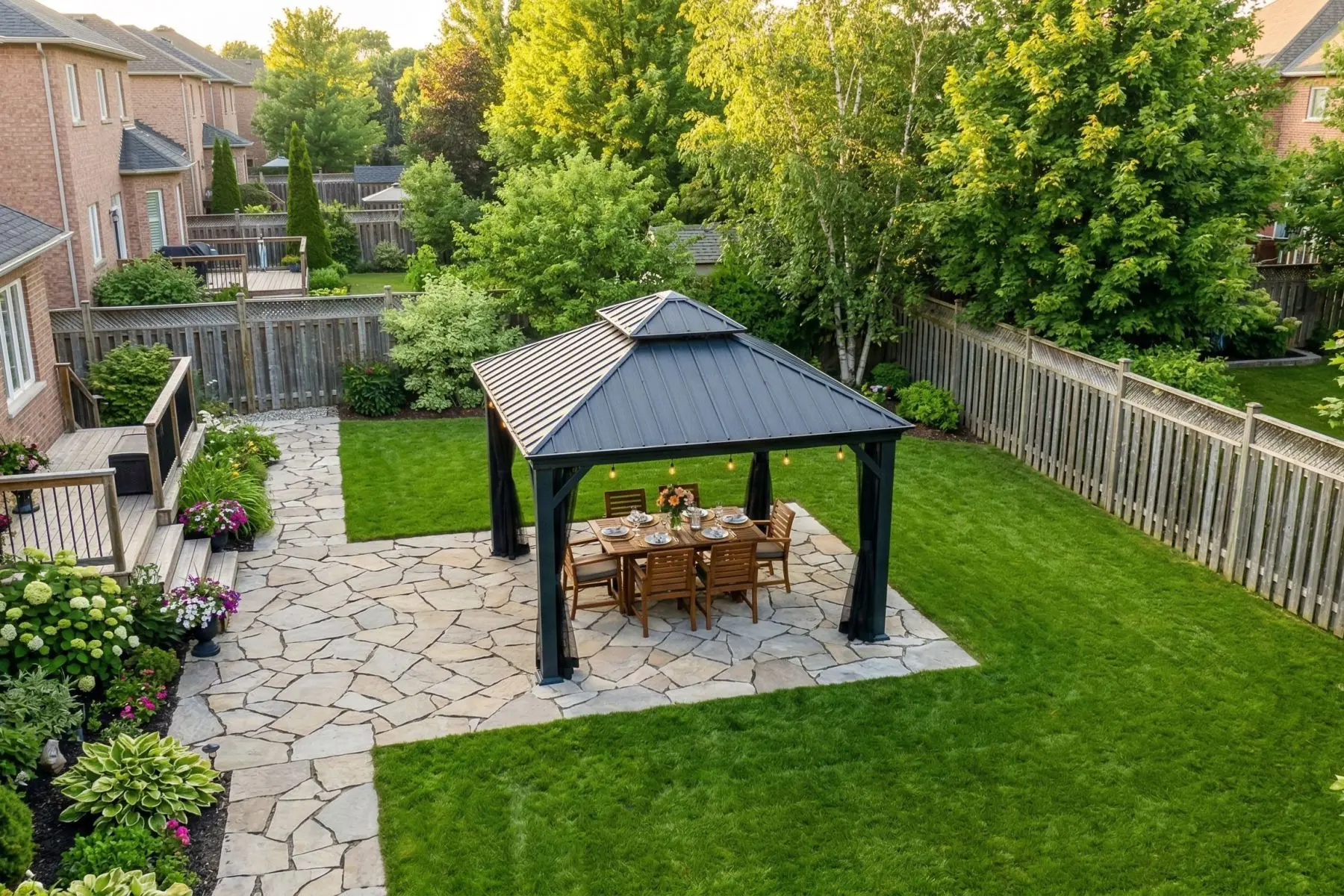
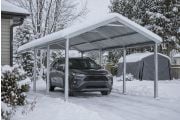
A freestanding gazebo can go anywhere. That freedom is exactly what makes it a bigger project: four sides of framing, four corners to anchor, and a footprint that has to be carved out of the lawn. An attached structure trades that flexibility for a shorter build and a covered path from the kitchen to the barbecue.
| Consideration | Wall-mounted | Freestanding |
|---|---|---|
| Yard space used | None beyond the patio you already have | A full island of lawn or deck |
| Posts to anchor | Typically the outer row only | Every corner |
| Weather protection at the door | Covers the entrance directly | You still walk through rain to reach it |
| Placement freedom | Limited to a wall with clearance | Anywhere the ground is level |
| House interaction | Fasteners, flashing and roof runoff to plan | None |
| Typical Canadian list price | Roughly $1,700–$2,700 for a wall gazebo, $4,200–$6,900 for a wall solarium | Comparable per square foot, but you buy more structure |
One more practical difference: a wall-mounted unit shades the wall it is attached to. West-facing patios in Calgary or Winnipeg, where late-afternoon sun bakes the back of the house, often see a noticeable drop in how hot the adjoining room gets through July and August.
Measure the wall before you fall in love with a model
This is where most attached-structure projects go sideways. A wall-mounted gazebo needs a band of clear, solid wall at a specific height, and that height is remarkably consistent across the category.
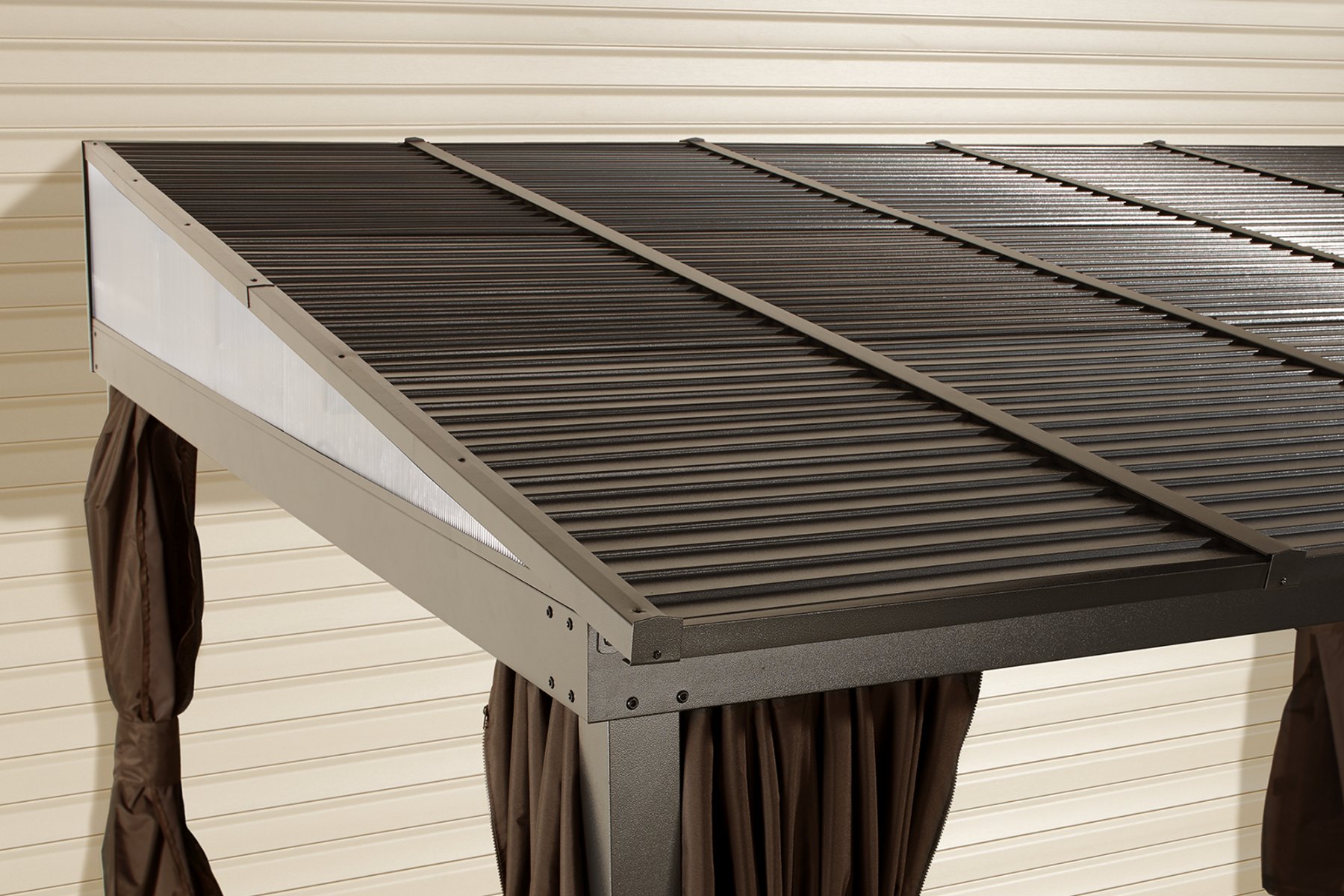
Across the wall-mounted models we carry, the structure stands roughly 94 to 97 inches tall where it meets the house — call it eight feet. The Sojag Pompano measures about 94.6 inches high at the wall, the Sojag Sutton 10 x 12 wall gazebo about 95.4 inches, the Korado solariums about 95.9 inches, and the Gazebo Penguin Florence Add-A-Room about 96 inches. Before you shop, check three things on your own wall:
- Clear height. You need about eight feet of uninterrupted wall from the patio surface up to the mounting line — below the soffit, and above the top of your patio door.
- Obstructions. Dryer vents, exterior lights, hose bibs, electrical meters, second-storey window sills and gas lines all sit in that band on a typical Canadian build. Any one of them can force you a few feet sideways.
- Projection. The depth is what reaches out over your patio. A 10 x 10 Pompano projects about 117 inches from the wall, a 10 x 12 Sutton about 143 inches, and a 10 x 16 Korado nearly 200 inches — over 16 feet of patio. Chalk the outline on the slab before you order.
Headroom inside is lower than the wall height suggests, because the roof pitches away: expect roughly 75 inches of clearance at the outer edge on the wall gazebos and about 78.5 inches on the Korado solariums. That is comfortable for standing and for a dining set, but it is worth knowing before you hang a light fixture or plan for a tall patio heater.
Wall gazebo or wall solarium? Match the structure to how you will use it
If the patio is a summer dining spot, an open wall gazebo is usually the better buy. Mosquito netting and curtains handle the two things that actually chase Canadians indoors in July — blackflies and low evening sun — and the open sides keep barbecue smoke moving. Polycarbonate roof panels let daylight through while cutting UV; a galvanized steel roof, like the one on the Sojag Portland wall gazebo, trades some of that light for a more solid, quieter roof in heavy rain.
Products in this guide
If you want to stretch the season into May and October, a wall solarium is the more capable structure. PVC sliding windows let you close the space on a cold evening, and mosquito screens behind them mean you can open it up again when the bugs settle. The Gazebo Penguin Florence Add-A-Room and the Korado line both work this way. Keep expectations calibrated to what these are: three-season rooms that make cool shoulder-season evenings pleasant, not winterized additions.
Whichever way you go, budget for the parts that make the structure livable — outdoor lighting, patio furniture sized to the footprint, and a set of gazebo accessories such as replacement netting or a side panel kit.
Attaching to a Canadian house: siding, flashing, snow and ice
An attached structure puts fasteners through your building envelope, so the details matter more than they do for a freestanding one.
Find structure, not just siding. The mounting rail has to reach solid framing — studs, a rim joist or masonry — not vinyl siding or foam sheathing alone. On brick, use appropriate masonry anchors; on stucco or engineered siding, locate framing first and plan fastener spacing to match the manual.
Seal the top edge. Every fastener you drive is a potential path for water. Flashing or a manufacturer-supplied wall seal at the top rail, plus exterior-grade sealant at each penetration, is what keeps spring meltwater out of the wall assembly. Doing this well is the single biggest difference between an attached structure that ages gracefully and one that causes a callback.
Plan for what comes off the main roof. This is the Canadian-specific failure mode. In Ontario, Quebec and the Maritimes, snow and ice sheet off a steep asphalt roof and land exactly where an attached roof sits. If the house roof drains toward the patio, look at snow guards or position the structure under a dormer, a lower roof section or a gable end. The same logic applies to eavestrough overflow: a downspout dumping onto a polycarbonate panel all winter will find its weak point.
Check the bylaw. Because the structure touches the house, many municipalities treat it differently than a freestanding gazebo — permits, setbacks and lot-coverage rules vary widely between, say, Ottawa, Laval and Surrey. A ten-minute call to the building department before you order is cheaper than moving it afterward.
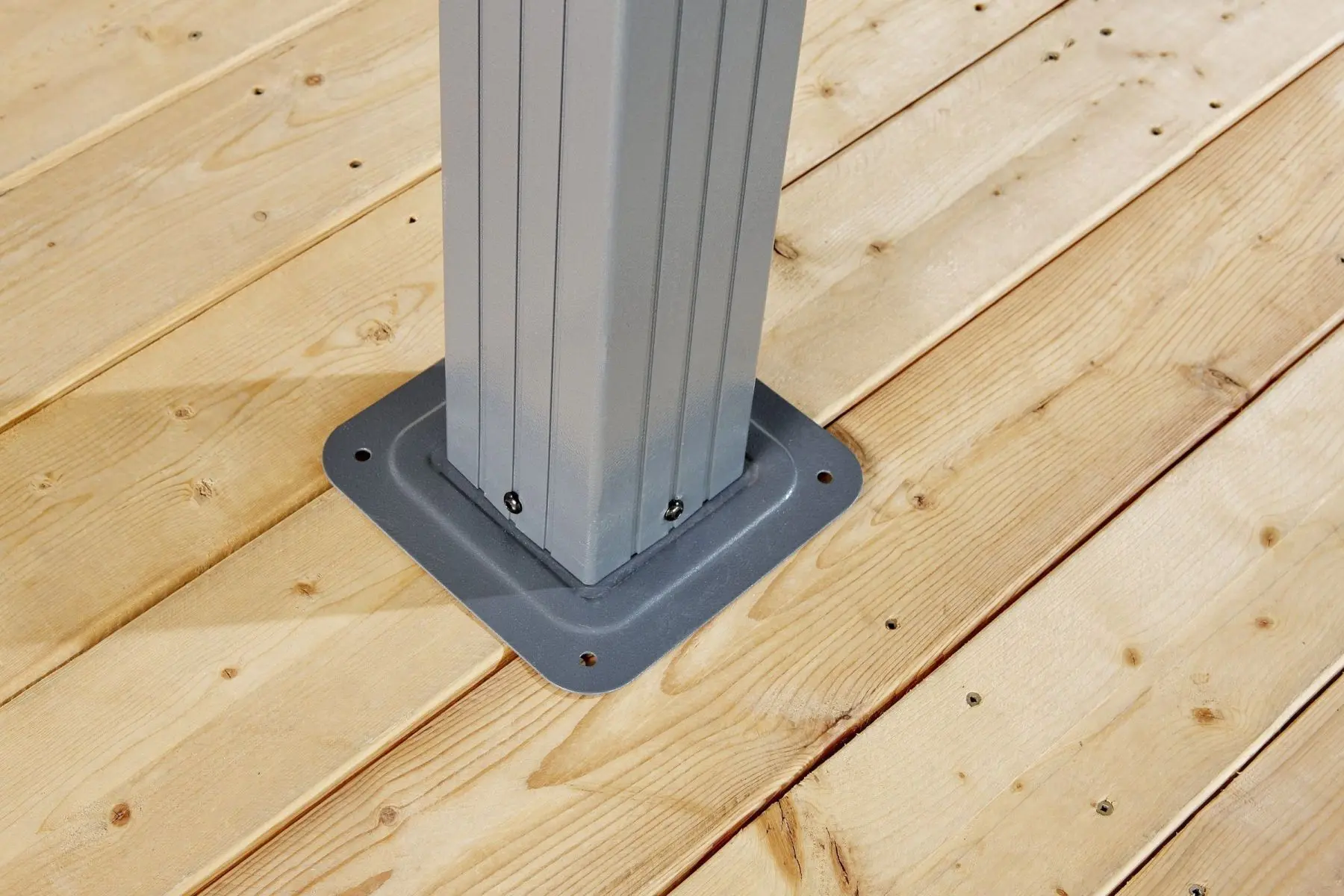
Anchor the outer posts properly. The house holds one side; wind uplift works on the other. Concrete patios take wedge anchors, decks take through-bolts into blocking, and gravel or soil needs proper ground anchors. Skipping this is the most common reason an otherwise sound structure moves in a summer storm.
Frequently Asked Questions
How much clear wall do I need for a wall-mounted gazebo?
Plan for about eight feet of solid, unobstructed wall above the patio. The wall-mounted models we carry stand roughly 94 to 97 inches tall at the house, so the mounting line has to clear your patio door and still sit below the soffit. Check for vents, lights, meters and hose bibs in that band before ordering.
Can a wall-mounted solarium stay up all winter in Canada?
These are three-season structures. Aluminum frames with galvanized steel or polycarbonate roofs handle rain and shoulder-season weather well, but they are not insulated winter rooms and they are not designed to carry a season of accumulated snow. Follow the manufacturer's winter instructions, clear snow promptly, and use winter covers or remove soft panels where the manual calls for it.
Is a wall gazebo cheaper than a freestanding one?
Usually, yes, for the same covered area — you are buying three sides of structure instead of four. Wall gazebos in our range list from roughly $1,700 to $2,700, while wall solariums with PVC sliding windows run about $4,200 to $6,900. Factor in fasteners, flashing and anchors suited to your wall and patio surface.
Do I need a permit for an attached gazebo?
It depends on your municipality. Because the structure is fastened to the house, many Canadian cities review it differently than a freestanding gazebo, and setback and lot-coverage rules vary by neighbourhood. Call your local building department with the model's footprint and height before you buy.
Choosing your setup
The decision comes down to your wall, not your yard. If you have roughly eight feet of clear, solid wall over a patio that the house roof does not dump snow onto, an attached structure gives you more usable shade per dollar and a dry path from the door. If that band of wall is crowded with vents and windows, or the main roof dumps snow and water straight onto it, a freestanding gazebo or a pergola on the open lawn will serve you better.
Start by measuring the wall and chalking the projection on the patio, then compare wall-mounted gazebos and three-season sunrooms in the sizes that actually fit. Add the winter covers and gazebo accessories your model calls for while you are ordering, and you will be sitting under it by the next long weekend.