Why Your Gazebo Roof Choice Matters in Canada
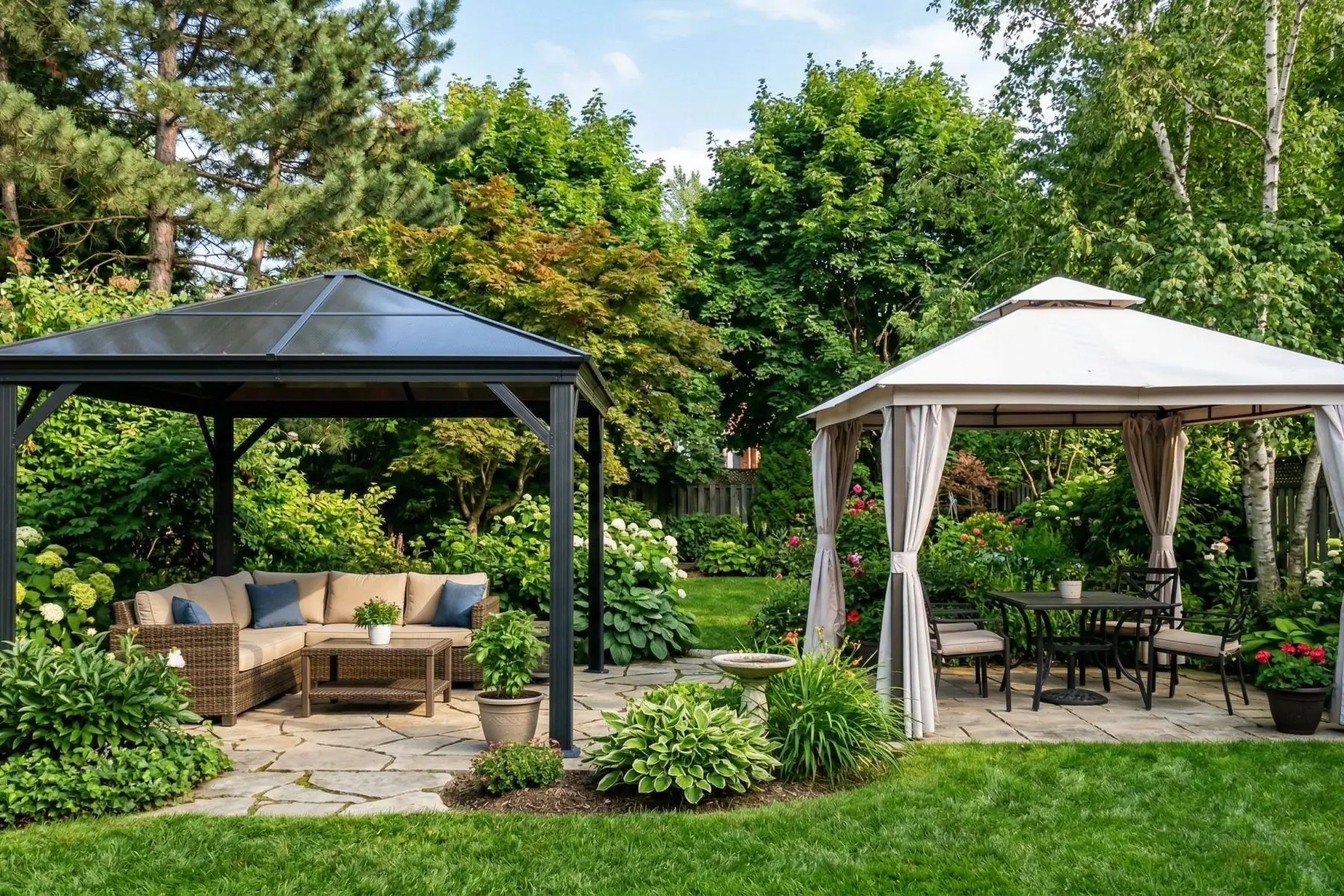
Choosing between a hardtop and a soft-top gazebo is one of the most important decisions you will make when planning your outdoor living space. In Canada, this choice takes on even greater significance. Our backyards endure heavy snowfall, freezing rain, gusty winds, and intense summer UV radiation, sometimes all within a single week. The roof over your gazebo determines how well your structure handles these extremes, how long it lasts, and how much maintenance it demands season after season.
Whether you are looking at a permanent year-round shelter or a seasonal shade solution, understanding the real-world differences between hardtop gazebos and soft-top gazebos helps you invest wisely. This guide breaks down everything Canadian homeowners need to know, from snow load ratings and wind resistance to maintenance requirements and total cost of ownership.
Hardtop Gazebos: Built for Canadian Extremes
What Defines a Hardtop Gazebo
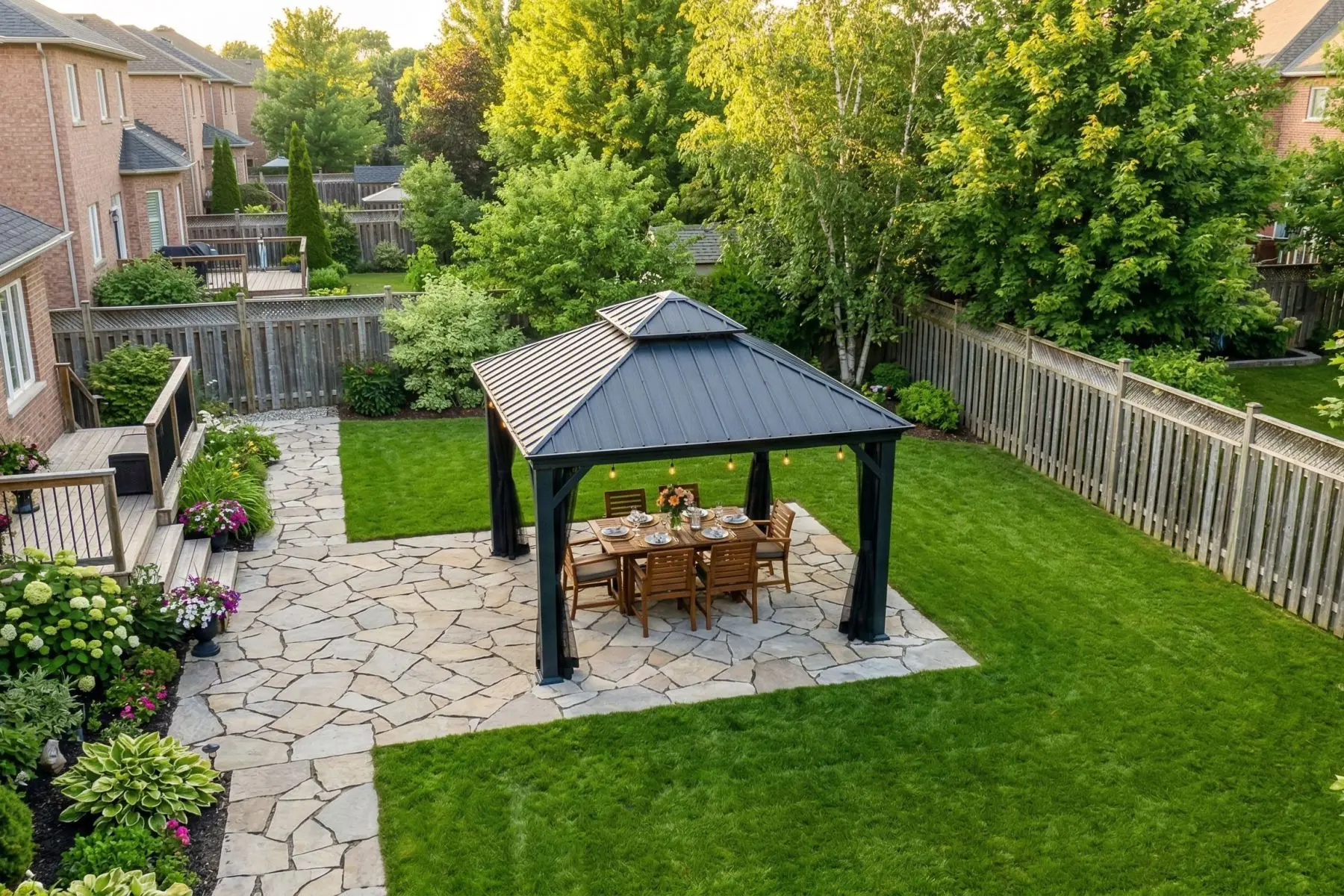
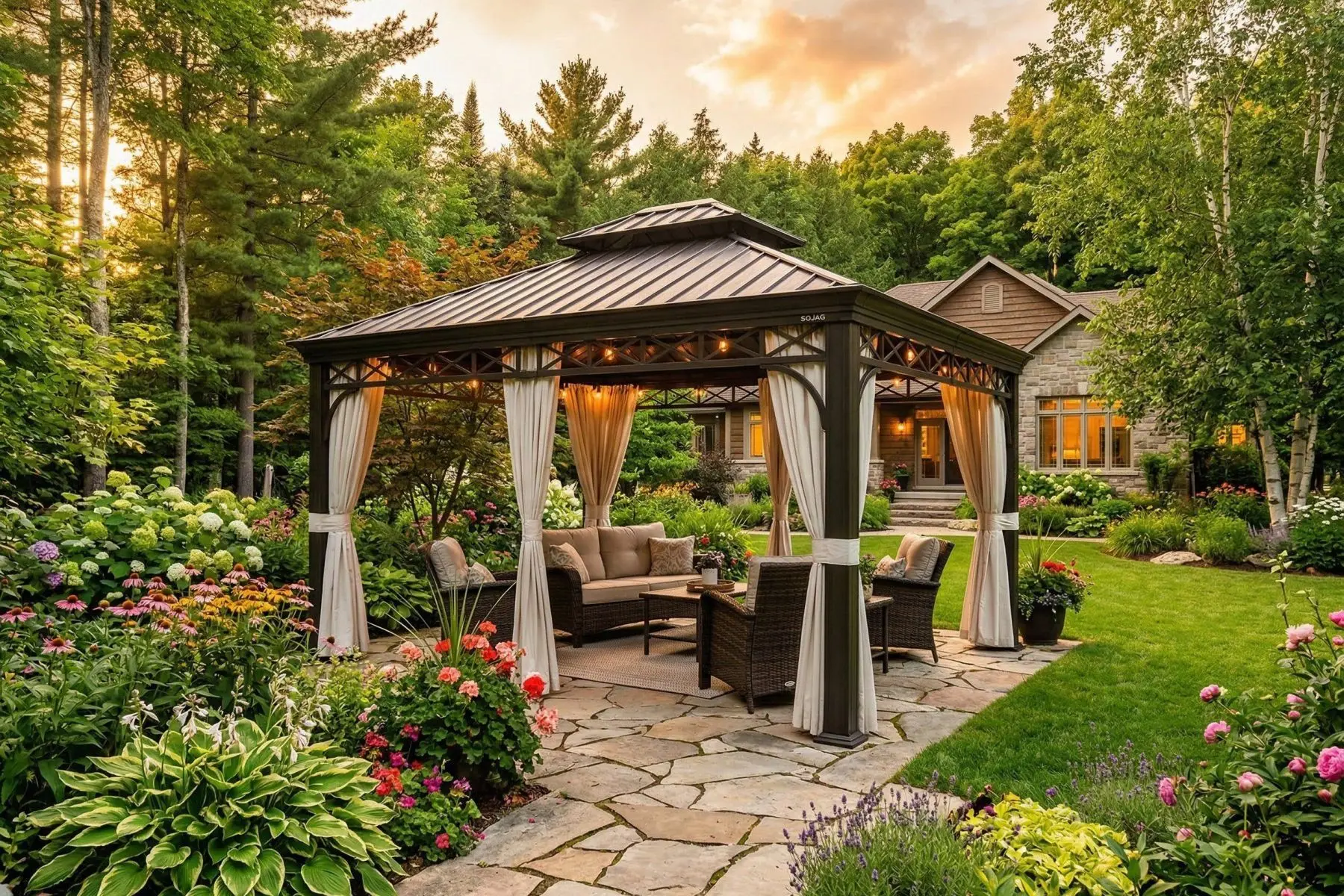
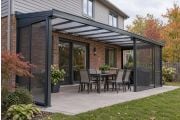
A hardtop gazebo features a rigid roof made from galvanized steel panels, aluminum, or polycarbonate sheets mounted on a heavy-duty frame. These structures are designed as permanent or semi-permanent backyard additions. Popular models like the Sojag Dakota, Sojag Genova, and Gazebo Penguin Florence use a combination of aluminum frames with galvanized steel roofs, while some designs incorporate tinted polycarbonate panels that allow filtered natural light.
The frame construction typically involves powder-coated aluminum posts with cross-bracing for structural rigidity. Roof panels interlock or overlap to create a watertight seal, and most hardtop models include an integrated gutter system to channel water and snowmelt away from the structure.
Snow Load Performance
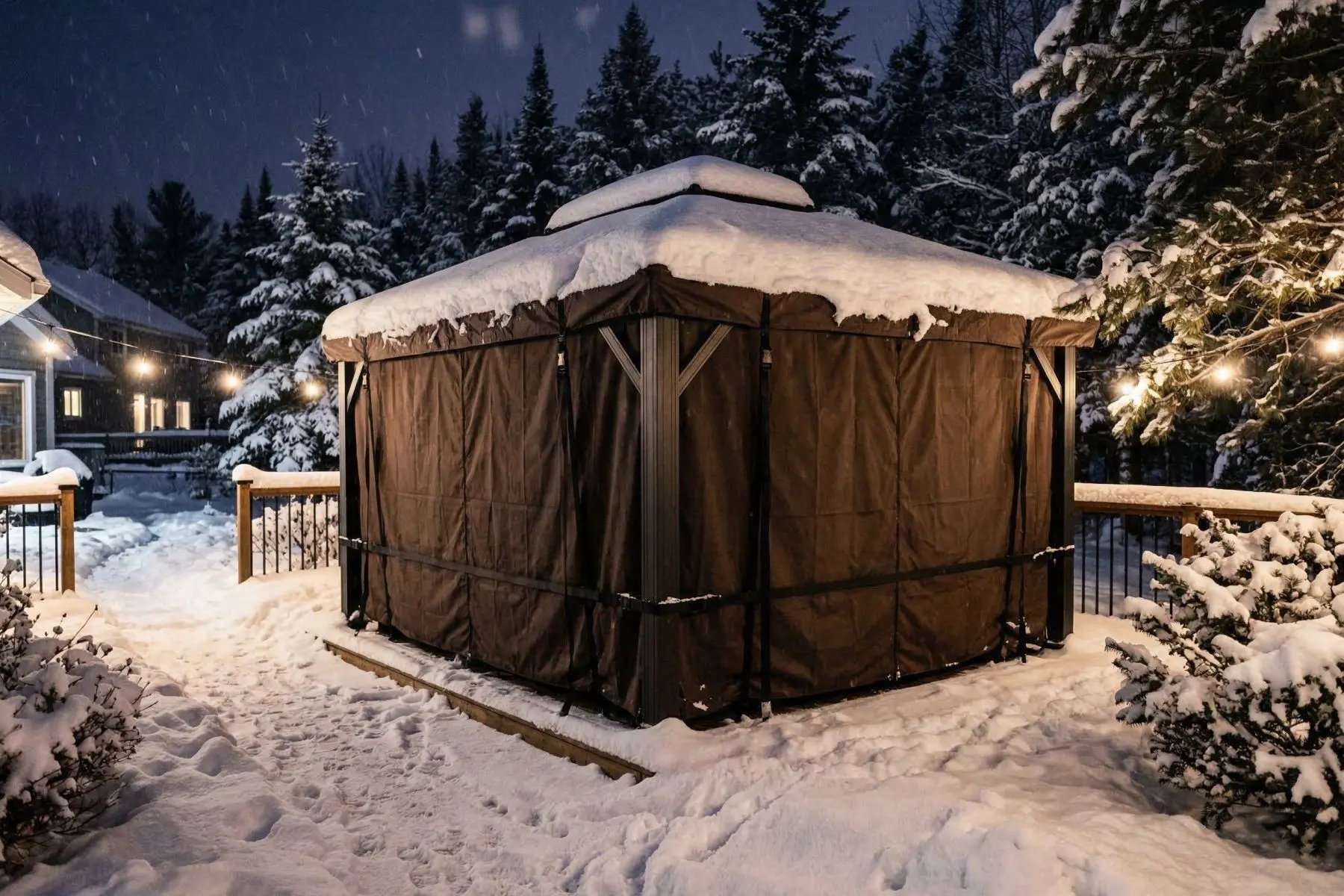
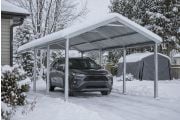
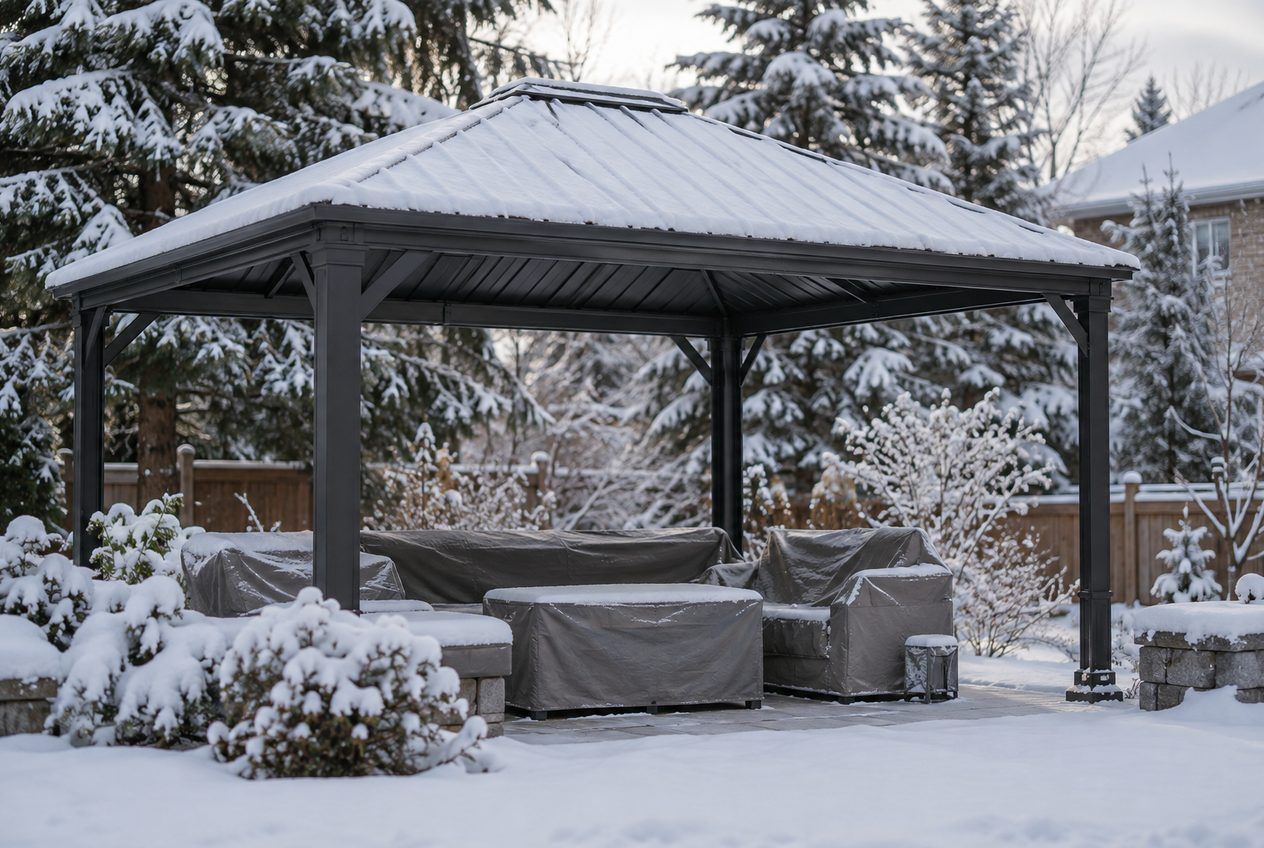
This is where hardtop gazebos truly shine in Canadian conditions. Quality hardtop models are engineered to support significant snow loads. The Sojag Dakota, for instance, handles snow accumulation that would collapse a soft-top canopy within hours. Steel and aluminum roofs distribute weight evenly across the frame, and their rigid surfaces allow snow to slide off more readily than fabric canopies where snow tends to pool in the center.
For homeowners in Quebec, Ontario, and the Maritime provinces where heavy wet snow is common, a hardtop gazebo provides peace of mind. You will not need to rush outside after every snowfall to brush off accumulated snow or worry about collapse during an overnight storm.
Wind Resistance
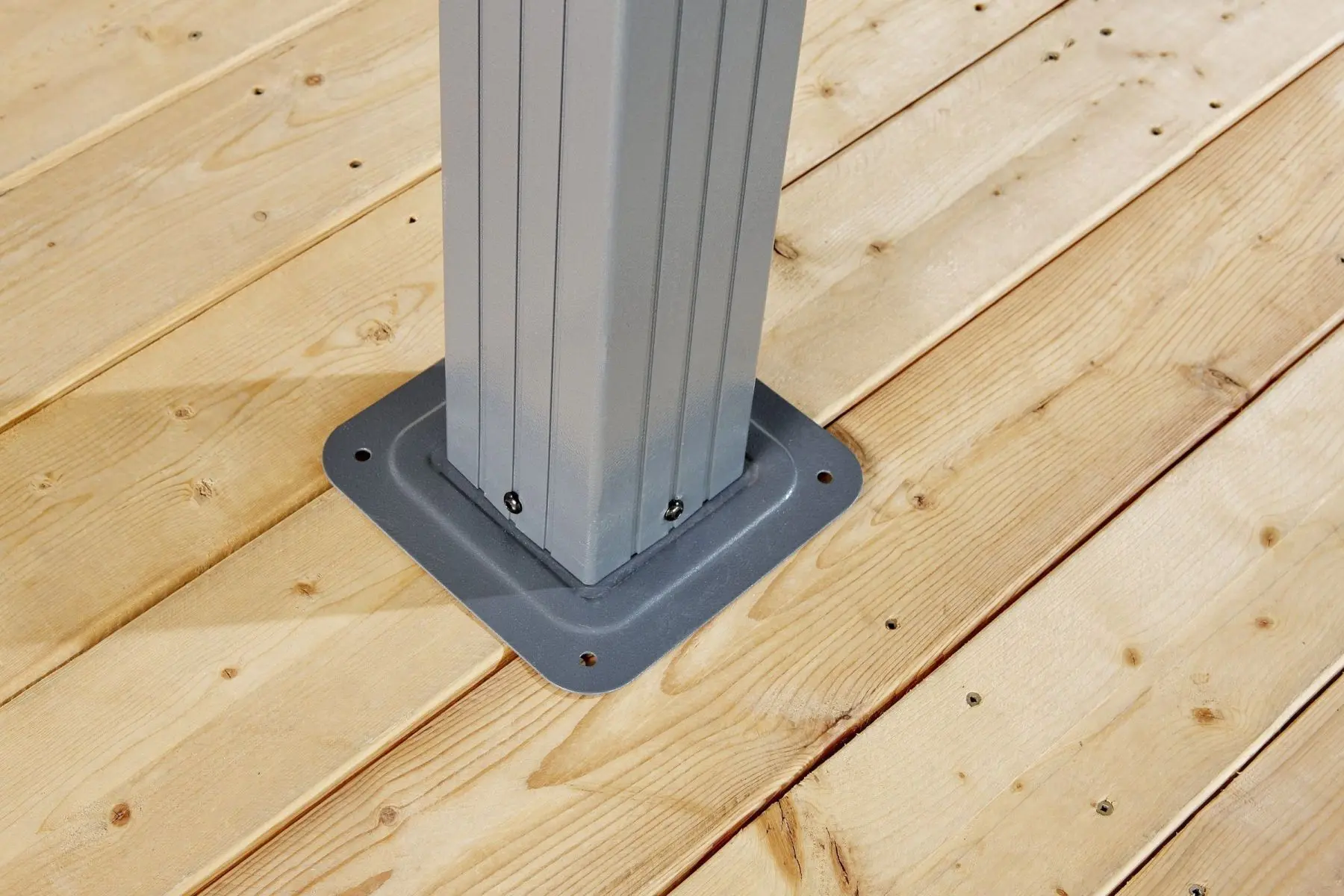
Hardtop gazebos offer superior wind resistance compared to soft-top models. The rigid roof panels do not catch wind like fabric canopies, which can act as sails during gusts. However, proper anchoring is essential. Most hardtop gazebos should be anchored to a concrete pad, patio stones, or a reinforced deck using the manufacturer's anchoring kit. The Gazebo Penguin Yosemite and similar models include anchor points engineered for permanent installation.
In exposed locations, particularly in the Prairies or coastal areas of British Columbia and the Atlantic provinces, the combination of a rigid roof and solid anchoring makes hardtop gazebos significantly more wind-resistant than their soft-top counterparts.
Durability and Lifespan
A well-maintained hardtop gazebo lasts 15 to 25 years or more. Galvanized steel resists rust, powder-coated aluminum will not corrode, and polycarbonate panels are virtually unbreakable. The primary wear points are the finish on the frame (which may need touch-up paint after 8 to 10 years) and the rubber gaskets between roof panels (which can be replaced inexpensively).
Compare this to the 3 to 5 year canopy replacement cycle of soft-top models, and the long-term value proposition becomes clear. Even factoring in the higher upfront cost, a hardtop gazebo often costs less per year of use.
Soft-Top Gazebos: Flexible and Budget-Friendly
What Defines a Soft-Top Gazebo
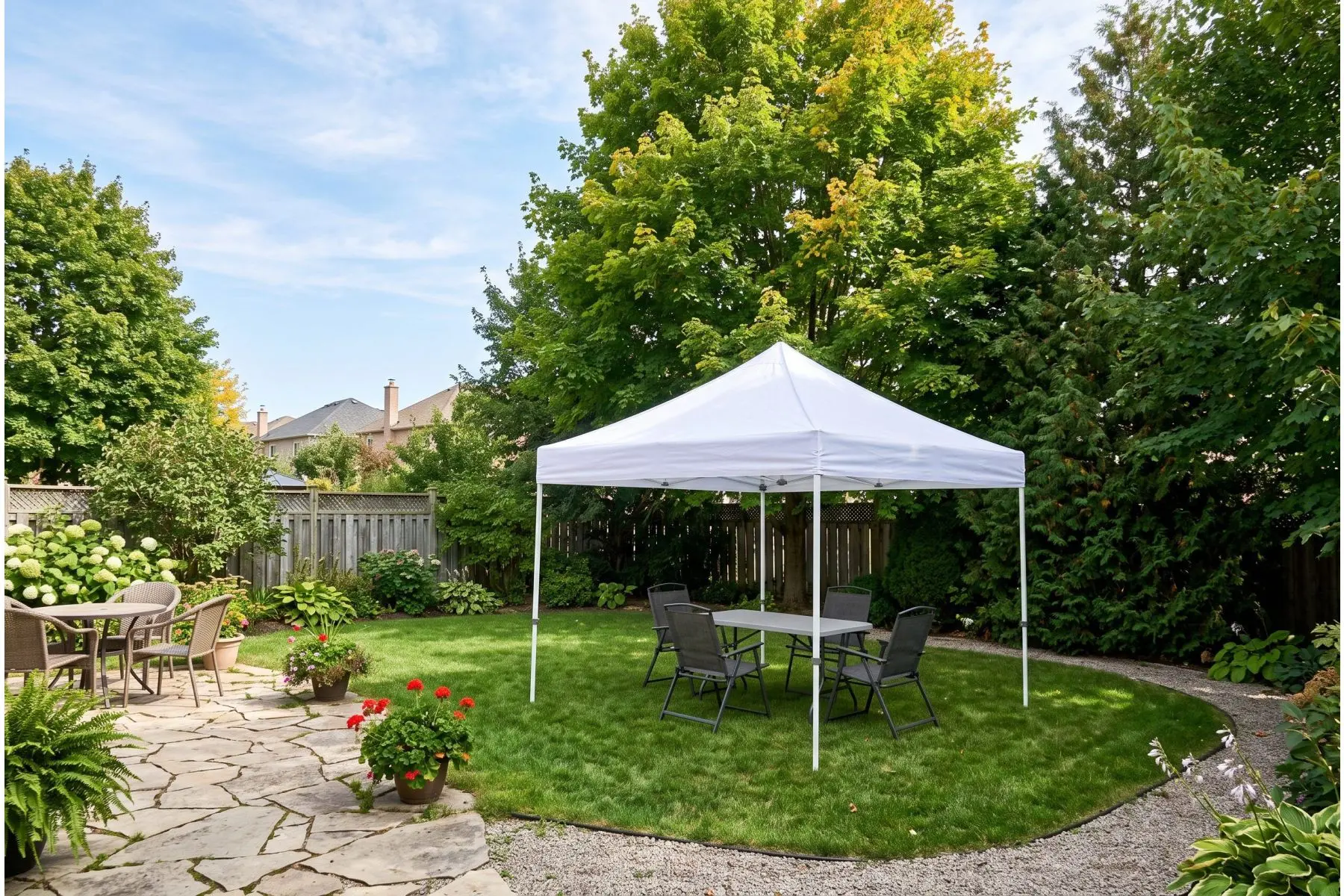
A soft-top gazebo uses a fabric canopy, typically made from polyester with a PVC or polyurethane waterproof coating, stretched over a steel or aluminum frame. These structures range from ultra-portable pop-up designs to more substantial seasonal gazebos. The Corriveau Metropolis represents the more durable end of the soft-top spectrum, with heavy-gauge steel frames and premium fabric canopies designed for extended seasonal use.
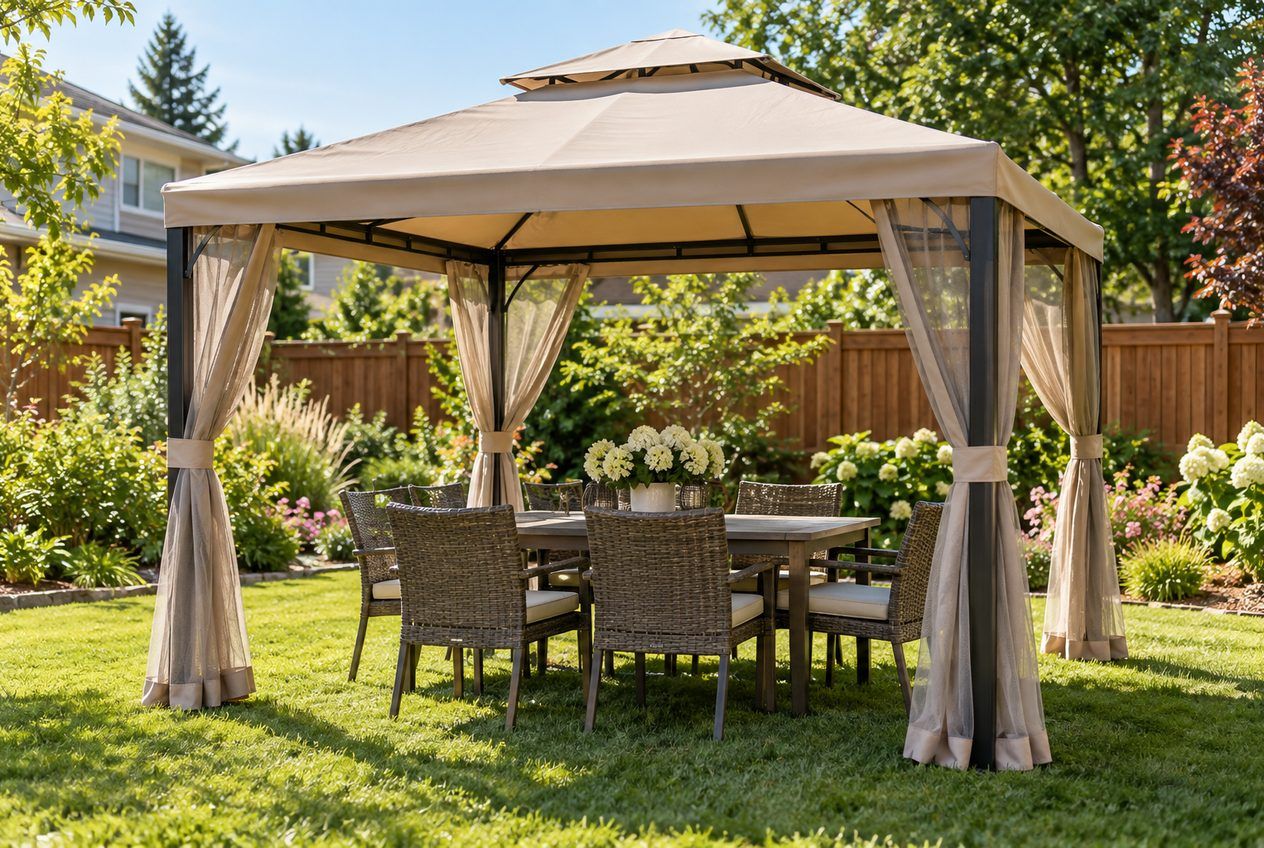
Soft-top canopies come in a wide variety of colors and styles, from classic solid hues to decorative patterns. Many models include zippered mosquito netting and removable privacy curtains, making them versatile three-season shelters.
Snow Load Limitations
This is the most significant weakness of soft-top gazebos in Canada. Fabric canopies are not designed to bear snow loads. Even a few inches of wet snow can stretch or tear the canopy, bend the frame, or cause a complete collapse. Most manufacturers explicitly state that soft-top gazebos must be disassembled or have the canopy removed before the first snowfall.
For Canadian homeowners, this means a soft-top gazebo is strictly a three-season structure. You will need to factor in the time and effort of annual setup and takedown, plus dry storage space for the canopy and potentially the frame during winter months.
Wind Performance
Soft-top gazebos are inherently more vulnerable to wind. The fabric canopy catches wind, creating uplift forces that can dislodge stakes and overturn lighter frames. Even with sandbag weights or ground stakes, strong gusts can damage the canopy or frame. During summer thunderstorms, which are common across most of Canada from June through September, a soft-top gazebo may require temporary removal of the canopy to prevent damage.
Higher-quality soft-top models with vented canopies perform better than budget options. The vent at the peak allows wind to pass through rather than building pressure underneath, reducing the risk of uplift. Still, no soft-top gazebo matches the wind resistance of a properly anchored hardtop.
Canopy Lifespan and UV Degradation
UV radiation is a silent destroyer of soft-top canopies. Even premium polyester fabrics with UV-resistant coatings begin to fade and weaken after two to three seasons of Canadian summer sun. The coating breaks down, waterproofing fails, and the fabric becomes brittle. Most soft-top gazebo owners replace their canopy every 3 to 5 years, and sometimes sooner if the gazebo faces south or west with full sun exposure.
Replacement canopies typically cost $80 to $250 depending on the model, and finding exact replacements for discontinued models can be challenging. This ongoing cost should be factored into any purchase decision.
Head-to-Head Comparison
| Feature | Hardtop (Steel/Polycarbonate) | Soft-Top (Polyester) |
|---|---|---|
| Snow Load Capacity | Engineered for heavy loads; snow slides off rigid panels | Not rated for snow; must remove canopy before winter |
| Wind Resistance | High, when properly anchored to concrete or deck | Moderate; vented canopies help but still vulnerable |
| Seasonal Use | Year-round (4-season capable) | 3-season only (spring through fall) |
| Lifespan | 15-25+ years with minimal maintenance | Frame: 8-12 years; Canopy: 3-5 years |
| Maintenance | Annual inspection, occasional touch-up paint | Seasonal setup/takedown, canopy washing, replacement |
| Waterproofing | Permanent; interlocking panels with gutters | Coating degrades over time; reapplication needed |
| UV Protection | Steel: full shade; Polycarbonate: filtered light with UV blocking | Good initially; degrades each season |
| Noise in Rain | Moderate drumming on steel; quieter on polycarbonate | Minimal; fabric absorbs sound |
| Weight | 150-350 lbs (permanent installation) | 40-100 lbs (semi-portable) |
| Price Range | $1,500-$5,000+ | $300-$1,500 |
| Assembly Time | 6-12 hours (2 people recommended) | 1-4 hours (some models solo-friendly) |
| Property Value Impact | Positive; viewed as permanent improvement | Neutral; viewed as temporary accessory |
Canadian Climate Considerations by Region
Ontario and Quebec
Heavy wet snow, ice storms, and humid summers make this region a strong candidate for hardtop gazebos. The combination of significant snowfall (often exceeding 80 inches annually in many areas) and frequent freeze-thaw cycles means any outdoor structure needs to handle substantial loads and temperature extremes. A hardtop gazebo from Sojag or Gazebo Penguin withstands these conditions without seasonal disassembly.
Prairie Provinces (Alberta, Saskatchewan, Manitoba)
Wind is the dominant factor on the Prairies. While snowfall is generally drier and lighter than in Eastern Canada, sustained winds and sudden gusts can be severe. Hardtop gazebos with proper concrete anchoring perform well here. Soft-top models struggle with persistent wind unless placed in a well-sheltered location.
British Columbia
Coastal BC gets more rain than snow, making waterproofing the priority. Hardtop gazebos with integrated gutters excel in the Lower Mainland and Vancouver Island. In the BC interior, conditions are closer to the Prairies with more snow and wind. Polycarbonate-roof hardtops are popular in BC because they allow natural light while providing rain and UV protection during the region's sunny summers.
Atlantic Provinces
The combination of heavy snowfall, nor'easters, salt air, and coastal winds makes the Maritimes one of the toughest environments for any outdoor structure. Hardtop gazebos with corrosion-resistant finishes are strongly recommended. Look for models with galvanized or marine-grade powder coating to resist salt air corrosion.
DIY Assembly: What to Expect
Hardtop Gazebo Assembly
Assembling a hardtop gazebo is a full-day project. Most 10 x 12 or 12 x 14 models take 6 to 12 hours with two people. The process typically involves:
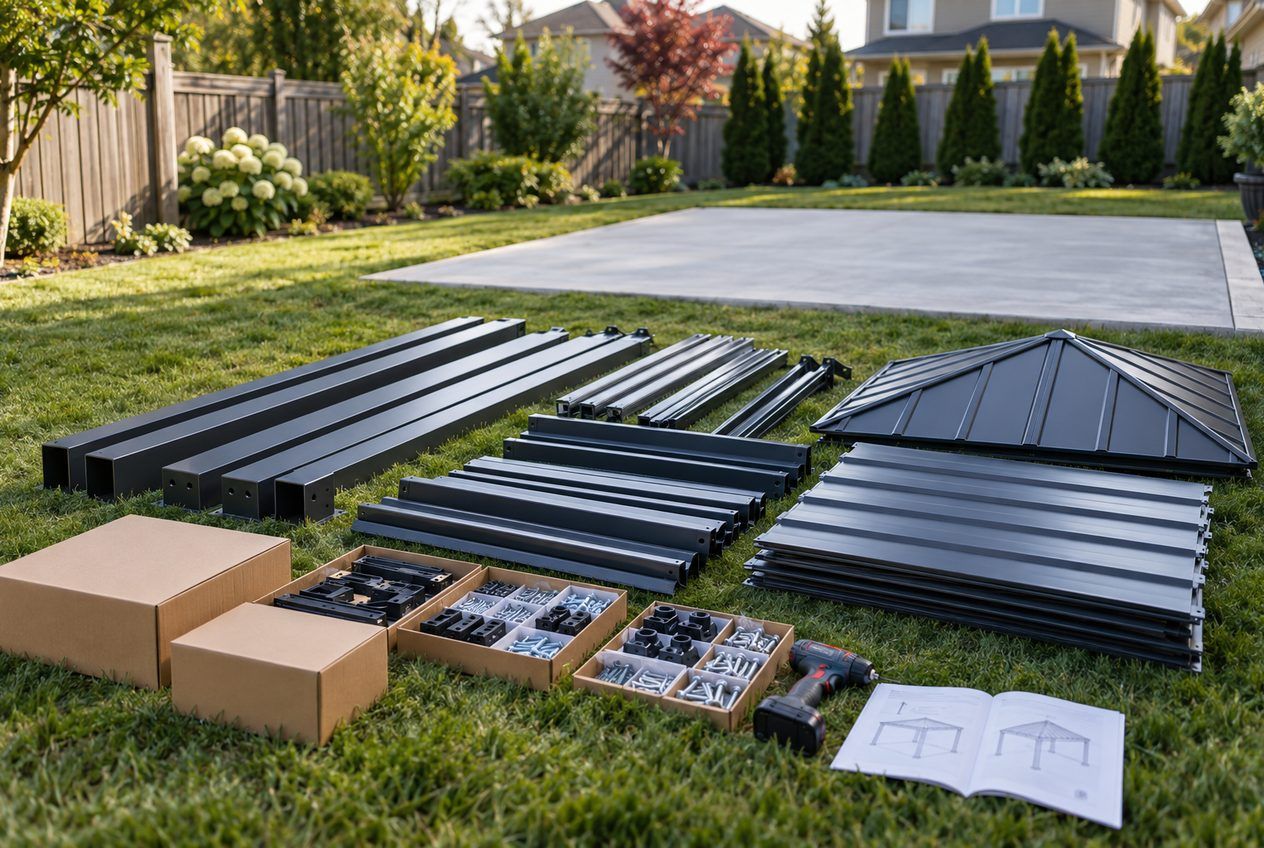
- Preparing a level foundation (concrete pad, patio stones, or reinforced deck)
- Assembling and raising the post frame
- Installing cross-beams and roof support structure
- Mounting individual roof panels (often the most time-consuming step)
- Securing gutters, trim, and hardware
- Anchoring the completed structure to the foundation
Models like the Sojag Roma and Sojag Genova come with detailed instructions and pre-drilled components. The biggest challenge is handling the roof panels, which can be heavy and awkward. A calm, windless day is ideal for assembly. Having a third person to steady panels while two people fasten them makes a significant difference.
Soft-Top Gazebo Assembly
Soft-top gazebos are considerably easier to assemble. Most models take 1 to 4 hours, and some pop-up designs can be set up in under 30 minutes by a single person. The process is straightforward: assemble the frame, drape and secure the canopy, attach mosquito netting or curtains, and stake or weight the legs.
The trade-off is that this assembly often needs to happen twice a year, spring setup and fall takedown, adding cumulative hours over the life of the gazebo. Over a 10-year period, a homeowner may spend more total assembly time on a soft-top than they would on a single hardtop installation.
Maintenance Requirements
Hardtop Maintenance
- Spring: Inspect roof panels for loosened fasteners, check frame joints, clear gutters of debris
- Summer: Wash frame and roof with mild soap and water, check for paint chips or scratches
- Fall: Clear leaves from gutters, inspect anchors, ensure drainage channels are unobstructed
- Winter: No action needed; structure handles snow and ice independently
Soft-Top Maintenance
- Spring: Remove from storage, inspect canopy for mold or mildew, clean with fabric cleaner, assemble and install
- Summer: Wash canopy monthly, reapply waterproof spray as needed, tighten frame connections
- Fall: Disassemble, clean and thoroughly dry canopy to prevent mold, store in a dry indoor space
- Winter: Verify storage conditions; moisture in storage leads to mold and premature fabric failure
When to Choose a Hardtop Gazebo
Choose Hardtop If:
- You want year-round outdoor shelter without seasonal assembly
- Your area receives significant snowfall or freezing rain
- You plan to add electrical wiring, a ceiling fan, or lighting
- You want to increase your property value
- You prefer a long-term investment with low ongoing costs
- You plan to use the space for outdoor dining, a hot tub cover, or a 火炉 area
- Wind exposure is a concern at your property
Consider Soft-Top If:
- Your budget is under $1,500
- You rent your home or may move within a few years
- You only need shade during summer months
- You want the flexibility to change canopy colors or styles
- Your municipality requires permits for permanent structures
- You have limited ability to prepare a concrete foundation
- You prefer a lightweight option for occasional use
Popular Models for Canadian Backyards
Hardtop Picks
Sojag Dakota -- A top-selling hardtop gazebo with a galvanized steel roof and powder-coated aluminum frame. Available in 10 x 10, 10 x 12, and 12 x 14 sizes. The dark-tinted steel roof provides complete shade and handles heavy snow loads. An excellent choice for homeowners in Ontario and Quebec who want four-season use.
Products in this guide
Sojag Genova -- Features a sleek, modern design with a double-roof structure that improves ventilation and reduces heat buildup during summer. The dual-layer roof also adds structural strength for snow loads. Available in 10 x 12 and 12 x 16 configurations.
Sojag Roma -- A premium option with a polycarbonate roof that allows soft, filtered natural light into the gazebo while blocking harmful UV rays. Ideal for homeowners who want the durability of a hardtop without the darker, fully shaded feel of a steel roof.
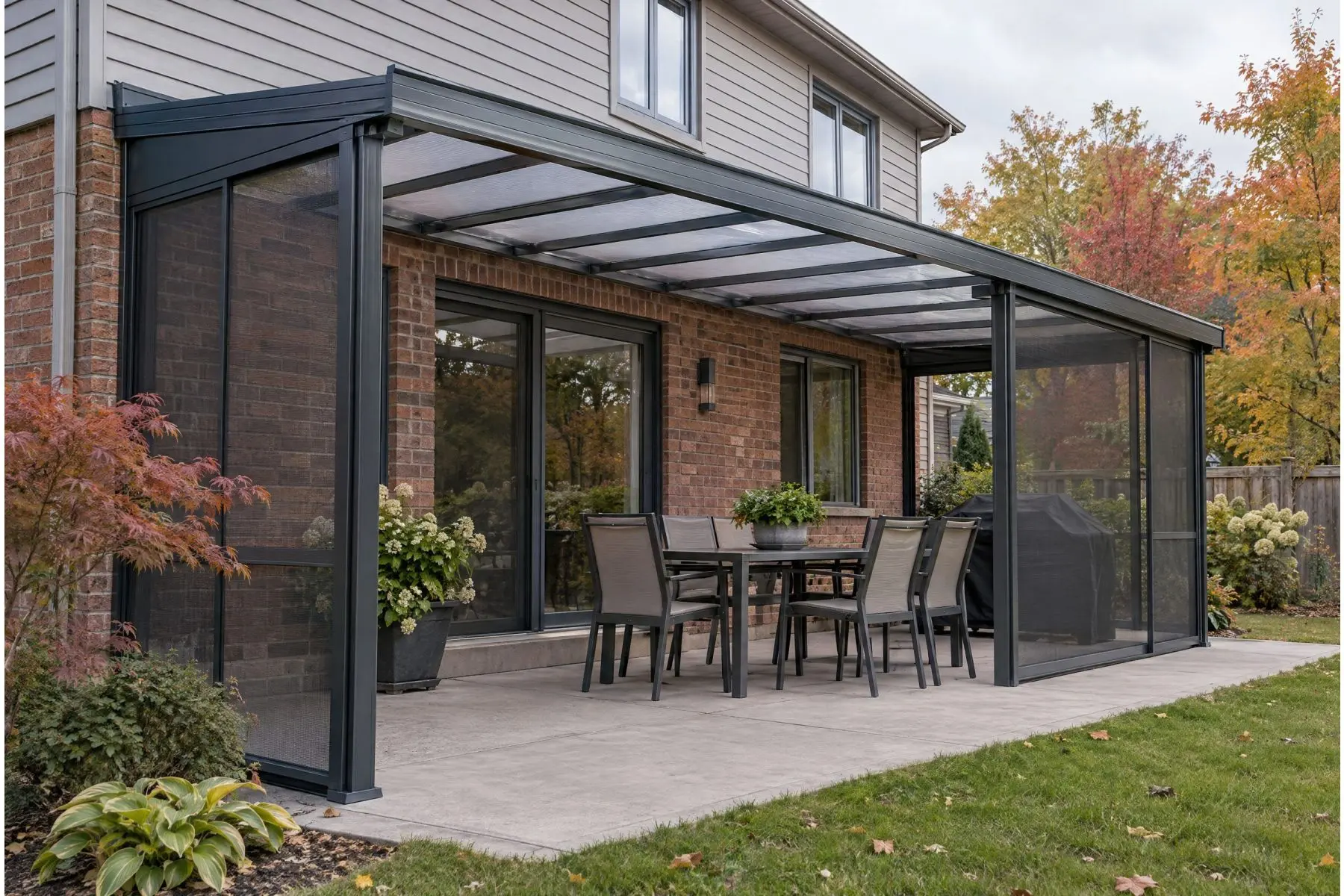
Gazebo Penguin Florence -- Known for its robust build quality and elegant design. The Florence features a fully enclosed option with sliding panels, making it suitable for use as a screened-in dining area or even a three-season 阳光房-style retreat.
Gazebo Penguin Yosemite -- A spacious hardtop option built for larger backyards. With its generous footprint and solid construction, the Yosemite is popular among homeowners looking for an outdoor entertainment hub.
Soft-Top Picks
Corriveau Metropolis -- Among the most durable soft-top gazebos available, the Metropolis features a heavy-gauge steel frame and a premium polyester canopy with UV protection. Its vented roof design helps manage wind, and the included mosquito netting makes it a practical three-season shelter for Canadian summers.
Total Cost of Ownership: A 10-Year View
When evaluating cost, looking beyond the purchase price reveals the true value of each option.
Hardtop Gazebo (10-year estimate):
- Purchase price: $2,000-$4,500
- Foundation preparation: $200-$800
- Touch-up paint/gaskets: $50-$100
- 10-year total: $2,250-$5,400
Soft-Top Gazebo (10-year estimate):
- Purchase price: $400-$1,200
- Replacement canopies (2-3 over 10 years): $200-$750
- Waterproofing spray, cleaning supplies: $100-$200
- Potential frame replacement (after 8-10 years): $400-$1,200
- 10-year total: $1,100-$3,350
While the soft-top option has a lower total cost over 10 years, the hardtop delivers significantly more value through year-round usability, zero seasonal effort, and positive impact on property value. For homeowners planning to stay in their home long-term, the hardtop gazebo is almost always the smarter financial choice.
Frequently Asked Questions
Can a hardtop gazebo survive a Canadian winter without being taken down?
Yes. Hardtop gazebos with steel or polycarbonate roofs are engineered for year-round use, including Canadian winters. Quality models from brands like Sojag and Gazebo Penguin are designed to handle heavy snow loads and ice accumulation. Ensure the gazebo is properly anchored to a solid foundation and check the manufacturer's specific snow load rating for your model. Most hardtop gazebos handle normal Canadian snowfall without any intervention, though clearing unusually heavy accumulation after major storms is a sensible precaution.
How long does a soft-top gazebo canopy last in Canada?
A soft-top canopy typically lasts 3 to 5 years with proper care in Canadian conditions. UV exposure during summer is the primary factor in canopy degradation, followed by moisture damage if the canopy is stored improperly over winter. South-facing or fully sun-exposed gazebos may see canopy degradation sooner. To maximize lifespan, remove the canopy before winter, clean it thoroughly, ensure it is completely dry before storage, and store it in a climate-controlled space. Reapplying waterproof spray each spring also extends the fabric's life.
Do I need a building permit to install a gazebo in my Canadian backyard?
Permit requirements vary by municipality. In many Canadian cities, permanent structures like hardtop gazebos may require a building permit, especially if they exceed a certain size (commonly 108 square feet or 10 x 10), are attached to the home, or include electrical wiring. Temporary or portable soft-top gazebos typically do not require permits. Always check with your local building department before installation. Setback requirements from property lines and height restrictions may also apply regardless of gazebo type.
Can I install a hardtop gazebo on a wood deck?
Yes, many hardtop gazebos can be installed on a wood deck, provided the deck is structurally sound and can support the combined weight of the gazebo plus snow load. Most models weigh between 150 and 350 lbs, and a fully loaded snow roof can add several hundred more pounds of distributed weight. Consult with a contractor or structural engineer if your deck is older or elevated. Anchoring to deck joists (not just decking boards) is essential. Some homeowners reinforce the deck section beneath the gazebo with additional posts or cross-bracing for added security.
What size gazebo is best for a typical Canadian backyard?
For most Canadian backyards, a 10 x 12 or 12 x 14 gazebo provides a comfortable balance of covered space without overwhelming the yard. A 10 x 10 is suitable for smaller patios or as a dedicated hot tub enclosure. A 10 x 12 comfortably fits a dining set for six. For larger entertaining spaces or to accommodate lounge furniture along with a dining area, a 12 x 14 or 12 x 16 is ideal. Measure your available space and leave at least 3 feet of clearance on all sides for foot traffic and maintenance access.
Making Your Decision
For most Canadian homeowners, a hardtop gazebo is the superior long-term choice. The ability to leave it standing through winter, the minimal maintenance requirements, and the decades-long lifespan make it a worthwhile investment in your outdoor living space. Models from Sojag and Gazebo Penguin offer proven reliability in our climate, with options for every budget and backyard size.
That said, a quality soft-top gazebo like the Corriveau Metropolis has its place. If you are on a tighter budget, renting your home, or only need seasonal shade, a soft-top delivers solid value. Just plan for the annual maintenance cycle and canopy replacement costs.
Whichever style you choose, investing in a gazebo transforms your backyard into a true outdoor room, a place for family dinners, summer entertaining, quiet morning coffee, or simply watching the snow fall from a sheltered, comfortable space.