
ShelterLogic Raised Garden Beds
A raised garden bed is the shortest route to a productive vegetable garden in a Canadian yard: the soil warms one to two weeks earlier in spring, drains after heavy rain, and you never dig out the lawn or fight compacted clay. Our raised bed kits are by Arrow and Miracle-Gro, in galvanized steel or wood, from 2' x 4' to 4' x 8', with elevated garden boxes on legs for a deck or balcony and a ShelterLogic greenhouse cover that fits a 4 x 4 bed.
The choice is mostly the type of bed and its depth. An in-ground raised bed has no bottom and sits on the soil, so roots can go further down. An elevated planter, often called a garden box, stands on legs with a slatted floor and a liner, so it works on a deck, a patio or a balcony and puts the plants at waist height. Depth matters more than footprint: 9 to 12 in. suits salad, herbs and bush beans, while carrots, potatoes and tomatoes want 17 in. or more.
Filling a bed well matters more than the bed itself. Aim for roughly two parts screened garden soil or triple mix to one part compost, water it in and let it settle for a day before planting, then finish with an inch of mulch to slow evaporation. A raised bed drains faster than open ground, which is its advantage in a wet spring and its weakness in August, so plan on watering more often than you would a row garden. The Arrow GrowIT beds go together without tools; the Miracle-Gro beds arrive as kits with pre-cut boards or panels and the hardware supplied.
Related: Planters and raised beds · Greenhouses · Plant support and protection · Metal vs wood raised beds
Raised bed, deep bed or garden box?
| Type | Height and depth | Where it goes | Lines |
|---|---|---|---|
| Galvanized raised bed | 11 to 17 in. deep, open at the bottom | On soil or lawn, in the sun | Arrow GrowIT · Miracle-Gro 2 x 4 x 1 ft |
| Deep metal bed | 2 ft deep, open at the bottom | On soil; less bending, room for root crops | Miracle-Gro 2 x 4 x 2 ft |
| Wood bed and two-tier bed | 9 1/2 in. deep; the two-tier bed adds a 4 3/4 in. level | On soil or lawn | Miracle-Gro wood 4 x 4 · two-tier 4 x 8 |
| Elevated garden box on legs | 28 in. tall, 9 1/2 in. deep bed with a slatted floor and liner | Deck, patio or balcony | Miracle-Gro wood planter 4 x 4 · 2 x 4 with shelf |
Which depth for what you grow
| Depth | Grows well | Notes |
|---|---|---|
| About 9–12 in. | Lettuce, spinach, herbs, radish, bush beans, strawberries | Shallow roots; the least soil to fill, so the cheapest to start |
| About 17–24 in. | Carrots, beets, potatoes, peppers, tomatoes | Deep enough for most root crops and for staking tall plants |
| Two tiers | A mixed bed, or gardening without bending as far | Costs more soil, but easier on the back and easier to net |
Raised bed FAQ
How much soil does a raised bed need?
Multiply length × width × depth in feet to get cubic feet, then divide by 27 for cubic yards. A 4 x 8 ft bed at 11 in. deep takes roughly 30 cu ft — about eight 4 cu ft bags. Fill with a mix of garden soil and compost rather than pure potting mix, which drains too fast in a large bed.
Raised bed or garden box on legs?
A raised bed sits on the soil with no bottom, so it holds more soil and roots can reach the ground below; it is the better choice for a vegetable patch in the yard. An elevated garden box stands about 28 in. tall with a floor and a liner, so it works on a deck, a patio or a balcony and you garden without kneeling, but its bed is shallower and suits greens, herbs and strawberries best.
How deep should a raised bed be?
At least 9 to 12 in. for greens, herbs and bush beans, and 17 in. or more for carrots, potatoes and tomatoes. Over open ground a shallower bed still works, because roots carry on into the soil underneath; on a hard surface the bed depth is all the plants get.
Galvanized steel or wood?
Galvanized steel warms faster in spring, does not rot and keeps a clean modern line. Wood looks softer in a garden and insulates the root zone a little better; the wood beds here are Chinese fir from FSC-sourced lumber, naturally rot-resistant rather than pressure-treated.
Is galvanized metal safe for growing food?
Yes. The zinc coating on galvanized beds is stable at garden soil pH, and the amount that migrates into soil is negligible compared with what plants already take up. Metal beds also warm faster in spring, which is the main reason to choose them in Canada.
Can I put a raised bed on a patio or deck?
Put a bottomless raised bed on soil or lawn: on a deck or paving it leaks soil and water. For a deck, a patio or a balcony choose an elevated garden box, which has its own floor and liner. On lawn, lay cardboard under a new bed to smother the grass before you fill it.
Where should I put a raised bed?
Six to eight hours of sun for fruiting crops such as tomatoes and peppers; four is enough for leafy greens. Keep it within reach of a hose, and leave a path wide enough to kneel beside it — a bed you cannot reach the middle of gets neglected.
Do raised beds need to come apart for winter?
No. Both the metal and the wood beds stay outside year-round. The wood ones are Chinese fir from FSC-sourced lumber — naturally rot-resistant rather than pressure-treated, so nothing is added to the soil they hold. Top the soil up with compost in the fall, since a bed settles a few inches each season, and leave the roots of spent plants in the ground to break down.
What sizes do you carry?
Sizes in the range: 2' x 4', 3' x 3', 40" x 40", 4' x 4', 3' x 6', 4' x 8'.
Free shipping on most orders over C$88 — conditions in our Shipping Policy. Large items ship by freight carrier — see Freight delivery.
ShelterLogic builds fabric-covered steel structures: portable garages, winter car shelters, utility and run-in shelters, commercial canopies, GrowIT greenhouses, shade sails and firewood racks. The frame is steel with a rust-resistant finish and the cover is woven polyethylene, so a shelter goes up without a foundation and comes down at the end of the season if you want the space back. The ShelterCoat and ShelterTube garage lines are wind- and snow-load rated and are built to stay up year-round.
IPATIO lists ShelterLogic garages and storage shelters from 8 x 8 to 16 x 44 ft — the ShelterCoat round, peak and barn profiles and the taller ShelterTube frame — plus car shelters, utility shelters and Shed-in-a-Box units, canopies, run-in and livestock shelters, GrowIT greenhouses and the replacement covers and enclosure kits that fit them. The catalogue by series and size is at the bottom of this page.
Shop ShelterLogic by category: Portable garages · Car shelters · Utility shelters · Canopies · Livestock shelters · Greenhouses · Shade sails · Replacement covers · Firewood racks
1 products
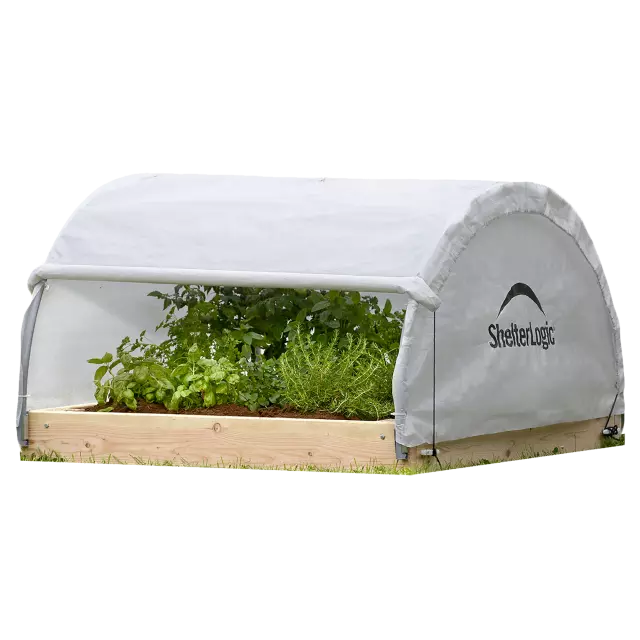
ShelterLogic catalogue — series and sizes
ShelterLogic portable garages and storage shelters
| AutoShelter | 10x15 · 10x20 |
|---|---|
| Garage-in-a-Box | 12x20 · 13x20 |
| ShelterCoat | 8x8 · 8x10 · 8x11 · 8x12 · 10x12 · 8x16 · 10x16 · 12x20 · 13x20 · 12x24 · 15x20 · 13x24 · 12x28 · 18x20 · 15x24 · 13x28 · 15x28 · 20x22 · 22x24 · 20x28 · 16x36 · 22x28 · 16x40 · 16x44 |
| ShelterTube | 10x14 · 10x18 · 12x18 · 10x23 · 14x18 · 10x27 · 12x23 · 14x23 · 12x27 · 18x20 · 14x27 · 14x32 · 20x23 · 14x36 · 20x27 · 14x40 · 20x32 |
ShelterLogic car shelters
| AutoShelter | 10x15 · 10x20 |
|---|---|
| Garage-in-a-Box | 12x20 · 13x20 |
| ShelterCoat | 10x16 · 12x20 · 13x20 · 12x24 · 15x20 · 13x24 · 12x28 · 18x20 · 15x24 · 13x28 · 15x28 · 20x22 · 22x24 · 22x28 |
| ShelterTube | 10x18 · 12x18 · 10x23 · 10x27 · 12x23 · 12x27 · 18x20 · 20x23 · 20x27 · 20x32 |
Utility shelters and Shed-in-a-Box
6x6 · 6x10 · 8x8 · 6x12 · 8x10 · 8x11 · 8x12 · 10x10 · 10x12 · 8x16 · 12x12 · 12x20
Canopies — MaxAP, SuperMax and UltraMax
6x10 · 10x10 · 9x16 · 10x20 · 12x20 · 12x26 · 18x20 · 18x30 · 18x40 · 30x30 · 30x40 · 30x50
Run-in and livestock shelters
2x2.5 · 4x4 · 4x5 · 8x10 · 10x10 · 12x12 · 12x20 · 13x20 · 13x24 · 20x22
GrowIT greenhouses
4x4 · 4x6 · 6x8 · 10x10 · 10x20 · 12x20 · 12x24
Shade sails and clamp canopies
Replacement covers, enclosure kits and anchors
Firewood racks and fireplace tools
ShelterLogic FAQ
What is the difference between ShelterCoat and ShelterTube?
Both are wind- and snow-load rated steel-frame garages. ShelterCoat comes in three roof profiles — round, peak and barn — and covers the widest size range, 8 x 8 to 16 x 44 ft. ShelterTube is the taller, fully enclosed tube-frame garage, made for a truck, an RV or equipment that needs headroom. The sizes of each are listed above this FAQ.
Can a ShelterLogic shelter stay up through a Canadian winter?
The ShelterCoat and ShelterTube garages carry a wind and snow-load rating and are built to stay up year-round: anchor them properly for your base, keep the cover drum-tight, and clear heavy snow off after a big storm rather than letting it build up. The lighter canopy and Shed-in-a-Box covers are not snow-load rated — take the cover down before winter.
Do you sell replacement covers for ShelterLogic canopies?
Yes — we list replacement tops, enclosure kits, extension kits and anchor bags, including the MaxAP, SuperMax and UltraMax canopy lines. Covers are ordered by line and size, so check both before buying: a 12 x 20 SuperMax top does not fit a 12 x 20 UltraMax frame.
What is a run-in shelter?
A run-in is a three-sided shelter horses and livestock can walk into on their own, out of sun, rain and wind. We list run-in, corral and small-livestock shelters in 2x2.5, 4x4, 4x5, 8x10, 10x10, 12x12, 12x20, 13x20, 13x24, 20x22, 22x24 ft, plus enclosure kits for the corral shelters.
What is GrowIT?
GrowIT is ShelterLogic's greenhouse line — the same steel frame and cover construction, with a greenhouse-grade translucent cover. IPATIO lists GrowIT greenhouses in 4x4, 4x6, 6x8, 10x10, 10x20, 12x20, 12x24 ft, including Greenhouse-in-a-Box and heavy-duty round and peak models.
Guides for ShelterLogic Raised Garden Beds
All guides-
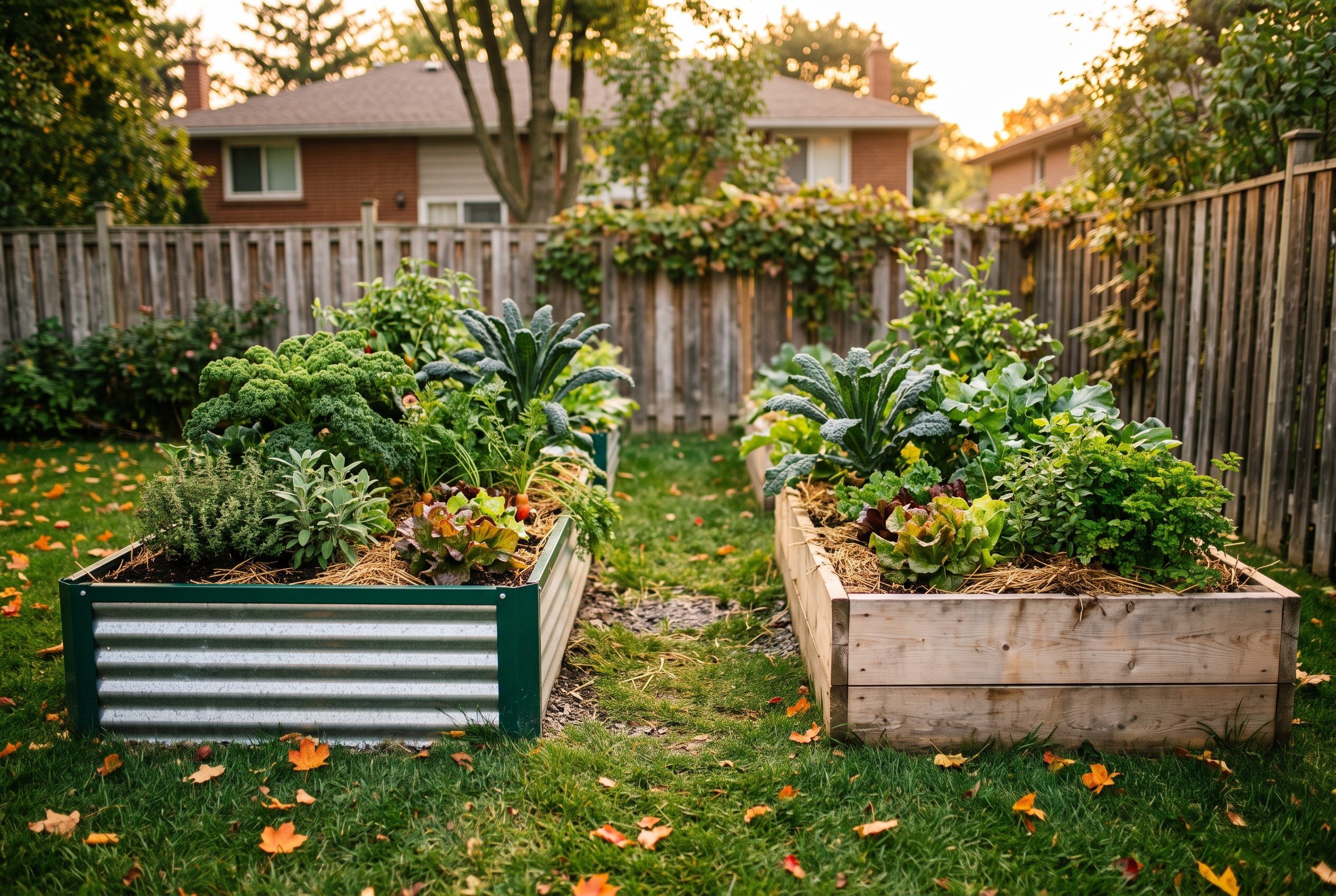
Raised Garden Beds in Canada: Steel vs Wood, Sizes & Fall Setup
Raised garden beds warm up earlier, drain better and save your back in a short Canadian season. Compare galvanized steel and FSC wood frames, size a bed around reach and root depth, and find out why September and October are the best weeks of the year to build one.
Login and Registration Form
Sign in before you order so your purchase earns points. Orders placed while signed in earn points once they’re complete. Checking out as a guest? Create your account on the order confirmation page and that order is added to it. Every 100 points takes $1 off a later order. About Club IPATIO
Create your account to earn 100 points right away, plus 100 more if you subscribe to our newsletter. Your account also earns points on purchases once each order is complete, and for product reviews. Every 100 points takes $1 off a later order. About Club IPATIO